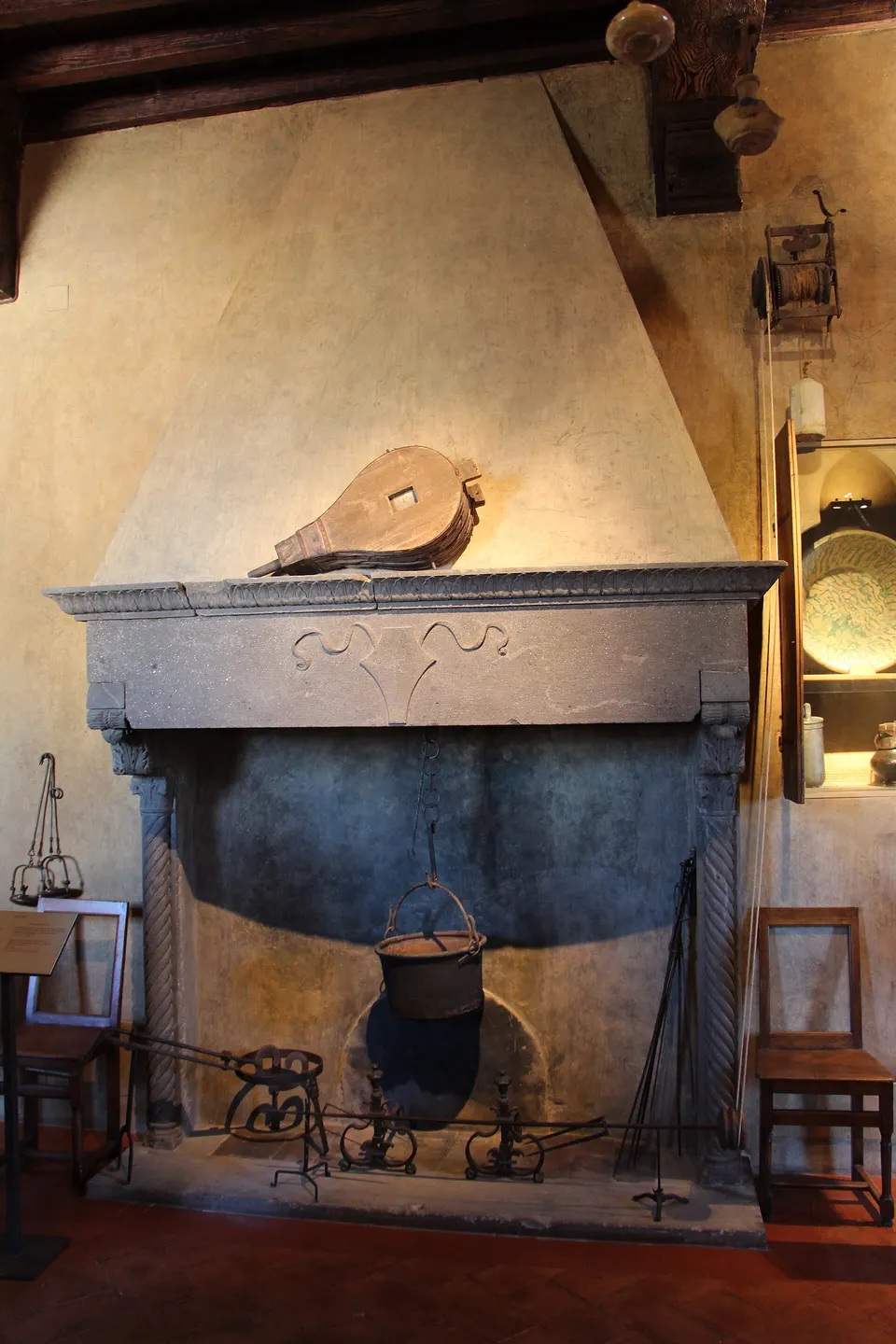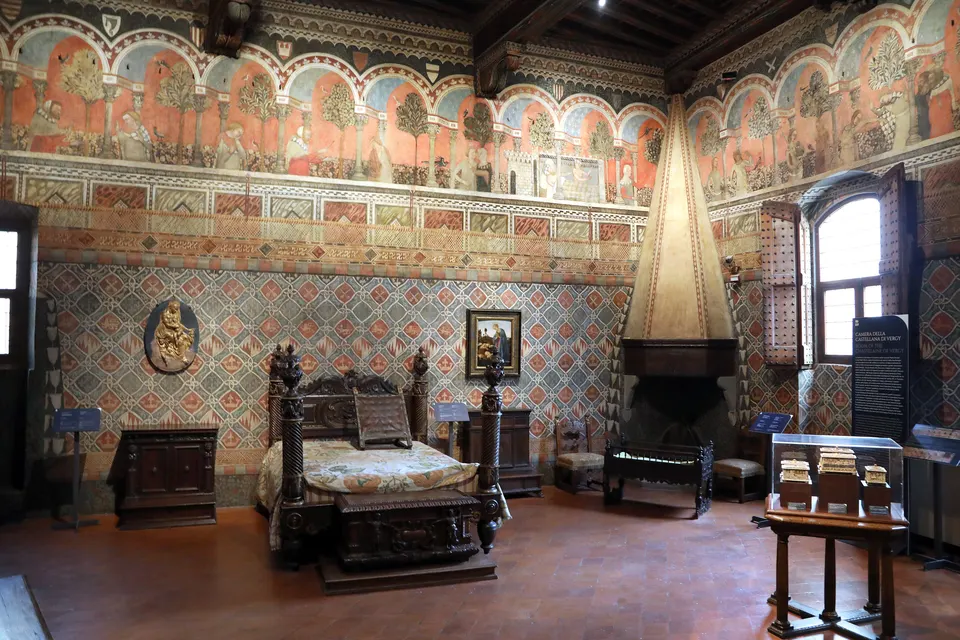
Tuscan style interior design is built on four materials: terracotta floors, pale plaster walls, gray stone around doors and fireplaces, and wooden beams. Furniture is simple and heavy, and there is little of it.
Two Tuscan houses: farm and town
The style comes from two kinds of buildings. The first is the farmhouse, called casa colonica. A family lived there and worked the land for an owner, and the harvest was usually shared half and half. In the 1780s Grand Duke Pietro Leopoldo paid landowners to build better ones. The second is the town house of a rich merchant, such as Palazzo Davanzati in Florence, now a museum of the old Florentine home.
Farmhouse and town house compared
| Part | Farmhouse | Florentine town house |
|---|---|---|
| Plan | Stores and cellars below, rooms upstairs | Business rooms below, kitchen on the top floor |
| Walls | Local stone and clay brick, small windows | Plaster painted like hangings, with birds or coats of arms |
| Wood | Beams of chestnut and oak | Carved and painted chests |
| Main room | A large kitchen with a wide hearth | A great hall with big windows on the street |
| Open air | Covered loggia and a paved yard | Courtyard, and a loggia at the top |
Small farmhouse windows had a reason: they kept the indoor temperature steady. In a dark room, take the materials from the farmhouse but keep your windows clear.
Terracotta floors from Impruneta
Impruneta, a town south of Florence, has worked clay since the Middle Ages. A document of 1308 already mentions its guild of jar makers. Brunelleschi went to its kilns himself to check roof tiles. The local clay is rich in iron, and the fired color is red.
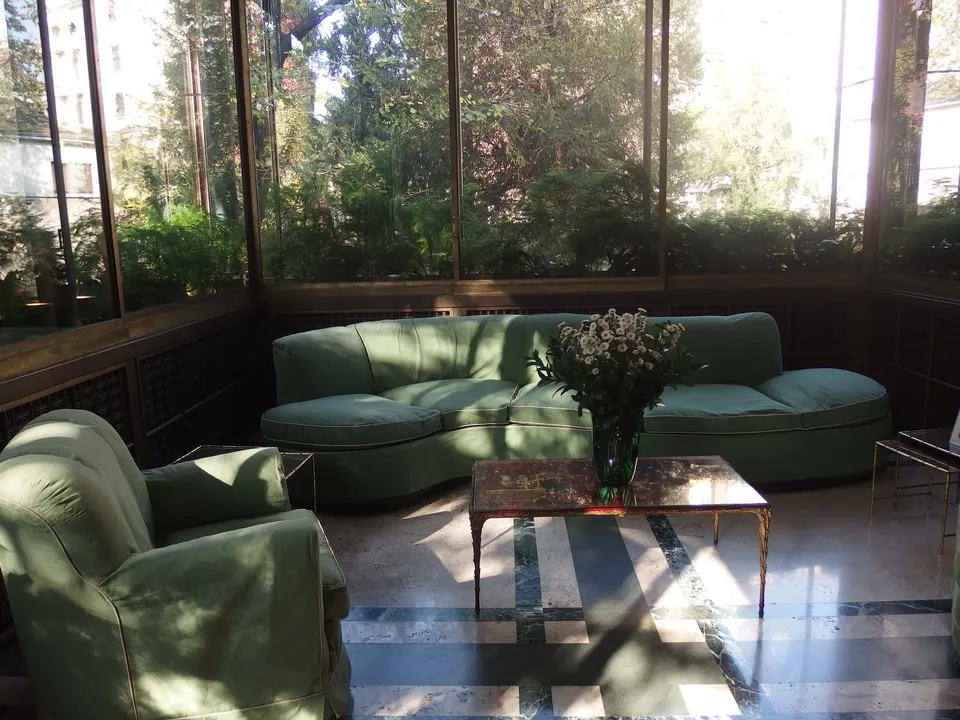
For a floor, choose a matte, slightly uneven tile. Terracotta is porous, so ask how it was sealed before you put it in a kitchen. Terrazzo floors are Italian too, but they belong to Venice.
Gray stone and white walls
The yellow wall is only one option. In Florence the classic pair is gray and white. Pietra serena is a gray sandstone from the hills near the city. Brunelleschi used it for columns, frames and ribs against white plaster, for example in the church of San Lorenzo.
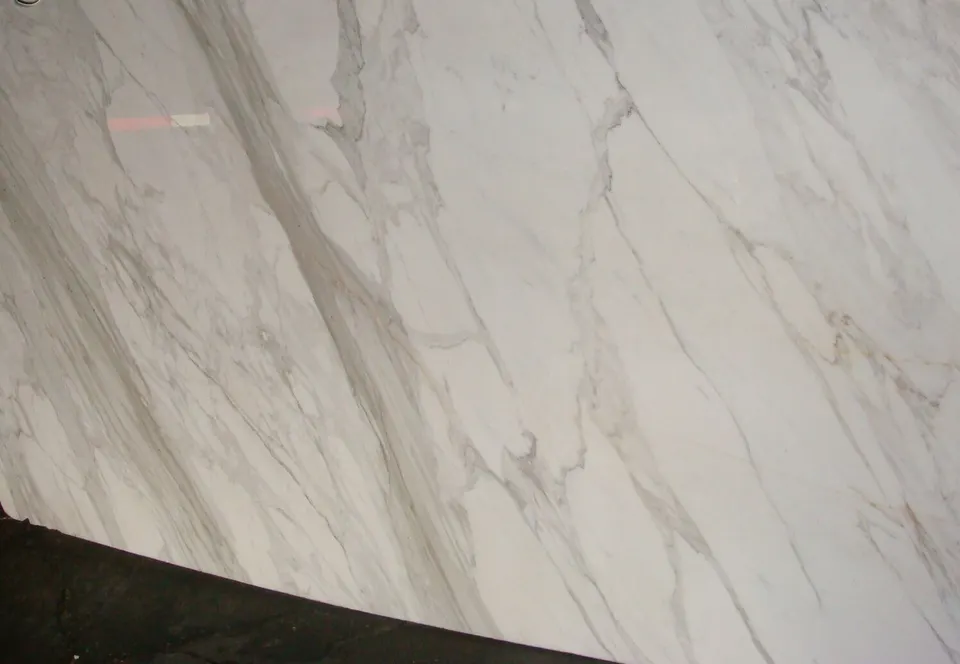
You can repeat this at small scale: gray stone for a shelf, a step or a fireplace edge, and an off-white wall. Water and changes of temperature damage this stone, so use it indoors. White marble is Tuscan as well, since Carrara lies in the region. See Carrara and Calacatta marble.
Tuscan furniture: chests, tables, few seats
The most important piece in a Renaissance house was the cassone, a large chest given to a bride. It often stood at the foot of the bed and could serve as a backrest and a table. With a high back added it became a cassapanca, a chest-bench.
A plain wooden chest in the hall or bedroom is the easiest way to bring this in, and it hides clutter. Add a long table and a few straight chairs. For how the parts fit together, see Italian interior design in five elements, and for wall colors see three bedroom palettes.
What you can leave out
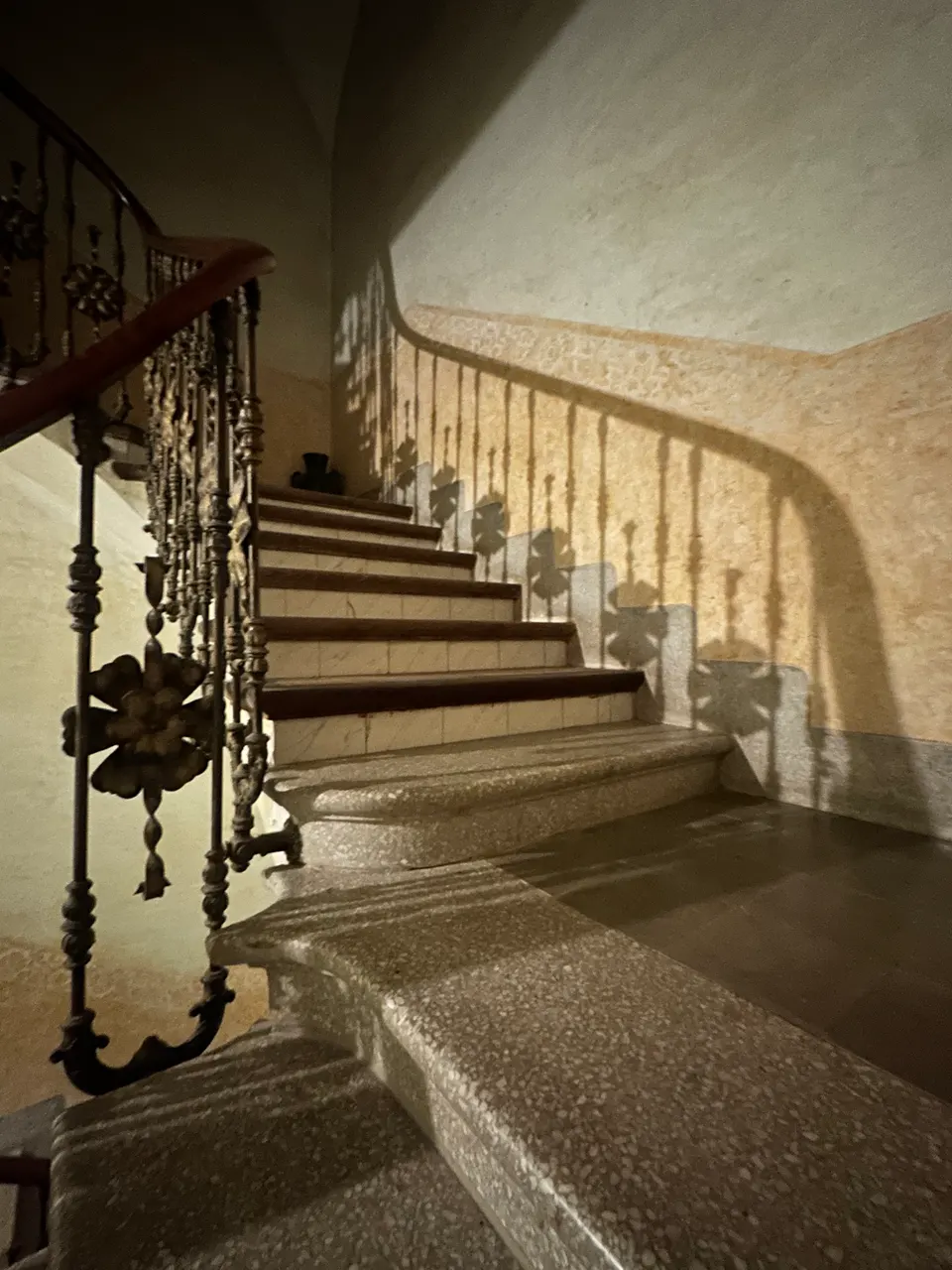
You do not need walls painted to look old, grape patterns or curly iron on every lamp. One real surface, such as a clay floor or a stone shelf, does more than a room full of decoration.
Sources
Main photo: Bedroom in Palazzo Davanzati, Florence. Photo: Francesco Bini, CC BY-SA 4.0