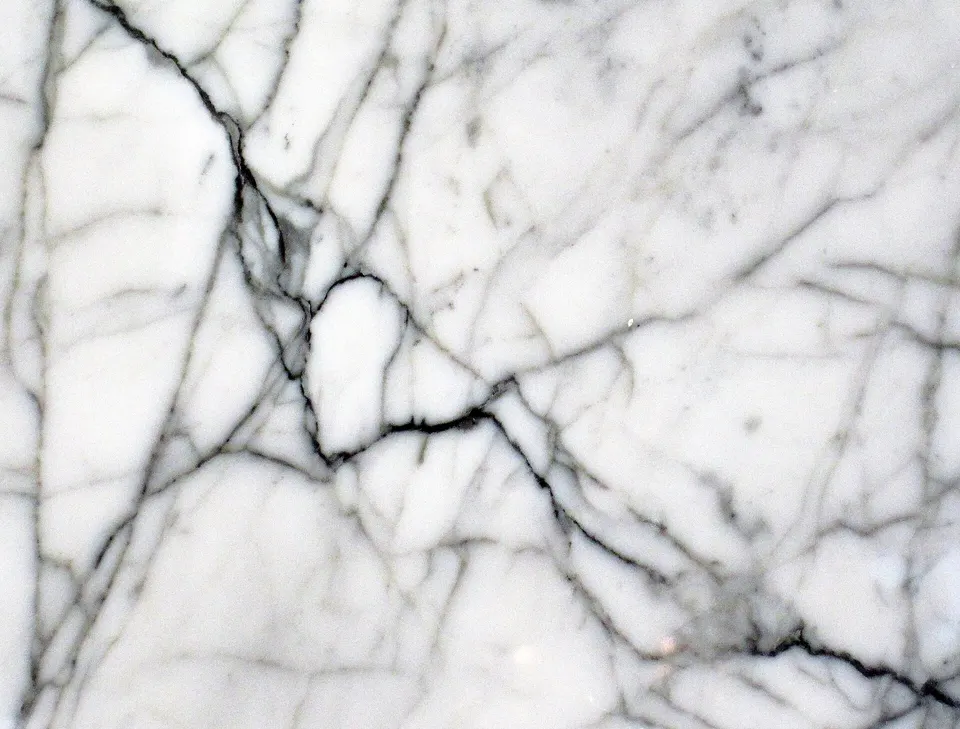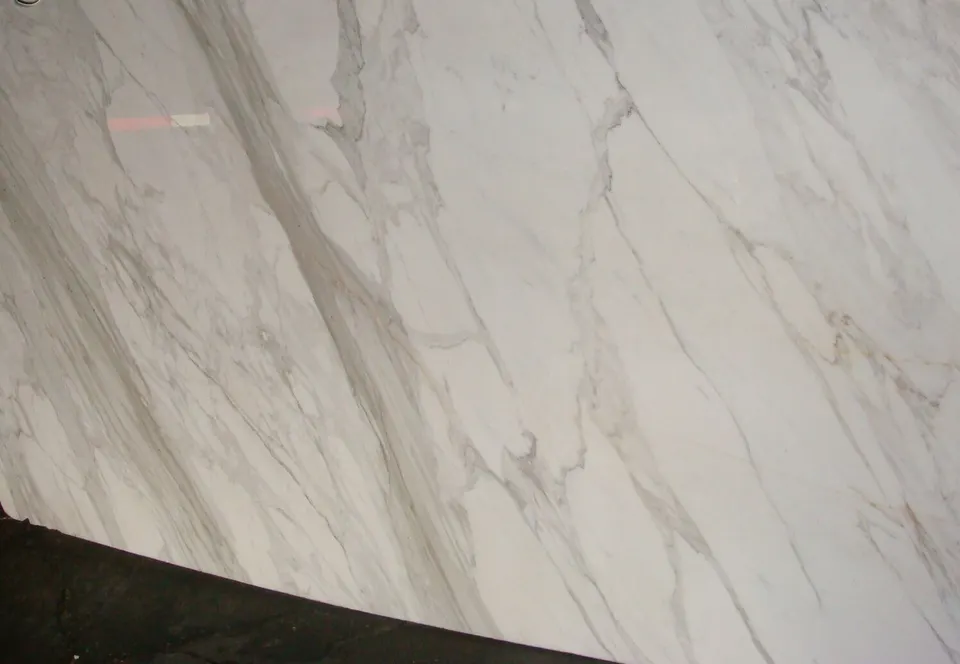
Carrara marble has a light gray or pearl-white background with soft gray veins. Calacatta is whiter and warmer, with wide veins that go from gray to gold. Both come from the same mountains in Tuscany.
Carrara and Calacatta side by side
| Carrara (Bianco Carrara) | Calacatta | |
|---|---|---|
| Background | Pearl-white to light gray | Ivory white to slightly yellow |
| Veins | Smoky gray, spread unevenly | A few centimeters wide, light gray to pale gold, sometimes greenish or brown |
| Structure | Even | Breccia: pale pieces set in a colored matrix |
| Where it is quarried | Around Carrara, also in the southern Apuan Alps | Around Carrara only, mostly at Calacata, north of Torano |
| How common | The most common type around Carrara | Rare |
| Grades and names | C, C/D and D, from whiter to grayer | Gold, Borghini, Macchia Vecchia and others |
The spelling differs too. Geologists often write Calacata with one t, like the place. Shops usually write Calacatta.
Why the name Carrara is confusing
“Carrara marble” is used in two ways. In the wide sense it covers stone from the whole Apuan Alps, with more than 150 commercial varieties. In the narrow sense it means marble from the quarries of the town of Carrara. Calacatta is a Carrara marble in both senses. In a shop, though, “Carrara” alone usually means Bianco Carrara, the gray-white type.
The quarries have been worked since Roman times. Michelangelo's David is Carrara marble. So is the block at the foot of the Arco lamp, described in light and scale in a living room.
Other white marbles from the same mountains
- Statuario. White-ivory to pale cream, with few veins or none. Sculptors use it. Veined Statuario is easy to confuse with Calacatta.
- Venato. Pearl-white to light gray, with more gray veins than Bianco Carrara.
- Arabescato. A breccia with linked veins that draw loops. Most of it comes from quarries outside Carrara itself.
- Bardiglio. Gray, usually with darker veins.
The types pass into each other. Geologist Piero Primavori notes that Bianco Carrara and Venato are not always easy to tell apart. Trust the slab in front of you more than the name on the tag.
Which one to choose for a table or counter
Choose by the size of the piece. Bianco Carrara is even, so it suits large areas and small rooms. Calacatta has a big pattern. It needs a wide top or wall to show a whole vein, and a small tile may catch only a white patch.
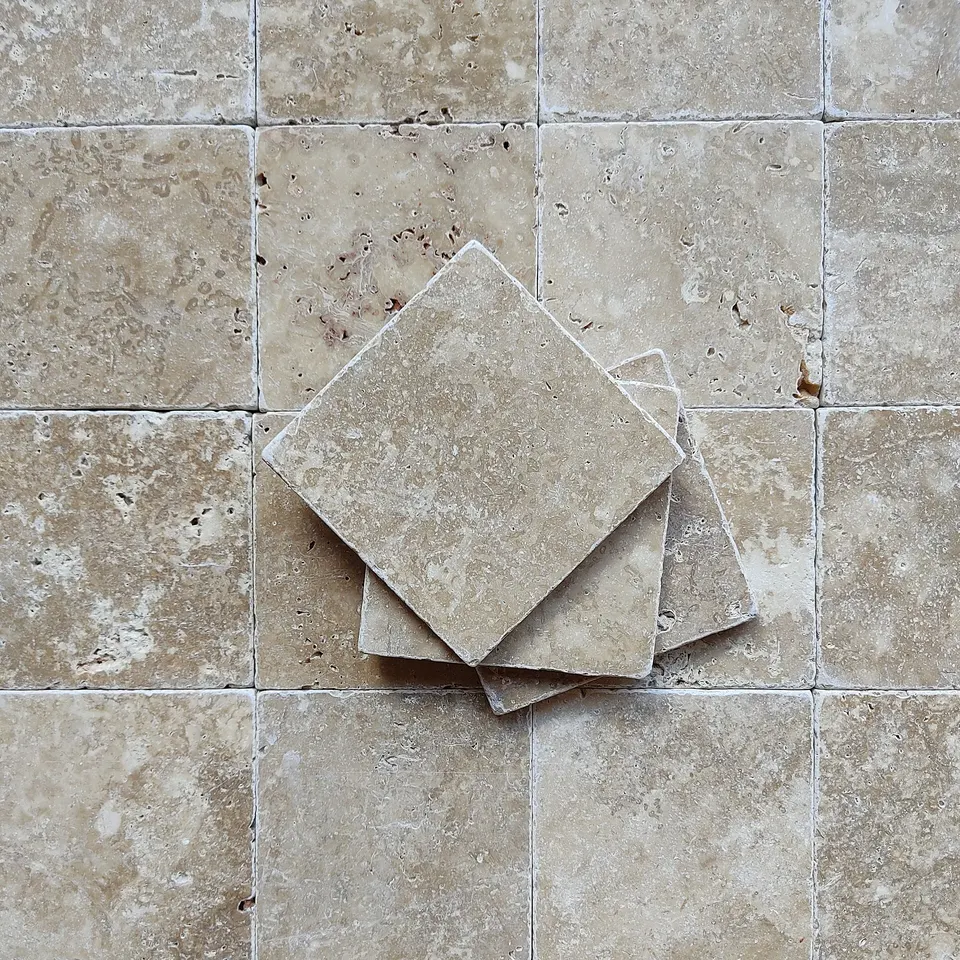
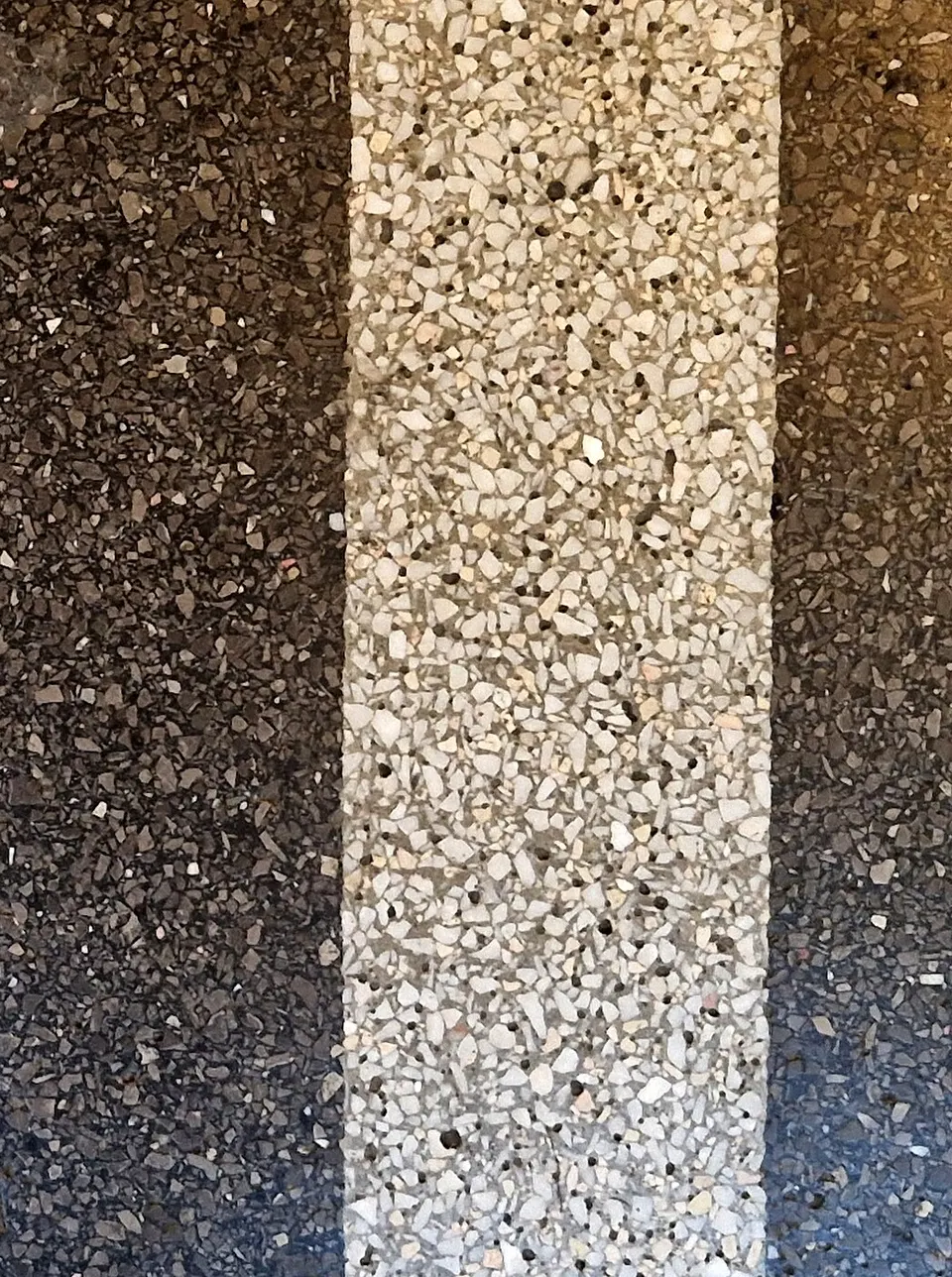
The direction of the cut changes the picture. Two slabs of Calacatta can look very different. If your project needs several pieces, ask to see them laid next to each other. A warmer stone without veins is travertine. Floors made of marble chips are covered in terrazzo floors.
Care is the same for both
Both stones are made mainly of calcium carbonate, so wine, citrus and vinegar etch them. Calacatta gives no extra protection. A honed, satin finish reflects less light than a polished one. Clean with mild dish soap and warm water, rinse, and dry. Blot spills at once and put mats under hot pans. See also stone, wood and steel compared.
Sources
Main photo: Calacatta Gold slab. Photo: Stones slabs, CC BY-SA 4.0