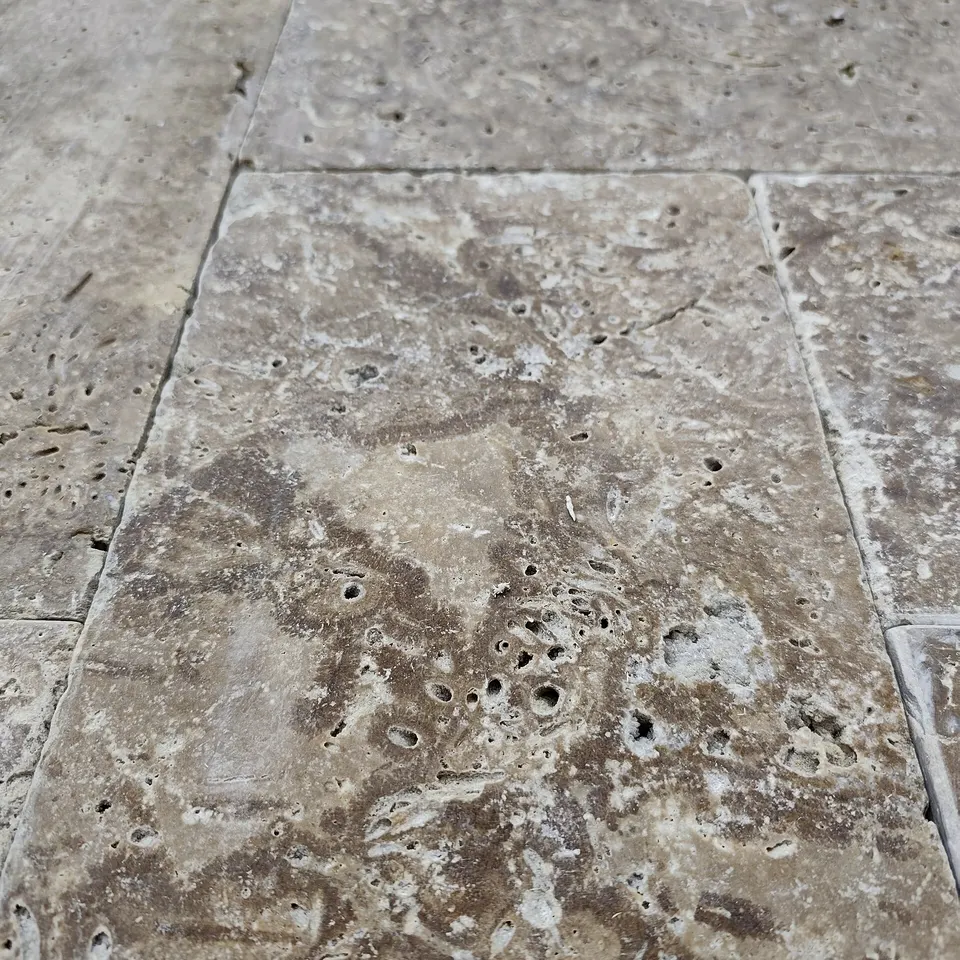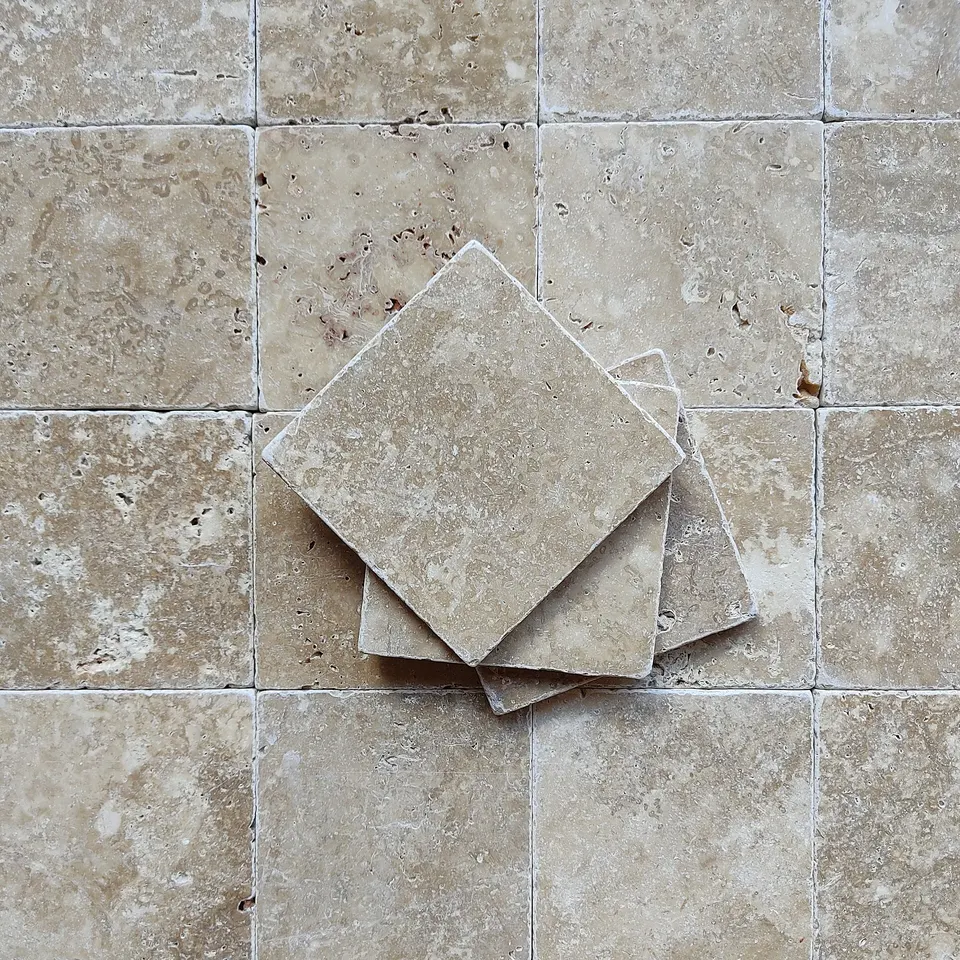
A travertine table is made of limestone that forms in layers around mineral springs. The stone is usually cream or tan, has natural holes, and can be marked by lemon juice, wine or vinegar.
What travertine is and why it has holes
Travertine forms where spring water brings dissolved limestone to the surface. The water gives off carbon dioxide gas, and the limestone turns solid again, layer over layer. Gas bubbles caught between the layers leave the holes. Leaves and algae can be caught too, so a slab sometimes shows fossils.
Pure travertine is white. Most of it is cream, tan or rusty brown because other minerals are mixed in. The name comes from the Latin tiburtinus, “from Tibur.” Tibur is now Tivoli, near Rome, where the stone has been quarried for about 2,000 years. It was used to build the Colosseum.
Travertine is found in hundreds of places around the world, so the word alone does not mean Italian stone. Ask for the country and the quarry.
Travertine or marble: the difference for a table
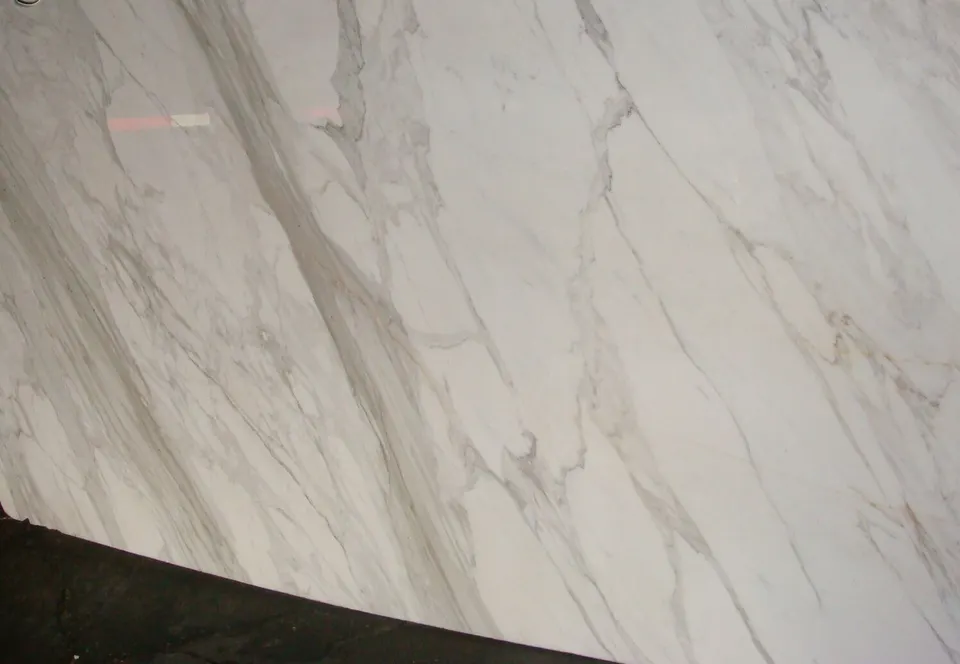
| Travertine | Carrara-type marble | |
|---|---|---|
| What it is | Limestone left by springs | Limestone changed by heat or pressure |
| Surface | Holes and bands | Veins, no such holes |
| Usual color | Cream, tan, rust, sometimes white | White to gray |
| Lemon, wine, vinegar | Leave dull marks | Leave dull marks |
| Good to know | Light for its strength, because of the holes | Sold under many type names |
You may see the words “travertine marble.” Geologists call the stone a limestone. The white marbles have their own guide: Carrara and Calacatta compared.
Filled, unfilled, honed or polished
- Unfilled. The holes stay open. You feel the texture, and crumbs and spills get into it.
- Filled. The holes are closed with a paste before the last smoothing. Compare the color of the paste with the stone.
- Honed. Smooth and satin, with little reflection.
- Polished. Glossy, so color and bands look stronger.
Holes are normal. A checklist from the Natural Stone Institute says that solid structure and good finishing decide the quality. It also warns that travertine varies more than any other natural stone, so ask to see several samples, or the actual top.
Eros: an Italian table held together by weight
Angelo Mangiarotti designed the Eros tables in 1971. The leg is a tapered cone. The top has an opening that fits the cone, so it slides down over the leg and stops. The weight of the stone locks the joint, with no screws or clamps. Agapecasa makes Eros in several stones, and travertine is one of them.
Look at how any stone table is joined. A slab on a metal frame and a slab that sits on stone legs are repaired and moved in different ways. For other names, start with famous Italian furniture designers.
Cleaning and protecting a travertine top
Travertine is calcium carbonate, and acid attacks it. Use coasters, above all under wine and citrus drinks, and mats under hot dishes. Blot a spill with a paper towel. Wiping spreads it. Wash with warm water and a little mild dish soap, rinse and dry with a soft cloth.
Do not use vinegar, lemon, bathroom cleaners or scouring powder. If you want a sealer, ask whether it soaks into the stone or lies on top, and whether it is safe where food is prepared. Sealers on the surface can change how the stone looks. More on stone beside wood and steel: choosing furniture materials.
Sources
Main photo: Travertine tiles. Photo: Fravert, CC BY-SA 4.0