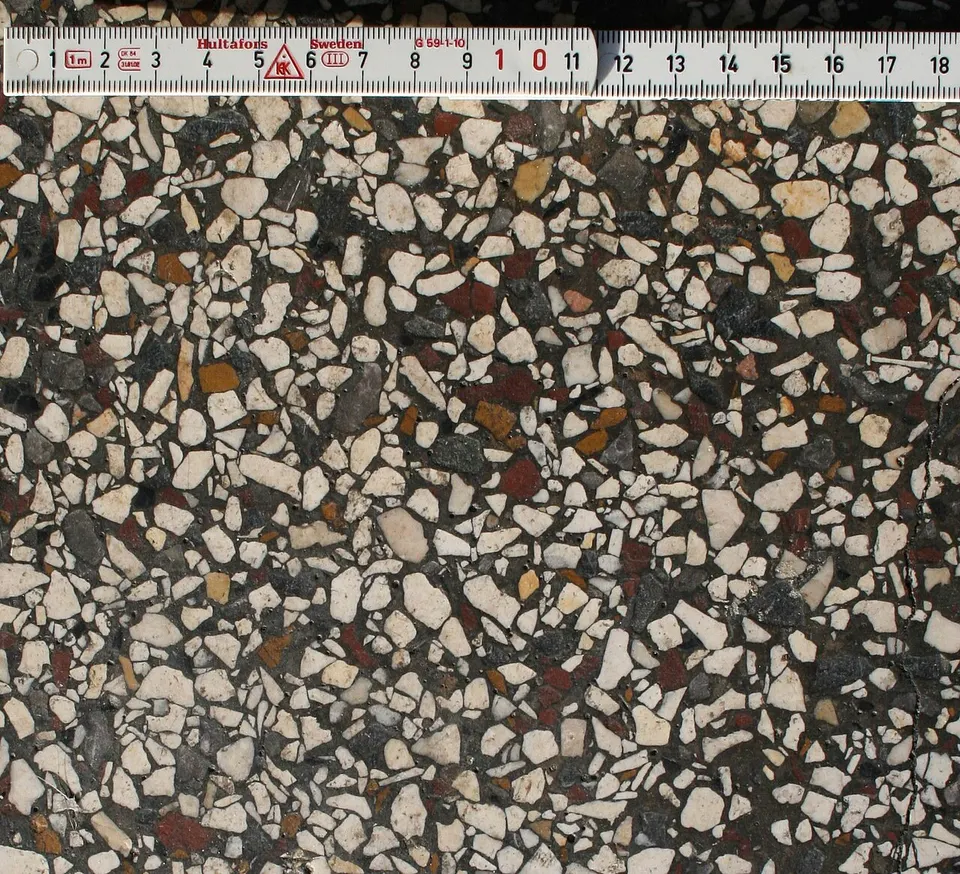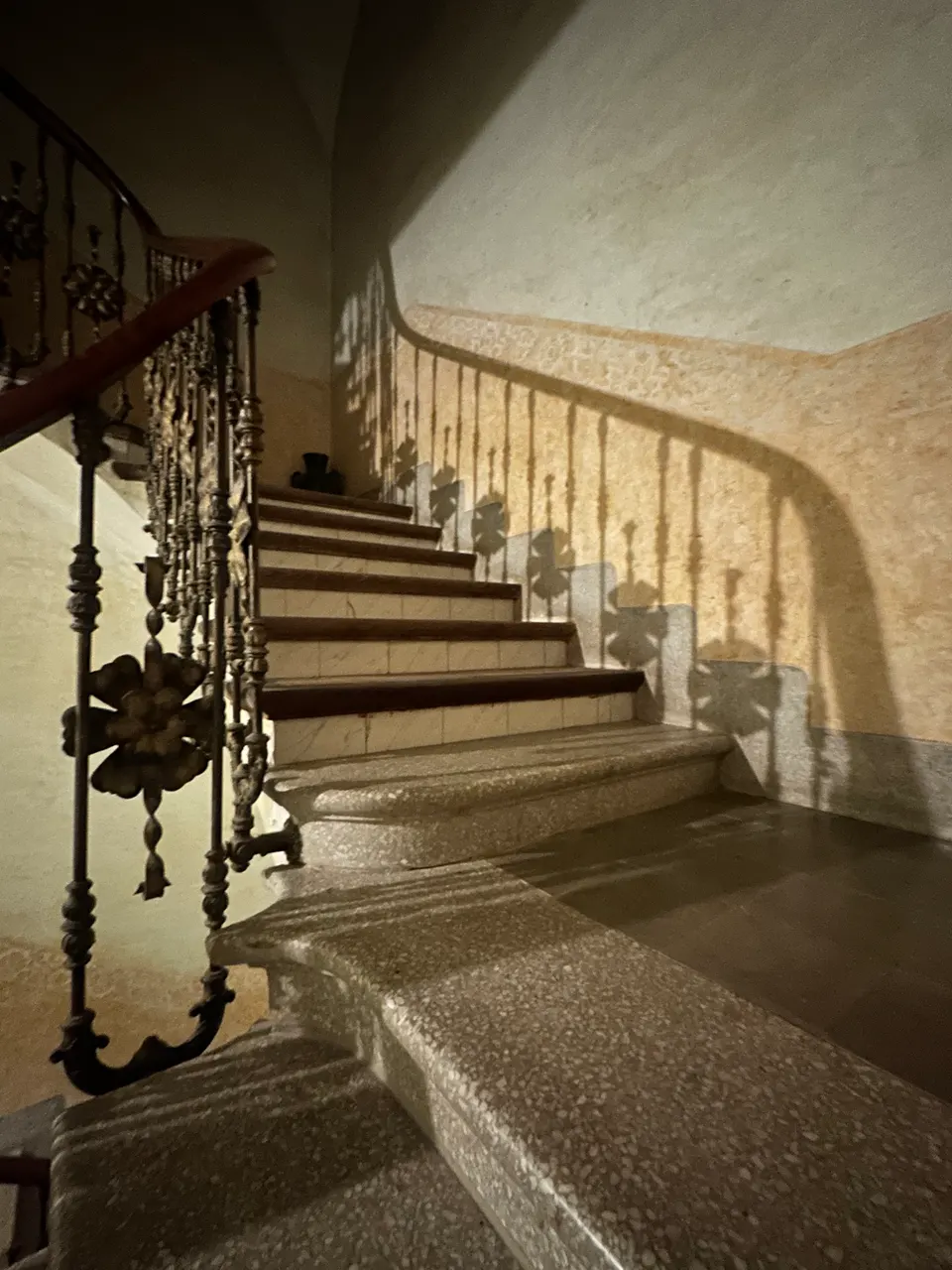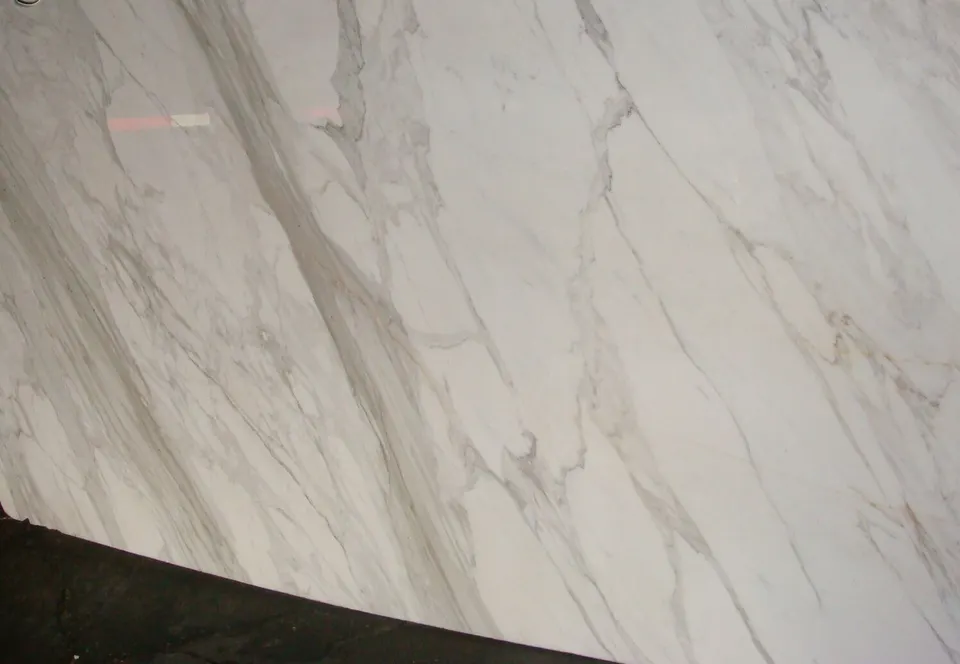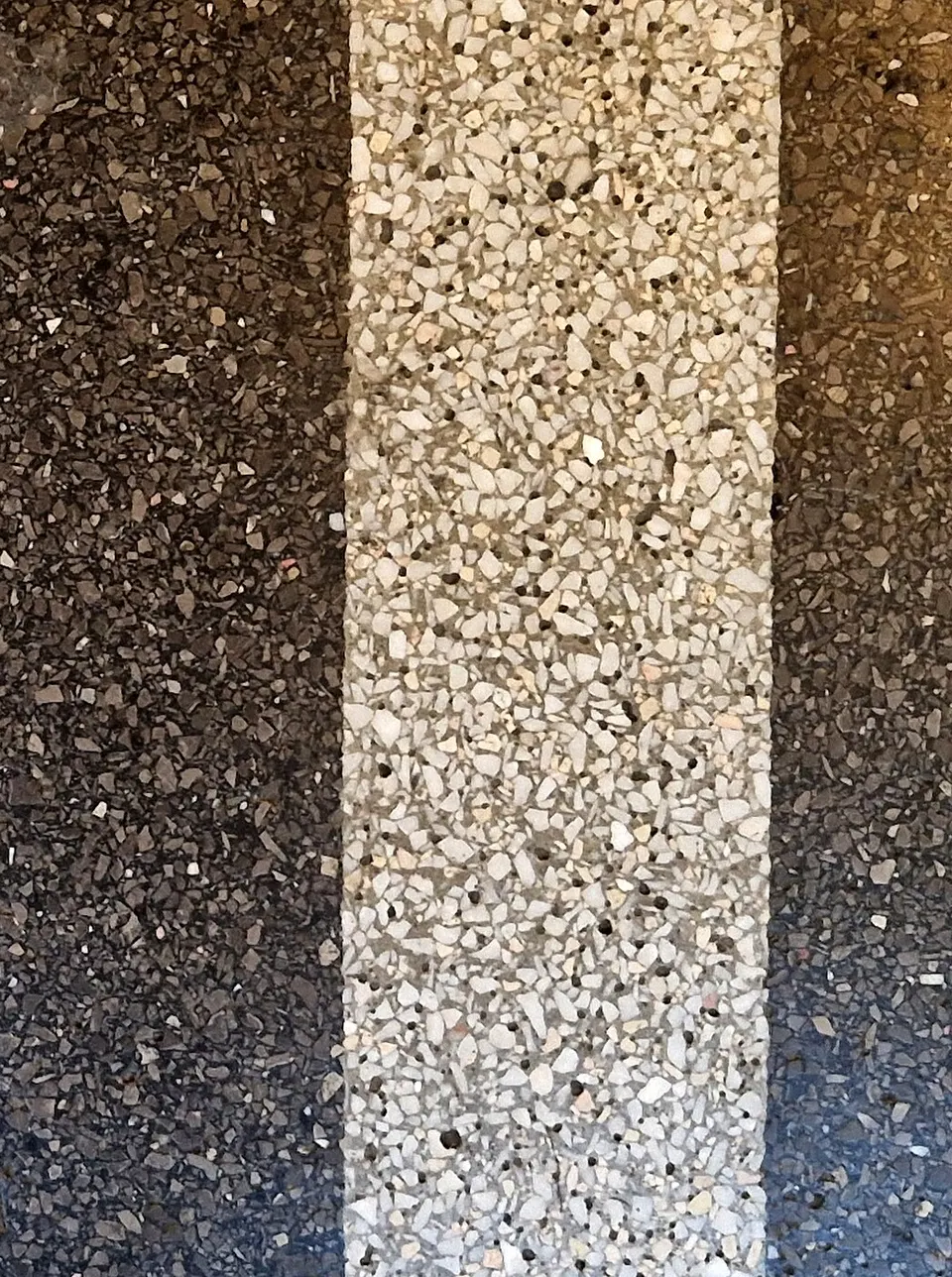
A terrazzo floor is a mix of stone chips and a binder that is spread, left to harden, then ground and polished smooth. The chips are often marble. The binder is lime, cement or resin.
How a terrazzo floor is made
For cement terrazzo, workers first lay a solid base. On top goes a layer of binder mixed with fine chips. While it is wet they throw more chips over it and press them in with a heavy roller. When the floor is hard, a machine grinds it until the chips are cut flat. Small pits are filled, and the surface is polished and sealed.
Thin metal strips are often set in the layer. They mark the color borders and give the floor room to move, so it cracks less.
Venetian terrazzo: the original
In Venice the floor was made with lime. A base of crushed bricks and roof tiles, 10 to 20 cm deep, was laid over wooden boards. Then came 2 to 4 cm of ground brick with lime, and a last coat of lime and marble dust. Marble chips from 5 to 40 mm were sown by hand, beaten in, smoothed and rubbed with linseed oil. In 1581 the writer Francesco Sansovino said such a floor shone so much that you could see yourself in it.
The floor suits Venice, because the houses stand on wooden piles in mud and their walls shift. Lime terrazzo is thick but slightly elastic, so it follows small movements. Many of the craftsmen came from Friuli, northeast of the city. In 1583 Venice allowed them to set up their own guild school.
Lime, cement, epoxy or tiles: compare the types
| Type | What it is | Good to know |
|---|---|---|
| Venetian lime terrazzo | Lime, ground brick, marble chips | Thick, slightly elastic, slow to make |
| Cement terrazzo | Cement and chips, poured on site | Can be used outdoors; needs several layers |
| Epoxy terrazzo | Resin and chips, about 6 to 10 mm thick | More colors, lighter, cracks less; indoor use only |
| Terrazzo tiles | Tiles made with chips, often 20 × 20 cm | Laid like any tile, so there are joints |
| Printed tile | A picture of chips on the surface | Only looks like terrazzo |
Where terrazzo works at home
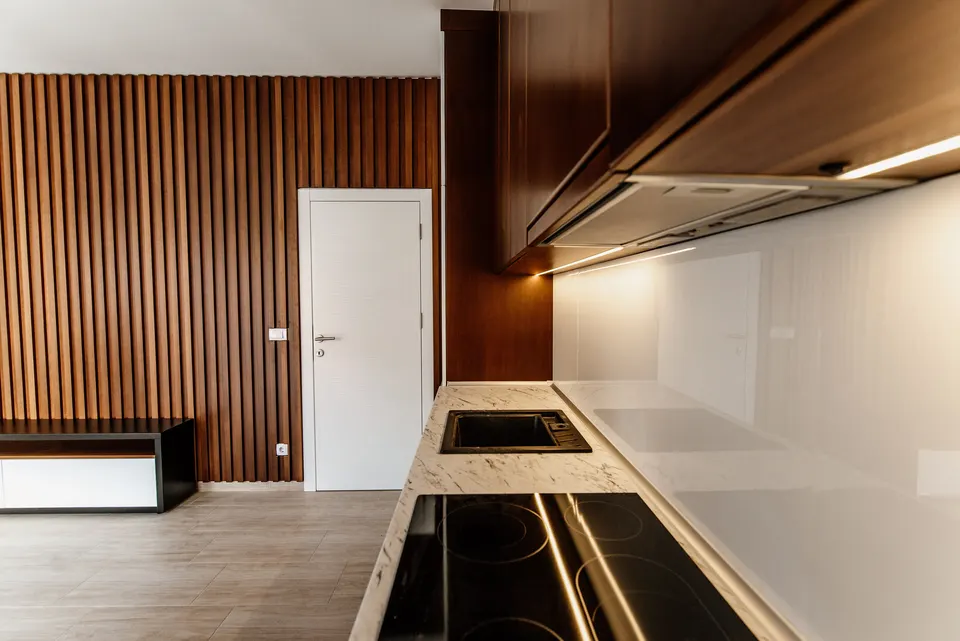
Terrazzo has no single direction, so one floor can run through several rooms. Small, close chips look even and hide crumbs. Large chips need space around them. Match one chip color with the furniture, for example a warm beige next to a travertine table.
In a tiny room a continuous floor helps the space feel larger. See small kitchen ideas. For walls made from similar materials, look at Venetian plaster. Terrazzo is also one of the floors used in an Italian interior.
Cleaning a terrazzo floor and repairing cracks
Grit scratches the finish, so dust mop often. Wet mop with clean water and change it when it turns cloudy. Wipe spills quickly. Acids and alkalis can damage the binder, and strong acid also attacks marble chips, so keep vinegar and harsh bathroom cleaners away. Use a sealer sold for terrazzo, in thin coats.
Cracks often start in the structure under the floor. An old floor can be polished again. A damaged part can be replaced with a mix of chips made to match, and it helps to make several samples first.
Sources
Main photo: Terrazzo with a band. Photo: Geolina163, CC BY-SA 4.0