Venetian plaster walls are covered with lime mixed with marble dust. The plaster goes on in thin layers and is rubbed with a steel trowel until it looks like smooth stone.
What Venetian plaster is made of
The two main parts are slaked lime and marble powder. A polished lime plaster may hold more than 40 percent marble powder. Color is mixed into the paste, so it is part of the layer.
This kind of lime hardens slowly by taking carbon dioxide from the air. It must not dry out too fast, which is one reason why the work needs time and a trained hand. Wet lime is caustic, so leave the mixing to someone with protection and practice.
Marmorino, stucco veneziano and scagliola compared
| Name | How it is made | How it looks |
|---|---|---|
| Stucco veneziano | Two or three thin coats of lime and very fine marble dust, pressed with a spatula | Smooth and glossy |
| Marmorino | Crushed marble and lime putty | Matte, satin or glossy, like natural stone |
| Scagliola | Plaster with glue and pigments, polished | Imitates colored marble and inlay |
| Unburnished plaster | The same lime paste, left unrubbed | Matte and rough; brittle |
Why Venice used marble plaster
The Romans already had a finish of this kind. Vitruvius wrote about it, and it can be seen in Pompeii. It came back in the 15th century. The first known Venetian record of it is a contract of 1473 with the nuns of Santa Chiara on Murano.
It solved practical problems. Sand was hard to bring into a city on water, while scraps of stone, brick and roof tile were everywhere. Ground brick in the lime undercoat let it harden in damp air. The finish weighed less than slabs of stone, which helped houses built on soft ground. Most marmorino was white, like the Istrian stone used across the city.
Interest faded at the end of the 19th century. Architects returned to it in the late 1970s, thanks in part to Carlo Scarpa.
How the wall is built up
The wall gets a primer and a base coat. Then come one to four thin coats. Pressing and rubbing with a steel trowel closes the surface and brings out the shine. The harder the paste is pressed, the glossier it gets. A coat of wax often finishes the work.
Ready mixed pastes often contain glue so that they hold on drywall or wood. They are easier to use and give a similar look. If you want lime, ask what the binder is.
Where it works at home and how to look after it
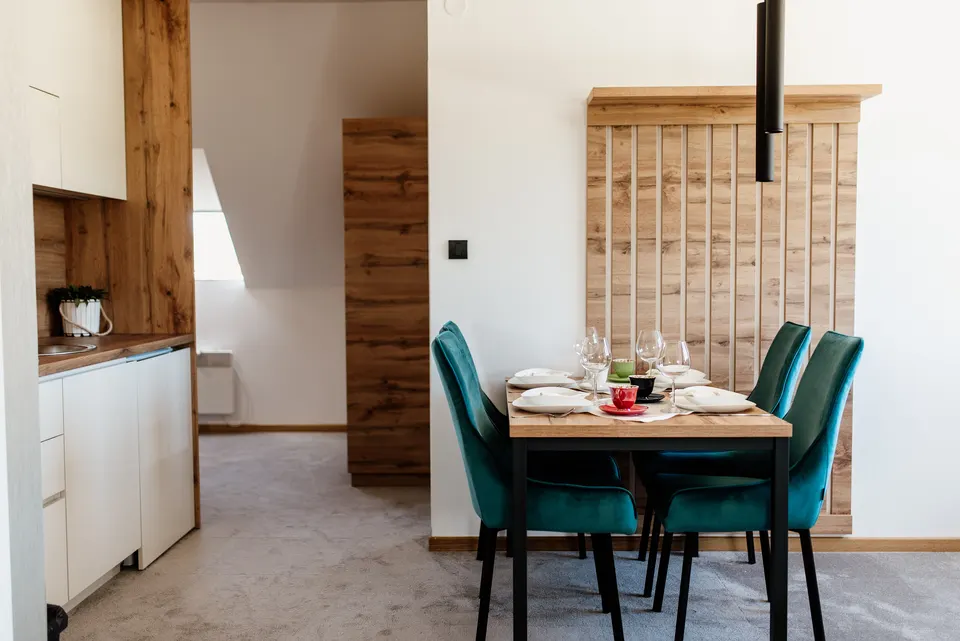
Venetian plaster suits curved walls, columns and corners where stone panels are hard to fit. The gloss picks up light from the side, so a wall near a window or a wall lamp shows it best. Such light also shows every bump, so the base must be flat. One wall is often enough in a small room.
Dust with a soft, dry cloth. Lime and marble react with acid, so keep vinegar and lemon cleaners off. Ask who applied the wax and when, before you use any other product.
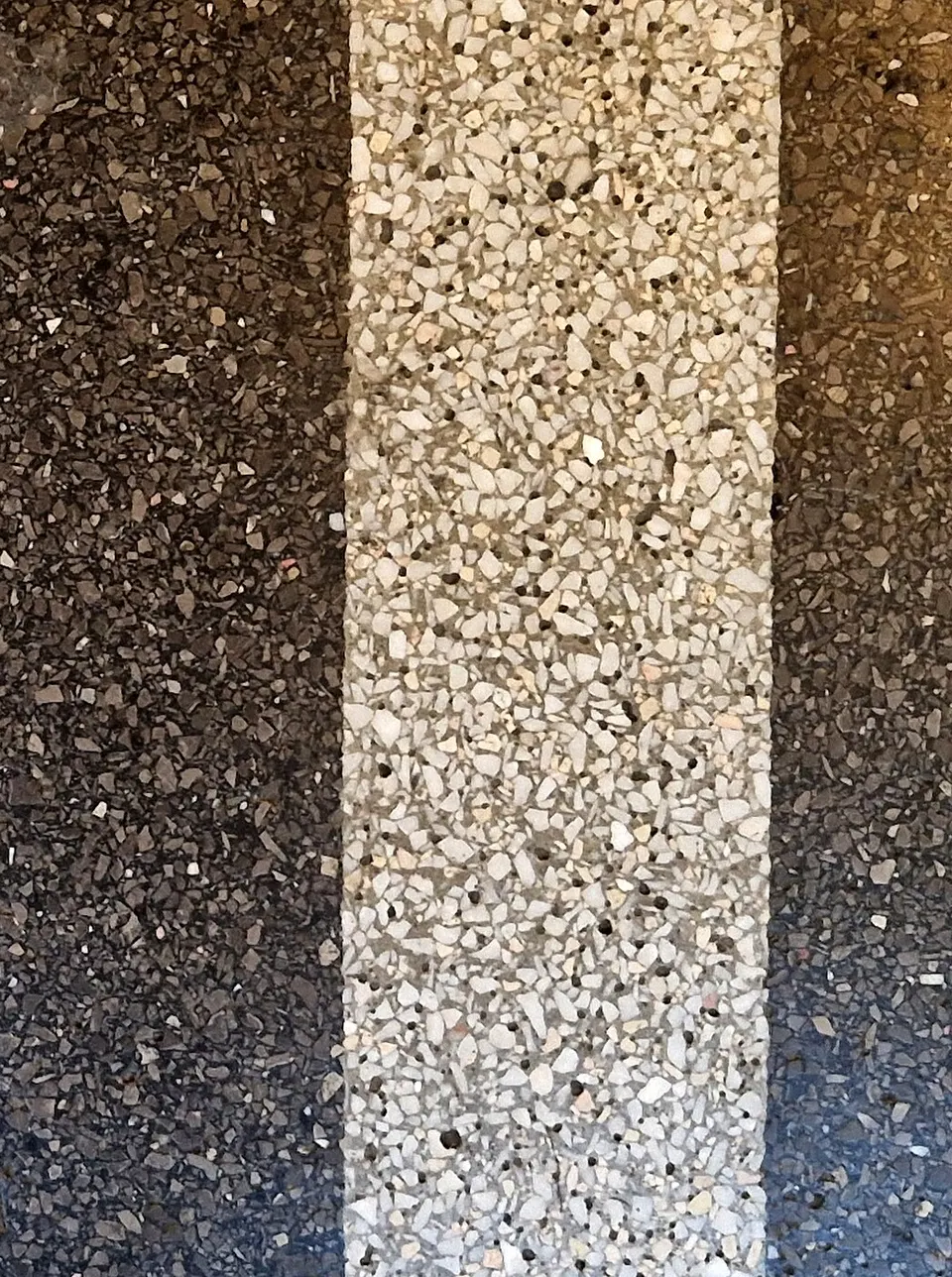
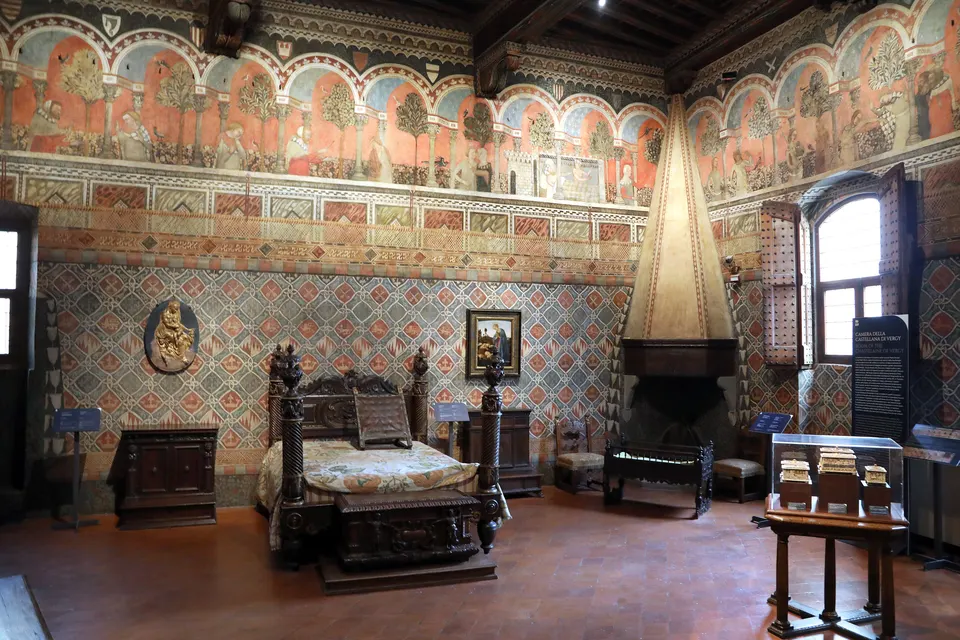
For plain rooms, see living with white walls. On the floor the closest relative is Venetian terrazzo, made from similar scraps and lime. Matte plaster also fits a Tuscan style interior.
Sources
Main photo: Marmorino plaster wall. Photo: CamillaStrong, CC BY-SA 4.0