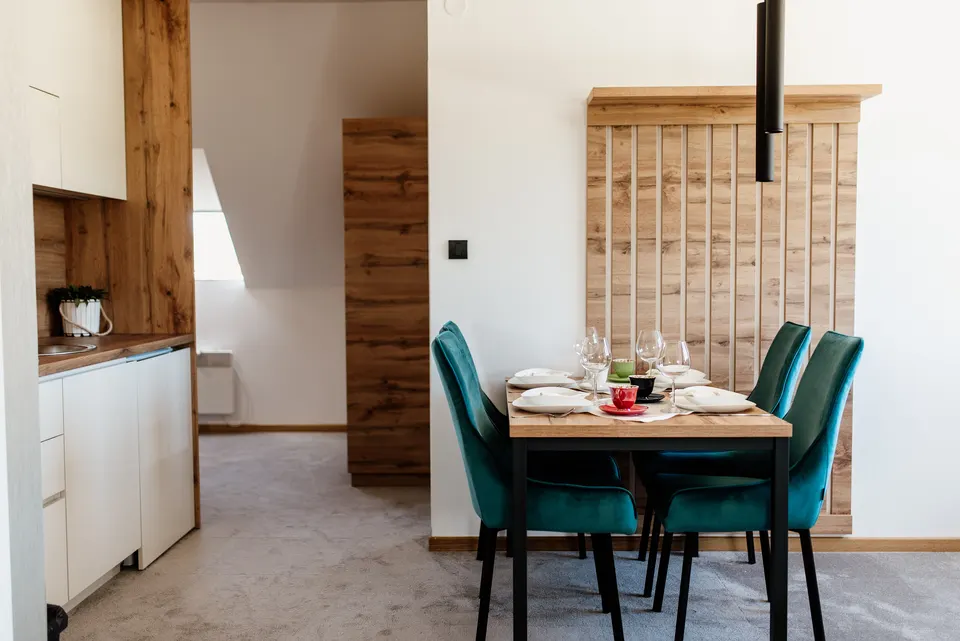
A room with white walls feels cold when every surface is equally smooth and white. Choose a white whose undertone you know, mix textures, and add one area of color.
How to choose a shade of white
Next to each other, whites split into families: yellowish, pinkish, bluish, greenish. The undertone comes out beside a truly white sheet of paper and grows stronger on a large wall. Wood floors push a wall toward yellow, trees outside push it toward green.
Paint cards often carry a light reflectance value, or LRV, which tells how much light the surface sends back on a scale from none to all of it. A high figure suits a dim room. In strong sun, a slightly lower one is easier on the eyes.
Limewash and other mineral paints
Before plastic paints there was limewash, slaked lime in water that sinks into plaster and hardens as it takes up carbon dioxide from the air. Crystals in it bend light twice, which gives the wall its soft glow. It goes on nearly transparent and turns opaque as it dries and cures. A little can rub off on dark clothes, so it suits ceilings and upper walls better than a child's corridor. It can also be tinted with earth pigments for cream and broken white.
Add texture to white walls
- Put three textures side by side: matte wall, coarse linen, glazed ceramic.
- Let some shadow in. A ribbed panel or a shelf with depth draws lines on a wall without paint.
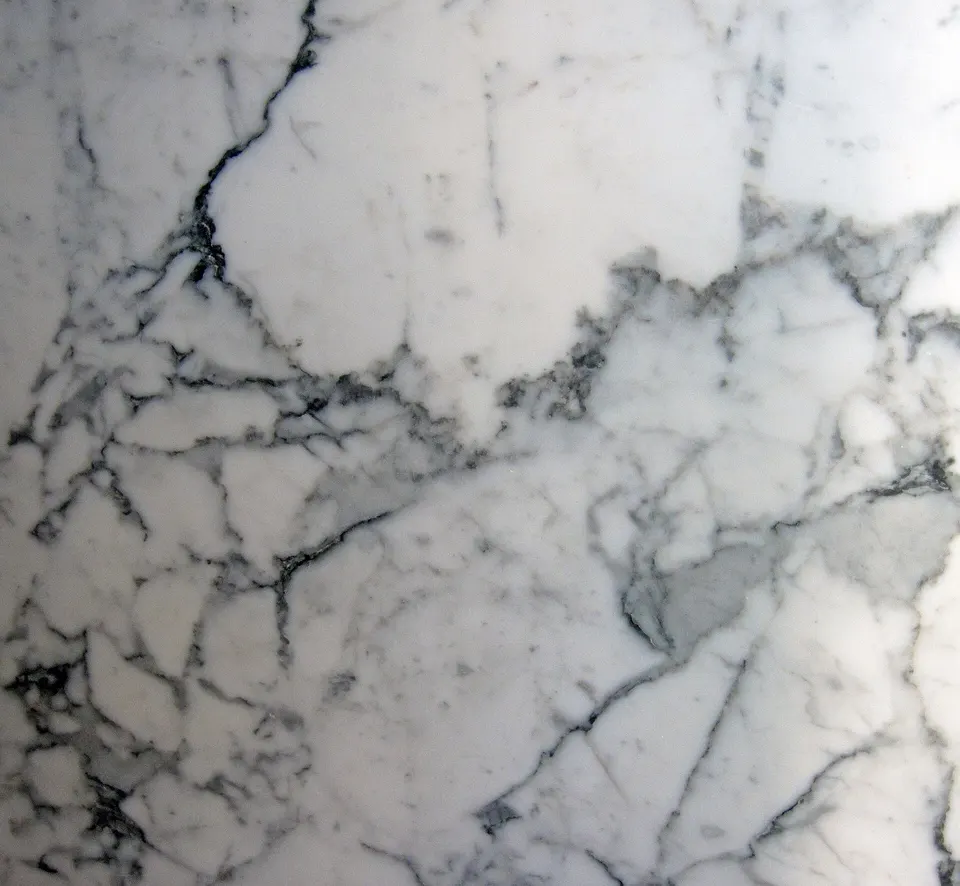
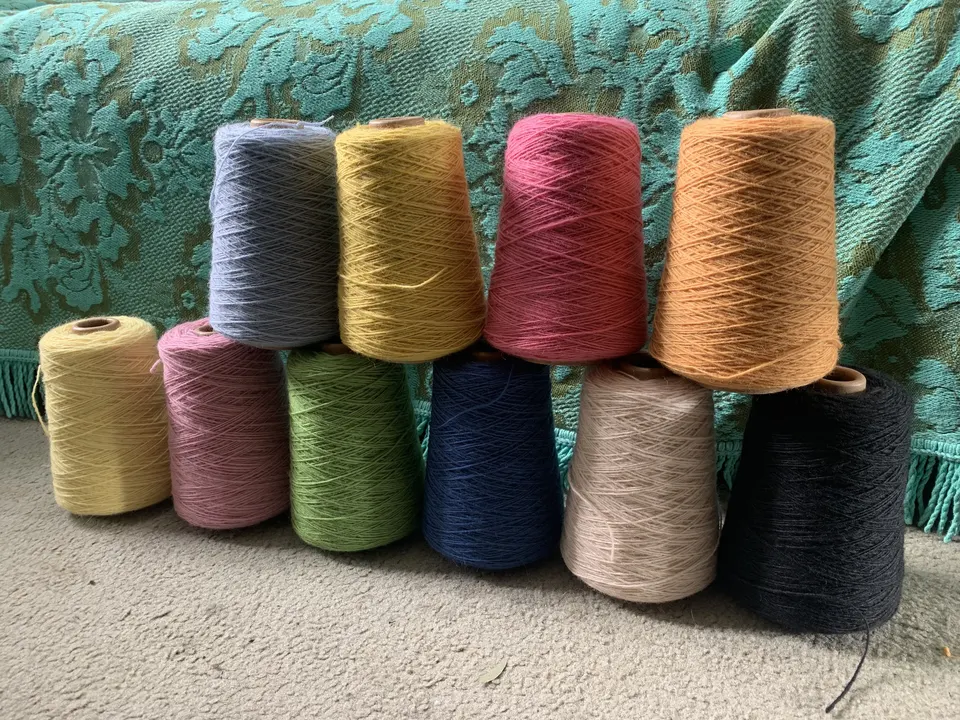
- Use undyed wool, raw wood and straw. They belong to the white family and keep it from looking clinical.
- Choose white upholstery by weave, since color is only half of what shows. A tight, textured cotton with removable covers is practical; a flat, pale silk is for rooms without wine.
Light matters as much as texture: see how to make a living room look more expensive.
Add one area of color
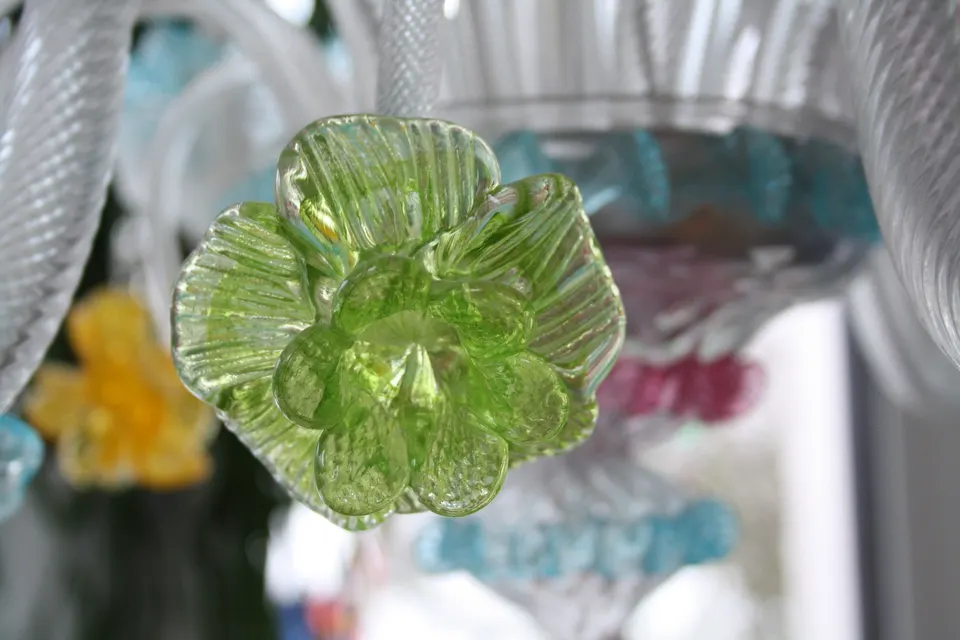
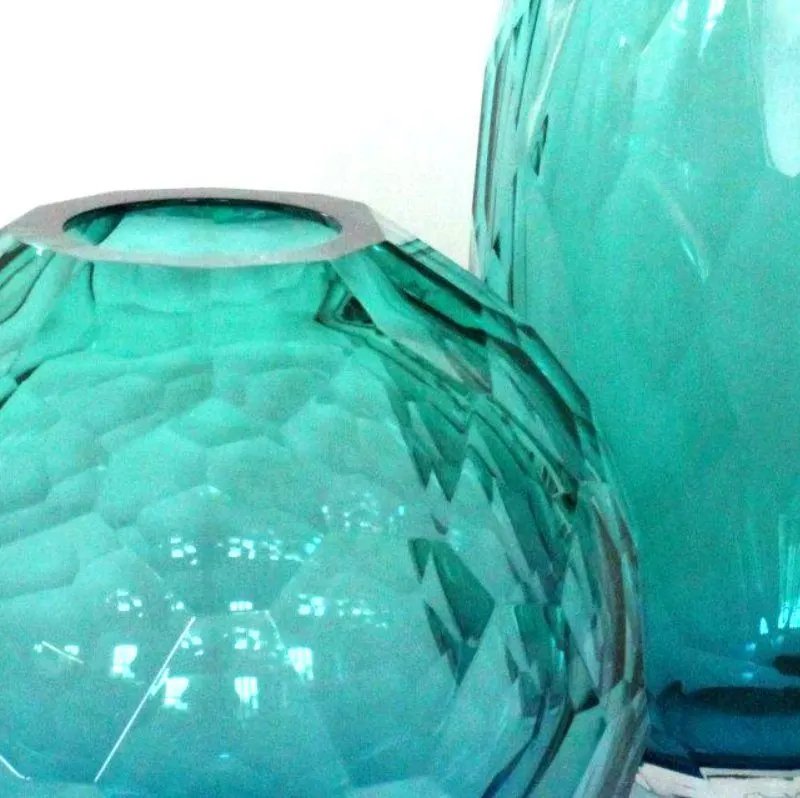
A single large picture, a rug, or a group of glass on a sill is enough. Color in glass is part of the material and throws tinted light onto a white wall, which no paint can do. Hang art with its center near standing eye level and leave white around it, like the margin of a page.
Furniture then reads as silhouette against the wall, so outline matters. One strong piece is easier to place in a white room than anywhere else.
Sources
Main photo: Table by a white wall. Photo: Shixart1985, CC BY 2.0