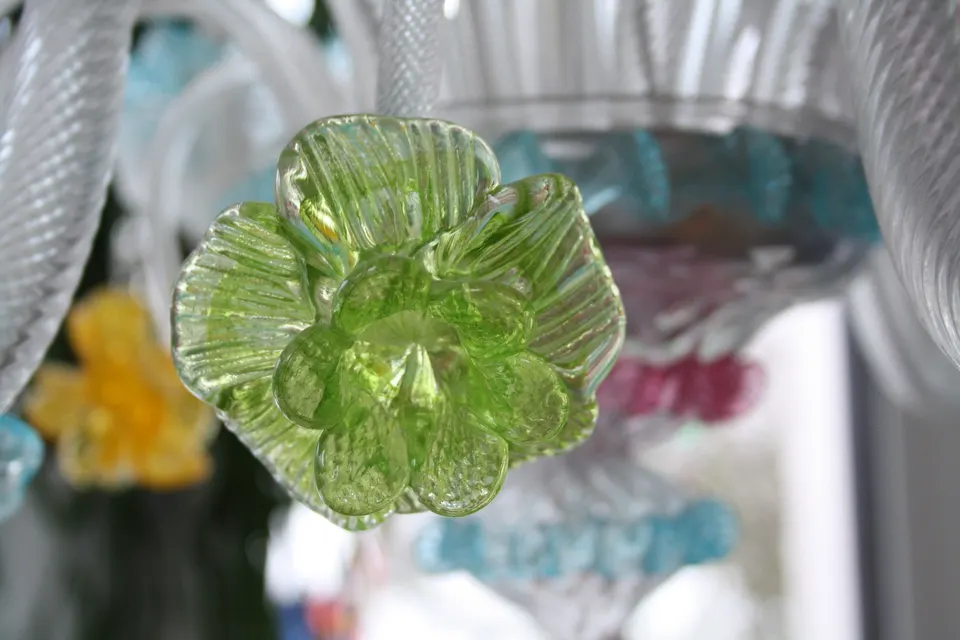
Colored glass is made by adding very small amounts of metal to the melt. Cobalt gives blue, manganese gives violet and gold gives ruby red. The color is part of the glass, so it does not wear off.
Why glass takes color from metals
Glass made from ordinary sand already has a color. Iron in the sand turns it faintly green, easiest to see when you look into a thick edge. A little manganese cancels that tint. More manganese turns the glass amethyst.
Which metal makes which color
| Added to the melt | Color you get |
|---|---|
| Cobalt oxide | Strong blue, from well under one percent |
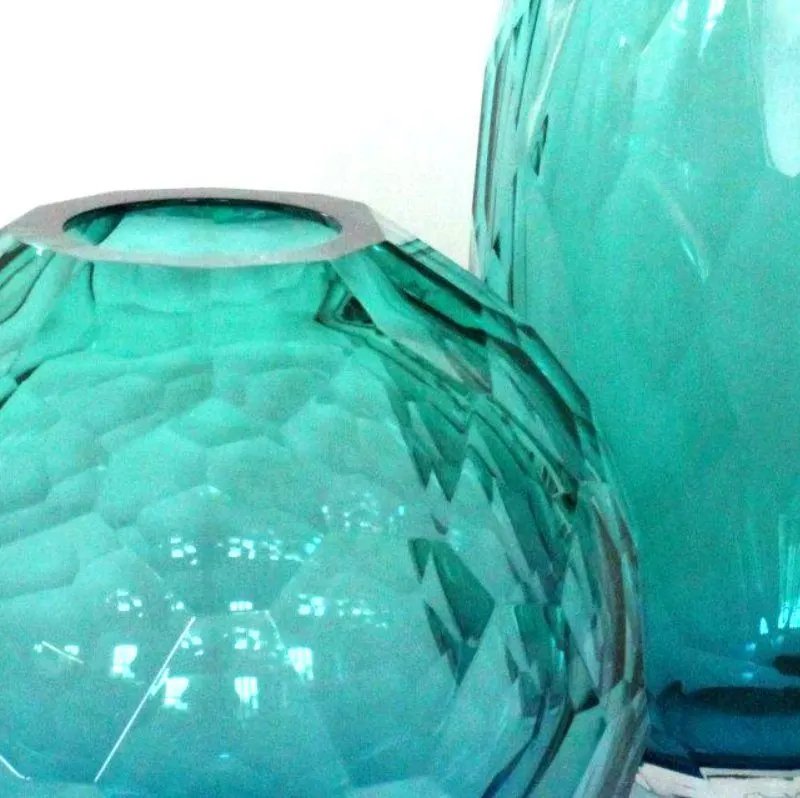
| Copper oxide | Turquoise, blue or green; red when treated differently |
| Manganese | Violet |
| Chromium oxide | Green |
| Cadmium sulfide | Yellow |
| Selenium, or selenium with cadmium | Pink to bright red |
| Gold | Ruby |
| Tin oxide, lead and tin | Opaque white, lattimo |
Gold ruby: red glass made with gold
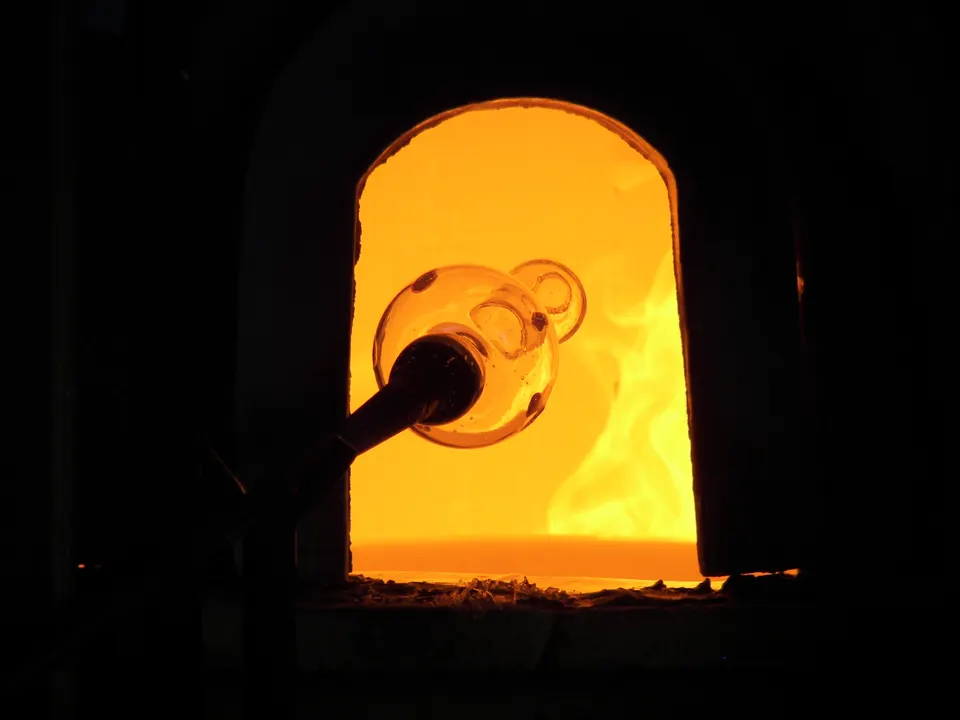
Gold ruby holds about ten parts of gold per million. The gold is present as particles far too small to see, and their size sets the color. Less gold gives the paler pink-red sold as cranberry glass. Glasses of this kind are called striking glasses, because the particles form in the glass itself during heat treatment.
Avventurina: the glass that glitters
Avventurina glitters. Copper oxide in the batch is reduced to metal, the pot is closed to air and held in a narrow range of heat, and copper crystals grow inside. The block is then broken open and the best part picked out near the center. The name refers to chance, since the result was never certain. Venetian records of it start in the 17th century. Similar glass appears earlier in Persia.
How colors are layered
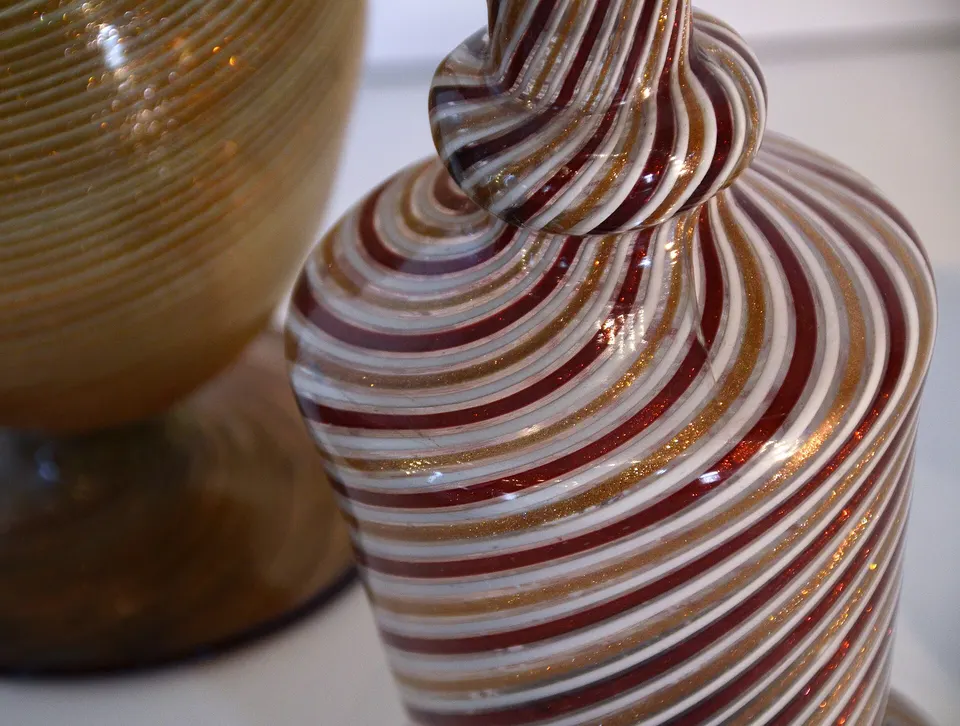
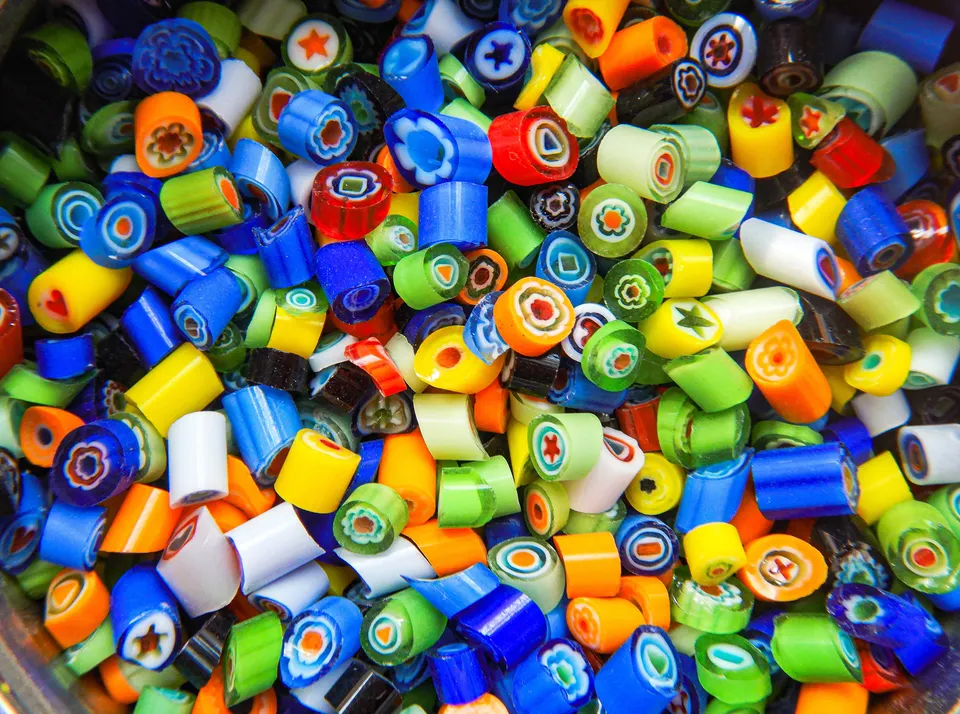
A furnace holds each color in its own small pot. Dipping the lump from one pot to the next puts a clear coat over a colored core, which is the sommerso method. The clear layer works as a lens, so the color inside appears larger and brighter from some angles. Pattern can be added with slices of cane or with threads.
Painted and enameled glass
Color can also sit on the surface. Enamel is powdered glass fired on at high heat, and it holds. Cold painting is never fired and may rub away with time, so wash such a piece with care.
Sources
Main photo: Chandelier flower. Photo: Mummelgrummel, CC BY-SA 3.0