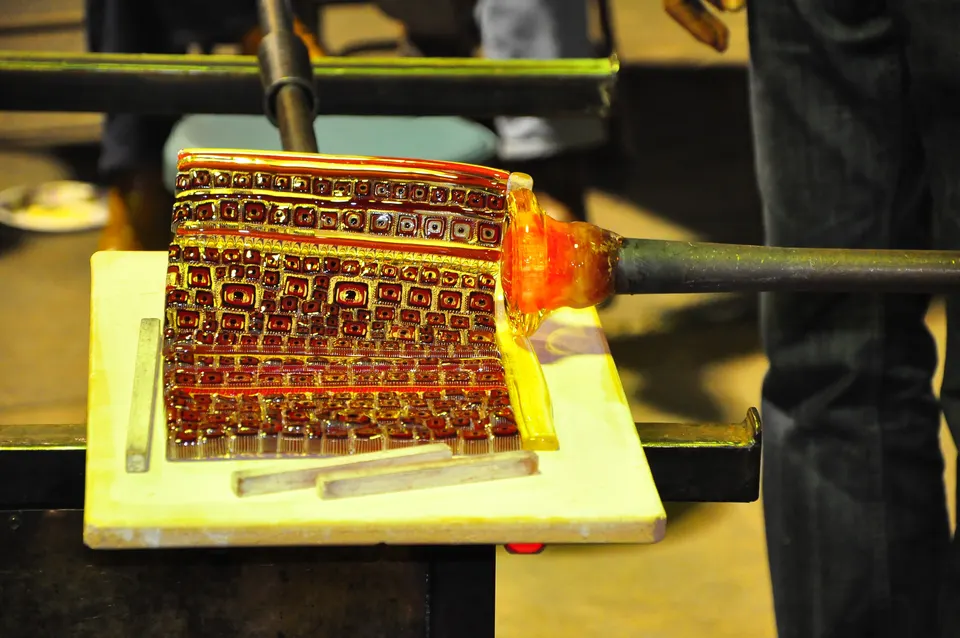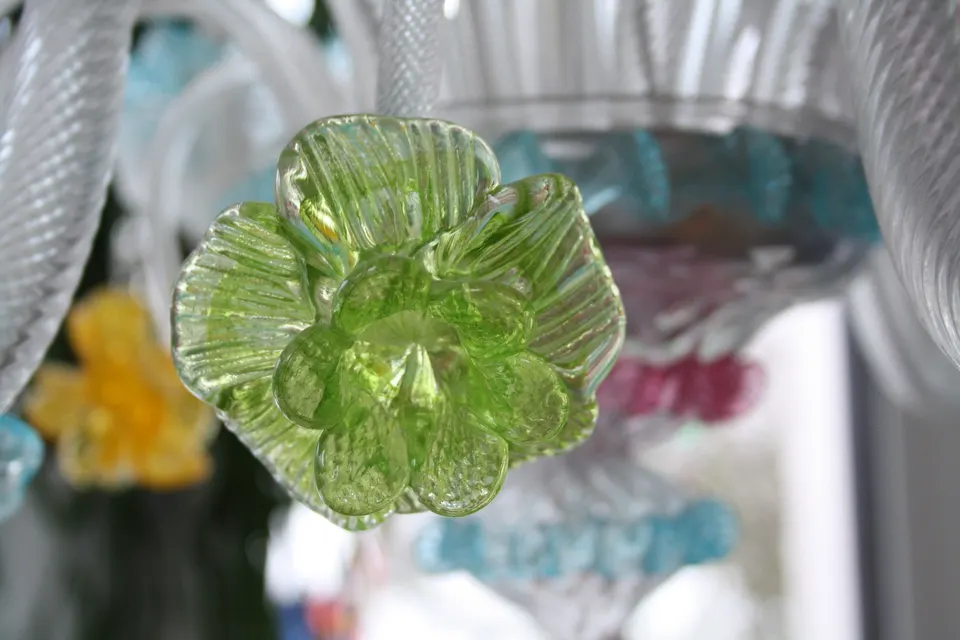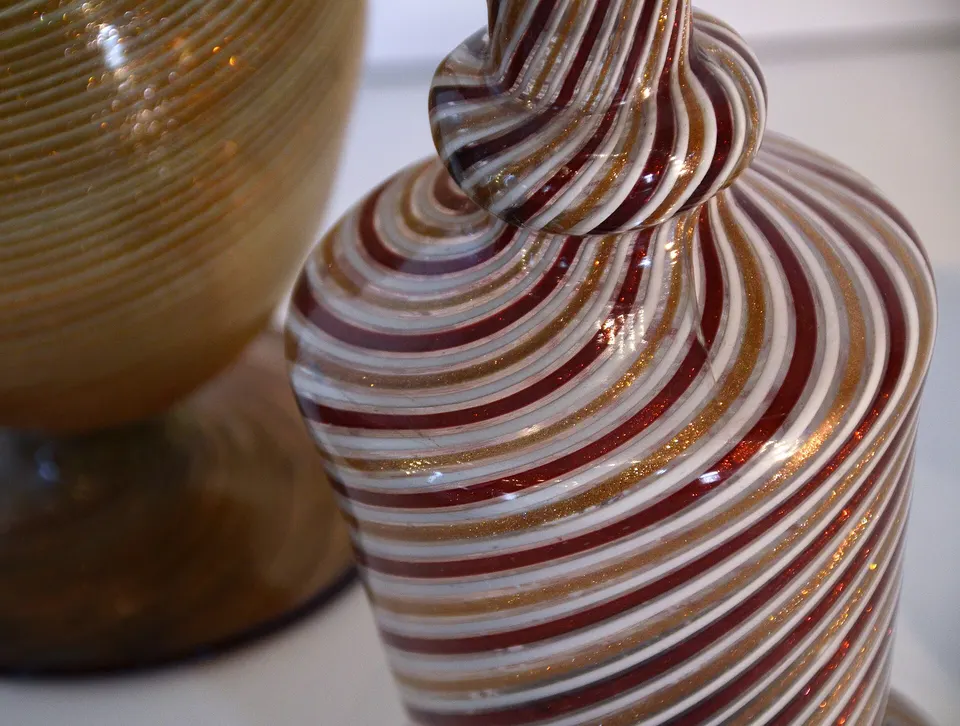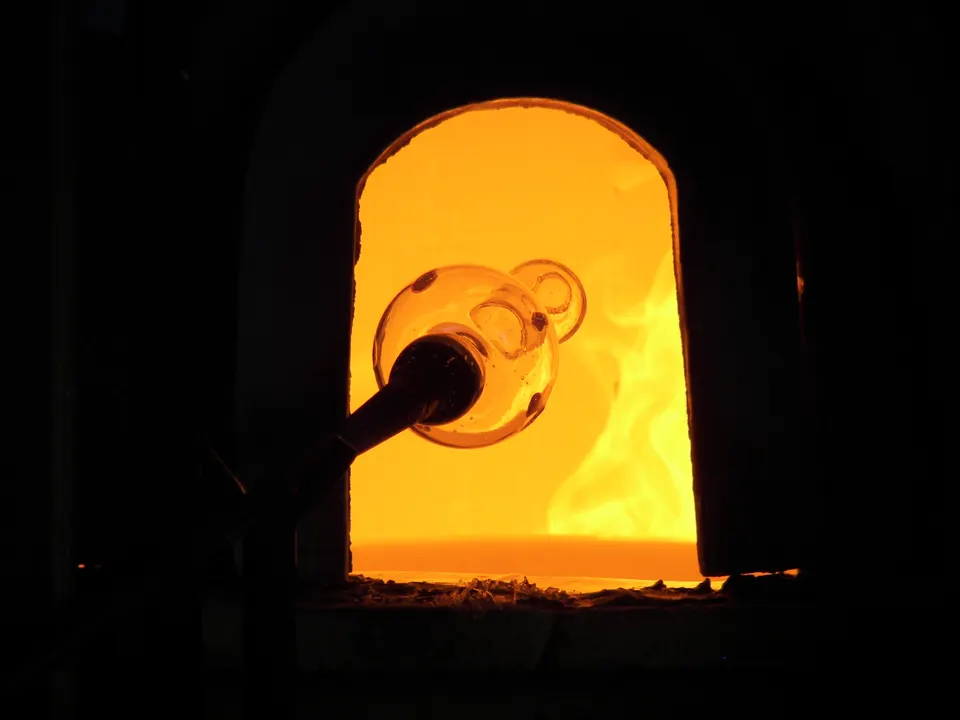
A Murano vase starts as a lump of molten glass on a hollow rod. The glassmaker rolls, blows and reheats it, moves it to a second rod to open the mouth, and then lets it cool slowly in an oven.
Melting the glass
The recipe is mostly silica sand, around 70 percent by weight, with soda to lower the melting point and calcium carbonate to keep the glass stable. The batch melts at about 1,400 °C (2,550 °F) and stays hot for hours so that gas bubbles can escape. The furnace then drops to around 1,100 °C, where the glass is thick enough to lift.
Murano glass is sodium based. Soda lengthens the working time, which is why the masters can pull and pinch details for so long between visits to the fire.
Blowing and shaping the vase
- Gather. The blowpipe picks up a lump, called bolo. Dipping into a second pot adds a layer, and that layer may carry color.
- Marver. The lump is rolled on a flat slab to cool the skin and make it even.
- First breath. An assistant blows while the master turns the pipe on the arms of the bench. Turning never stops, because soft glass sags.
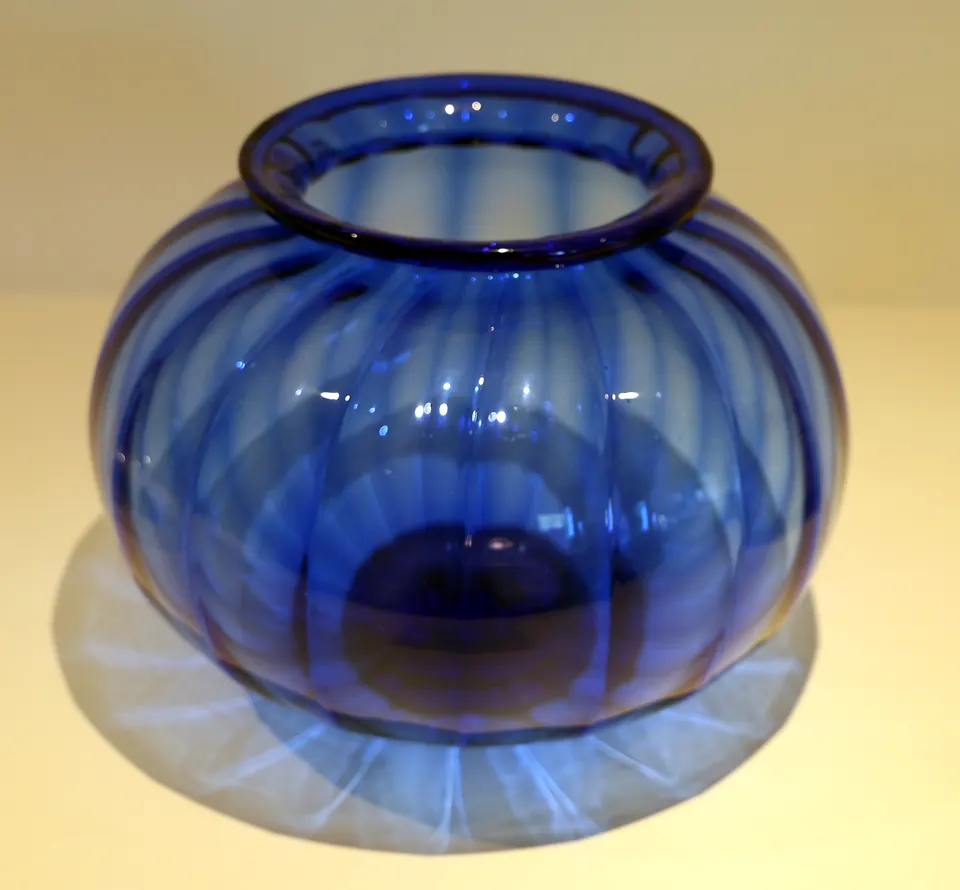
- Shape. Wet wooden blocks, spring-armed jacks and shears do the work. A mold may be used as well: blowing into a ribbed form is an old Murano practice.
- Transfer. A solid rod, the pontil, is stuck to the base and the pipe is knocked off. The broken end becomes the mouth.
- Finish. The piece is reheated, the rim is cut and opened, handles or threads are added hot.
Annealing: why glass must cool slowly
When the work ends the glass is still at 500 to 600 °C. Glass carries heat badly, so a thick wall cools faster outside than inside and locks up stress. An annealing oven brings the temperature down under control. The thicker the piece, the longer it takes, and the growth is steep: the safe cooling rate falls with the square of the thickness. A badly annealed vase can crack much later with no knock at all.
Cutting and polishing the cold glass
After cooling, the pontil scar may be ground away and the base polished. Some pieces get their whole surface cut on a wheel, as in battuto. Heavy vases such as Morning Sunshine or Deep Blue show why the cooling step matters, since each has a lot of glass in it.
Sources
Main photo: Furnace mouth, Murano. Photo: Wknight94, CC BY-SA 3.0