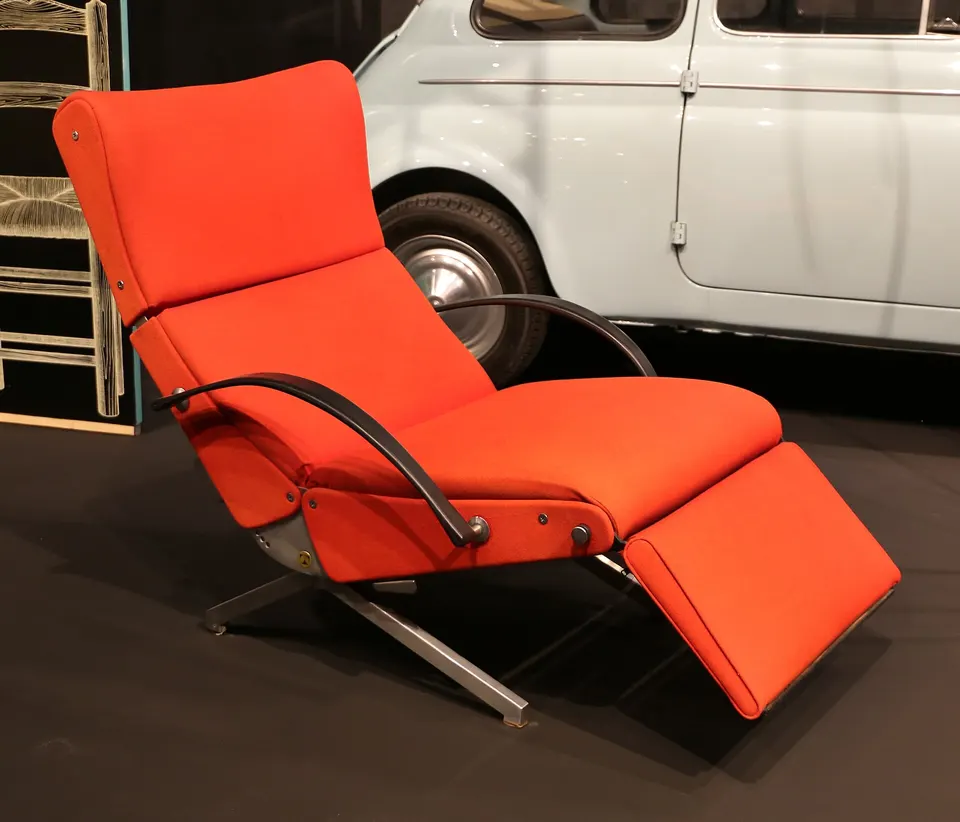
Italian mid century modern is furniture made in Italy from the late 1940s to the early 1960s. It joins old craft skills, such as woodwork and weaving, with new materials like foam rubber and bent plywood.
What makes Italian mid century furniture different
Modern design was widely accepted later in Italy than elsewhere. The Brooklyn Museum gives two reasons: the strong influence of ancient Rome and a slow economy. After the Second World War that changed fast. Workshops were good at wood, cane and metal, and factories offered rubber, plastic and steel.
The pieces have no single look. Some are thin and light. Others are soft and round. What they share is the method: take a familiar seat or table and try a new way to make it.
Six pieces and how to recognize them
| Piece | What was new | How to recognize it |
|---|---|---|
| Arabesco table, Carlo Mollino, about 1949 | One sheet of plywood bent into a wave | Wavy wooden body, glass top |
| Margherita chair, Franco Albini, 1950 | Cane weaving used for a modern armchair | Round woven body, no straight legs |
| Lady armchair, Marco Zanuso, 1951 | Foam rubber and elastic straps | Rounded arms, separate seat and back, slim metal legs |
| Luisa chair, Franco Albini, 1955 | Wood made thicker where parts join | Two flat planes on a frame like a trestle |
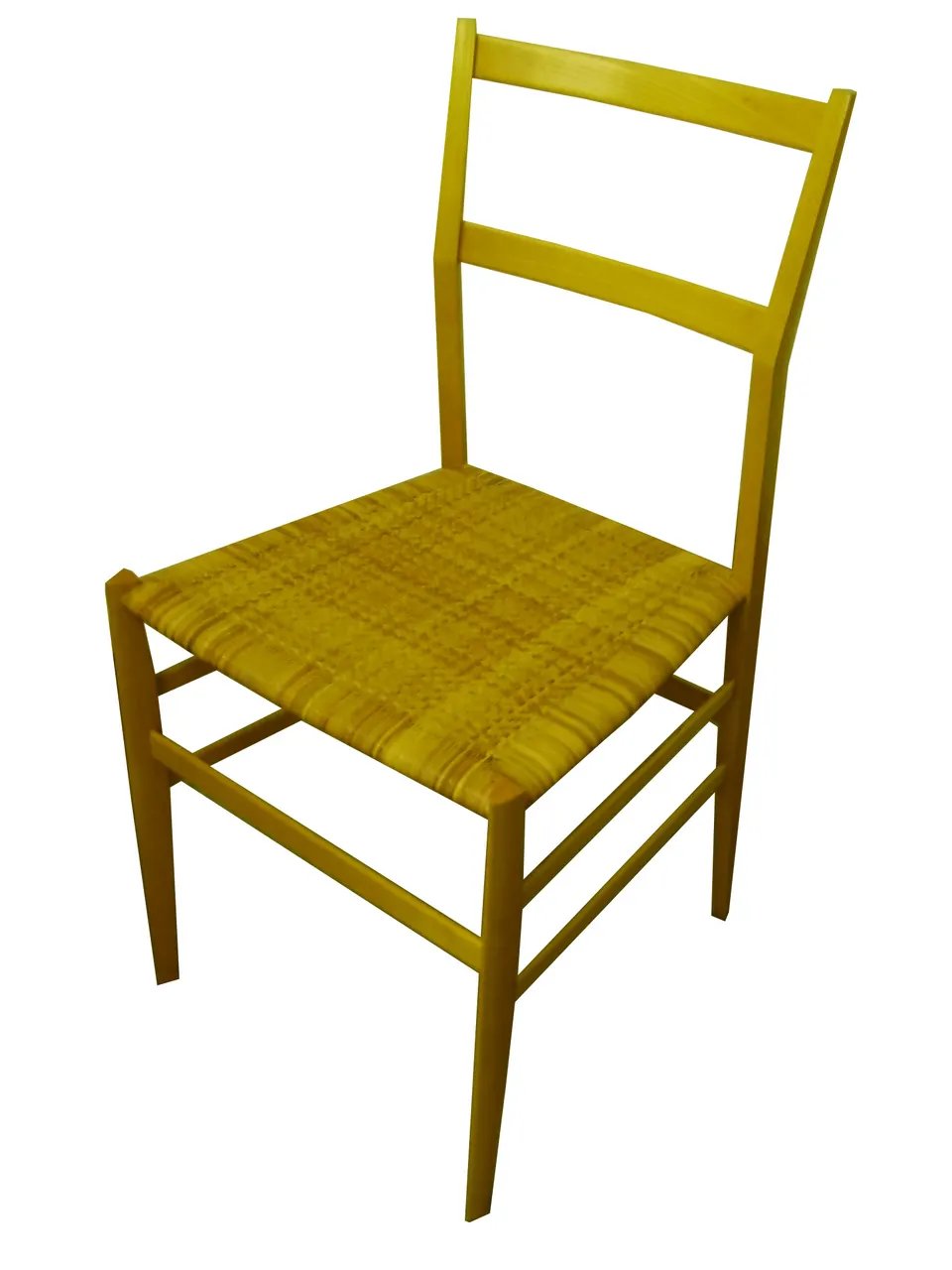
| Superleggera, Gio Ponti, 1957 | A full chair that weighs 1.7 kg | Ash frame, three-sided legs, woven seat |
| Carimate chair, Vico Magistretti, 1959 | A country chair in pop-art color | Bright red wood with a straw seat |
Two of these designers have their own pages here: Franco Albini and Vico Magistretti.
Foam rubber and the Lady armchair
In the late 1940s the tire company Pirelli had two new products: foam rubber and elastic tape. A group from Pirelli founded Arflex and asked the young architect Marco Zanuso to try them in seats. After two years of tests the firm showed its work to the public for the first time, at the Milan Triennale of 1951. The Lady armchair won a gold medal there.
In Lady, elastic straps do the work of springs. The structure is hidden in the seat, the back and the arms. Many armchairs made today also have foam over elastic webbing.
How the world found out about Italian design
The show “Italy at Work” opened at the Brooklyn Museum in 1950 and went to twelve places in the United States. It had hundreds of objects by more than 150 makers: furniture, glass, ceramics, textiles, shoes. Mollino's table was part of it.
In 1954 the Milan department store La Rinascente started the Compasso d'Oro, a design prize that still exists. In 1971 a letter from MoMA in New York called Italy the country that “has taken over where the Scandinavians left off.”
The next generation made furniture that argued with good taste. It is on the page about Italian radical design.
Using one piece at home
Many of these seats are open underneath, so they suit small rooms. Put a chair where its side can be seen, since the side view shows most of the work. Mixing it with newer or older things is fine, as the page on modern furniture myths explains. Keep straw and cane away from radiators.
Superleggera, Lady and Luisa are in production today. A chair made last month can be a correct one, so ask when it was made.
Sources
Main photo: P40 lounge chair by Osvaldo Borsani. Photo: Sailko, CC BY-SA 4.0