A rattan armchair with no legs, a radio pressed between two sheets of glass and a bookcase with hanging shelves: all three are by Franco Albini, an architect who worked in Milan. He used simple materials and left out every part a piece could do without.
Albini's career in Milan and Genoa
Franco Albini was born in 1905 in Robbiate, near Milan, and died in 1977. He finished his architecture studies in 1929, worked for Gio Ponti and then opened his own office. He belonged to the Rationalists, architects who wanted clear structure and no added ornament.
From 1952 he shared his studio with the architect Franca Helg, and several pieces sold under his name are by both of them. He also taught in Venice and Milan and won the Compasso d'Oro, the main Italian design prize, three times.
Six Franco Albini designs and how to spot them
| Design | What is new in it | How to recognize it |
|---|---|---|
| Radio in Cristallo | The working parts of a radio are left in view | Two upright sheets of clear glass with the parts between them |
| Veliero bookcase | Glass shelves held by rods instead of side panels | Wooden uprights, steel rods, thin glass shelves |
| Margherita armchair, Bonacina | An armchair woven from cane, without legs | A round open basket on a cane base |
| Luisa chair, Poggi, later Cassina | Wood is thicker only where the parts join | Trestle sides, seat and back like two floating boards |
| Cicognino side table | One leg grows into a handle | Three thin legs, round tray top, one tall leg |
| Infinito bookcase, with Franca Helg | Posts press between floor and ceiling | Open on both sides, works as a room divider |
Margherita: an armchair made of rattan cane
After the war Albini tried simple, low-cost materials. For Bonacina, a firm that works with cane, he designed the Margherita with Gino Colombini around 1950. The maker counts sixty canes and four bows of malacca, a strong type of rattan, all bent by hand with a flame, plus a loose foam cushion. Bonacina calls it the first Italian armchair without legs.
It received a gold medal at the Milan Triennale of 1951. Today it is one of the pieces people picture when they think of Italian mid-century modern.
Luisa: fifteen years of work on one chair
Albini returned to the Luisa again and again over about fifteen years. The final version won the Compasso d'Oro in 1955. Each side is a trestle, and the seat and back are two flat planes held between them. The wood swells a little at every joint, where the parts meet.
The current edition is made in solid ash or walnut. If you want to know how solid wood differs from veneer, see furniture materials compared.
Why his bookcases and paintings seem to float
Albini built the first Veliero in 1940 as a single piece for his own home in Milan. The books appear to hang in the air. A version for regular production came only in 2011, after long tests at Cassina.
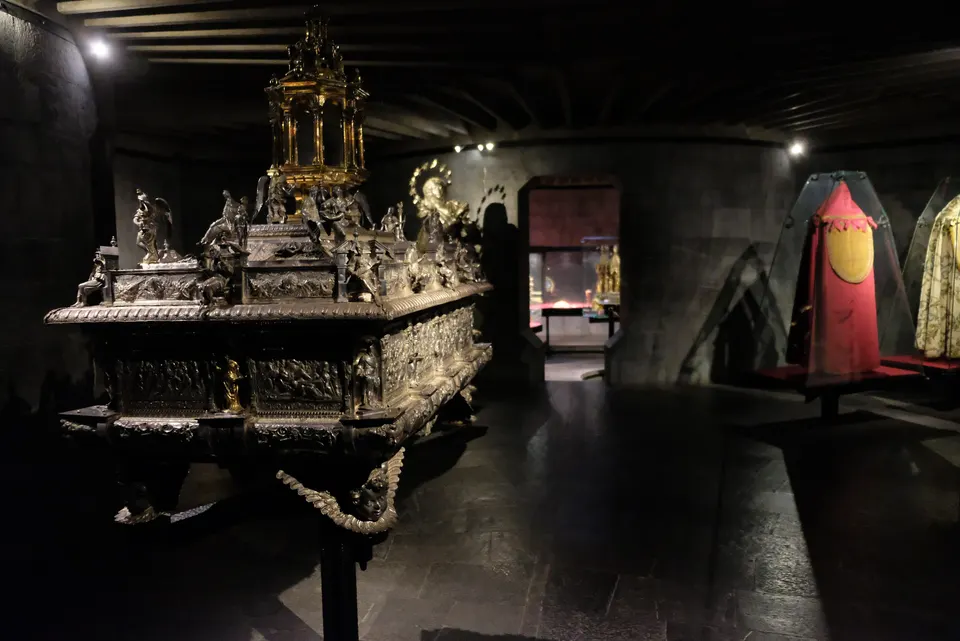
He used the same approach in museums. At Palazzo Bianco in Genoa, reopened in 1950, the walls were light gray and the stands were made of plain industrial materials painted black. Many frames that had been added later were removed, and some pictures stood on old stone capitals with concrete bases. In the nearby Palazzo Rosso some paintings were placed on arms that could be moved out from the wall.
At home, a two-sided bookcase like the Infinito can split a room and still let light through. That is useful in a small living space.
Where to see Franco Albini's work today
- Genoa: the Palazzo Rosso and Palazzo Bianco galleries.
- Milan: stations of metro lines 1 and 2, designed with Franca Helg and the graphic designer Bob Noorda. The curved handrails are part of the project.
- Rome: the Rinascente department store building.
- New York: the Museum of Modern Art has the Margherita and the Luisa in its collection.
His place among other architects who made furniture is in the overview of Italian furniture designers.
Sources
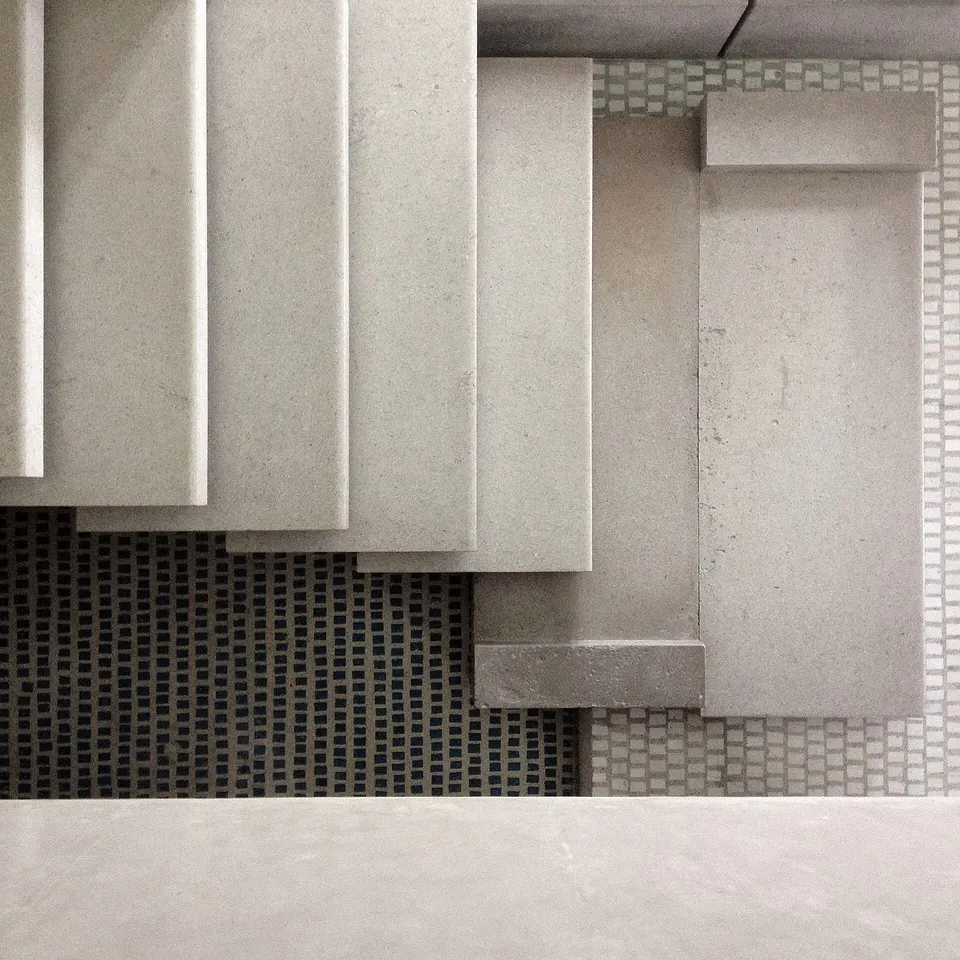
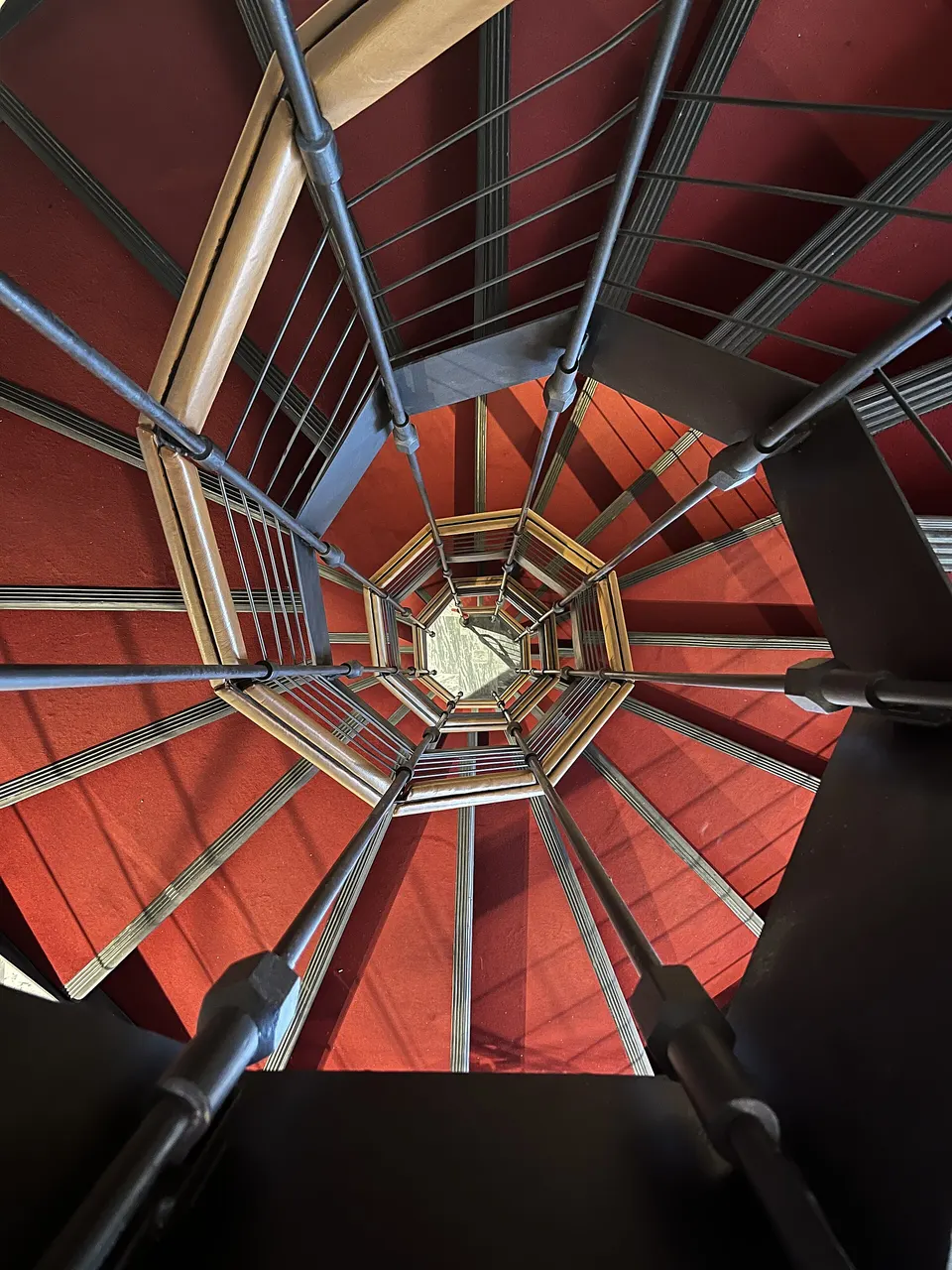
Main photo: Staircase by Franco Albini, Palazzo Rosso, Genoa. Photo: Musei di Strada Nuova, CC BY-SA 4.0