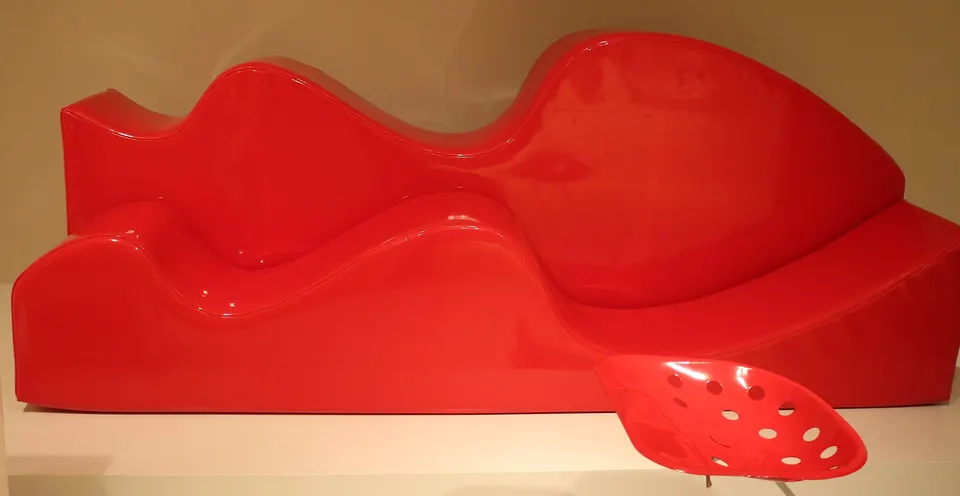
Italian radical design is a movement of young architects who used furniture to argue with good taste and with shopping itself. It began in Florence in 1966 and lasted until the middle of the 1970s.
How radical design started
In December 1966 two groups of young architects from Florence, Archizoom and Superstudio, put on a show called Superarchitettura in Pistoia. It had prototypes and projections. The name “radical” came a few years later from the critic Germano Celant.
Their question was simple. If a chair is only one more thing to buy, why design it? Some answered with drawings of impossible cities. Others made seats that let you sit, lie or fall in a new way. An older designer gave them an example, and you can read about him on the page about Ettore Sottsass.
The main groups
- Archizoom, Florence, until 1974. Andrea Branzi and friends. Known for the Superonda sofa and No-Stop City, a plan for an endless city.
- Superstudio, Florence, until 1978. Known for the Continuous Monument, a grid across the whole world, and for the Quaderna tables.
- Studio 65, and the trio Ceretti, Derossi and Rosso, both from Turin. Pop furniture in foam, made by Gufram.
- UFO, 9999 and Zziggurat, also from Florence.
- Gaetano Pesce, Ugo La Pietra and Riccardo Dalisi, under their own names.
Famous radical furniture
| Piece | Designer and maker | How to recognize it |
|---|---|---|
| Superonda sofa, 1967 | Archizoom, Poltronova | A block cut by a wave |
| Sacco, 1968 | Gatti, Paolini, Teodoro, Zanotta | The original bean bag, shaped like a pear |
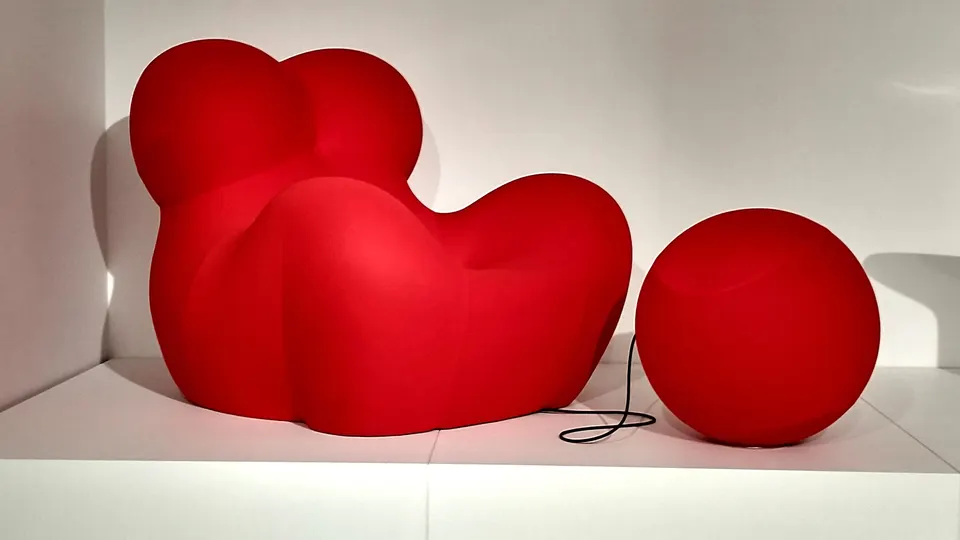
| UP armchair, 1969 | Gaetano Pesce, C&B Italia | Big round body with a ball on a cord |
| Joe sofa, 1970 | De Pas, D'Urbino, Lomazzi | A giant baseball glove in leather |
| Bocca sofa, 1970 | Studio 65, Gufram | A pair of lips, after Dalí's portrait of Mae West |
| Quaderna table, 1970 | Superstudio, Zanotta | White laminate with a grid of black squares |
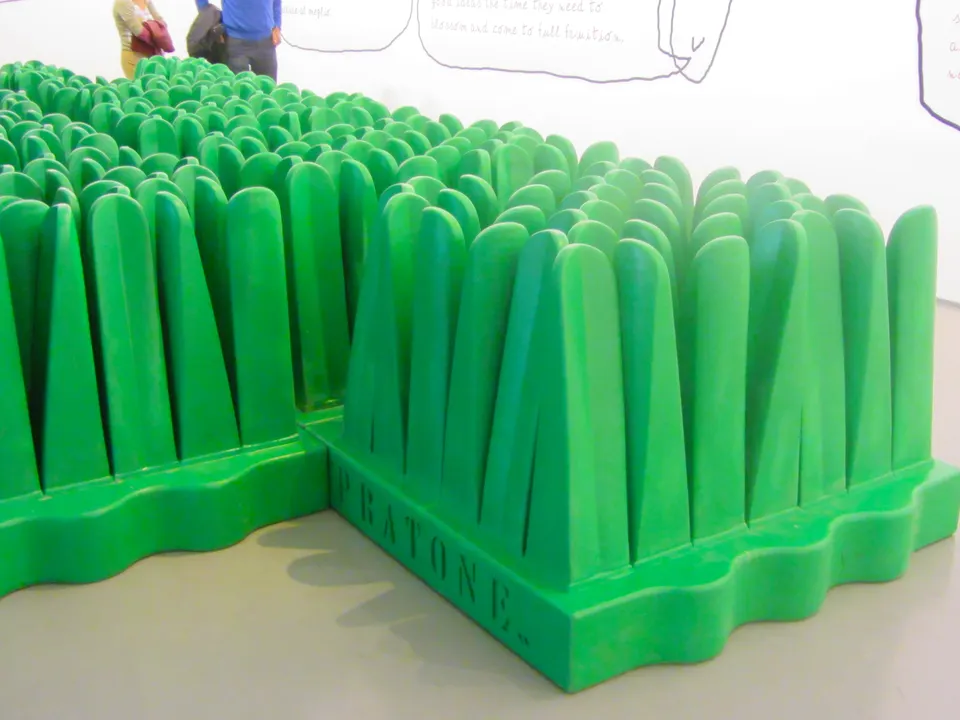
| Pratone, 1971 | Ceretti, Derossi, Rosso, Gufram | A patch of giant green foam grass |
Pesce's chair was meant as a comment on the life of women. One reading sees a mother and her child, another sees a ball and chain. His later work is on the page about Gaetano Pesce.
New materials: foam and printed laminate
Polyurethane foam was then widely used as packing in transport. Gufram, founded near Turin in 1966, turned it into furniture. A block of foam can be a cactus, a rock or a lawn, which is why these pieces look like giant toys.
Superstudio went the other way. Quaderna is all straight lines: a honeycomb core covered in white laminate, with black lines every 3 cm. The same surface covers tables, benches and cabinets, so no piece looks more important than another.
The museum show in New York
In 1972 the Museum of Modern Art opened “Italy: The New Domestic Landscape,” directed by Emilio Ambasz. Household objects stood in the garden, and a set of full-size rooms was built for the show. Some designers tried to make better rooms. Four rooms were by people who believed that there were already too many objects.
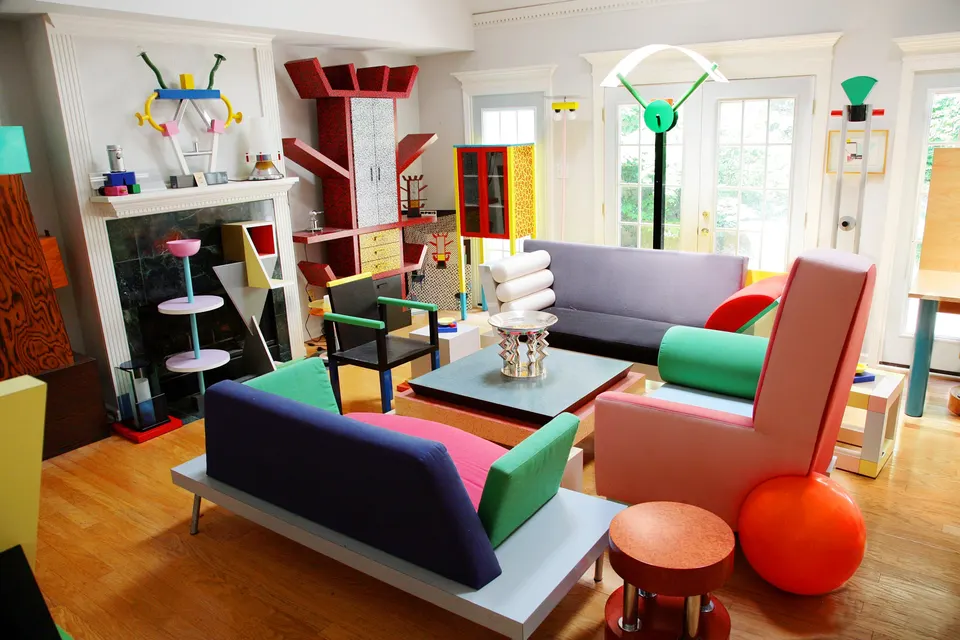
Radical design led to Studio Alchimia in Milan and then to Memphis design. For the calmer side of Italian furniture, see how to recognize modern Italian furniture.
Sources
Main photo: Superonda sofa by Archizoom. Photo: Sailko, CC BY 3.0