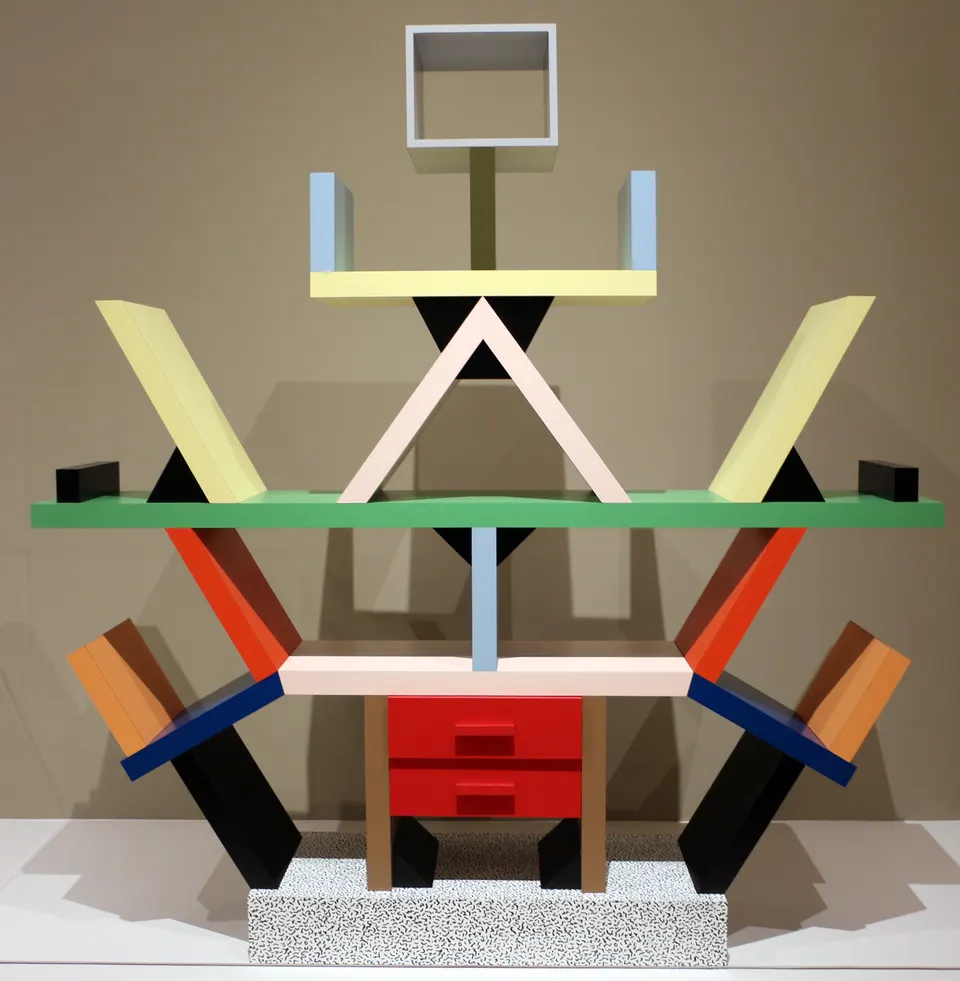
Ettore Sottsass was an Italian architect and designer known for bold color. His best-known works are the red Valentine typewriter, the Ultrafragola mirror and the furniture he made with the Memphis group.
Ettore Sottsass: life and career
Sottsass was born in Innsbruck in 1917 and grew up in Turin, where his father worked as an architect. He graduated in architecture in Turin in 1939 and opened his own studio in Milan in 1947. He worked in ceramics, painting, photography, jewelry and glass as well as furniture.
Two long jobs began in the 1950s. At Olivetti, from 1956, he designed office machines. At Poltronova, from 1957, he advised a furniture maker and tried out ideas that came back later. In 1980 he founded Memphis, and in the same year the firm Sottsass Associati. He left Memphis in 1985 and died in Milan in 2007. The other eight names in this guide are on the page about famous Italian furniture designers.
Key works by Ettore Sottsass
| Piece | What was new | How to recognize it |
|---|---|---|
| Elea 9003, Olivetti, 1959 | The first Italian mainframe computer | A room-size machine, now seen in museums and photos |
| Superbox cabinet, Poltronova, 1966 | A cupboard treated as a sculpture | Box covered in bold colored laminate |
| Valentine typewriter, Olivetti, 1969 | An office machine as a personal object | Red plastic body, black keys, orange spool holders, sleeve case |
| Ultrafragola mirror, Poltronova, 1970 | Mirror and lamp in one | Tall wavy frame that glows pink |
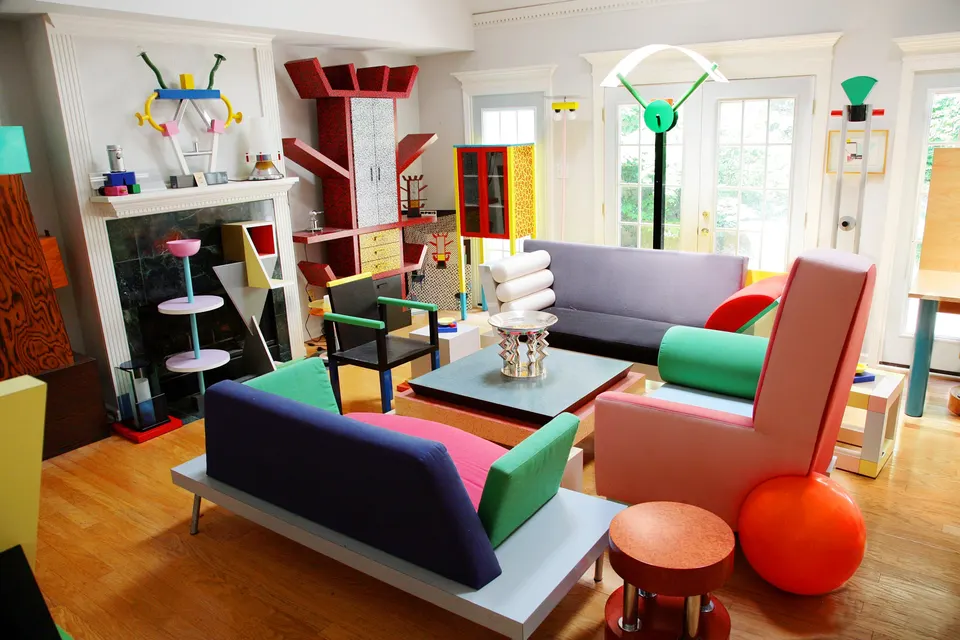
| Carlton room divider, Memphis, 1981 | Bookcase, divider and drawers together | Straight and slanted colored shelves on a flat base |
| Casablanca sideboard, Memphis, 1981 | Storage with slanted arms for wine bottles | Patterned laminate, winged shape |
The Valentine typewriter
Sottsass designed the Valentine with the British designer Perry King. It went into production in 1969. The body is ABS plastic in strong red. The machine slips into a red plastic case and locks with two black rubber tabs, so you can carry it like a small suitcase.
It was not a commercial success. The V&A calls it technically mediocre and expensive, yet it became a design classic because of the emotional connection it made with users. It is now in the collections of the V&A, MoMA and the Design Museum in London.
Furniture before and after Memphis
The Superbox cabinets of the 1960s already had the flat bright laminate that people link with the 1980s. From the late 1960s Sottsass worked with younger groups such as Superstudio and Archizoom, part of Italian radical design. He said he did not want to do any more consumerist products.
Ultrafragola comes from a set called Mobili Grigi, or grey furniture, shown in Milan in 1970. It was the only piece of the set to go past the prototype stage. Poltronova makes it today in molded white plastic with LED lighting.
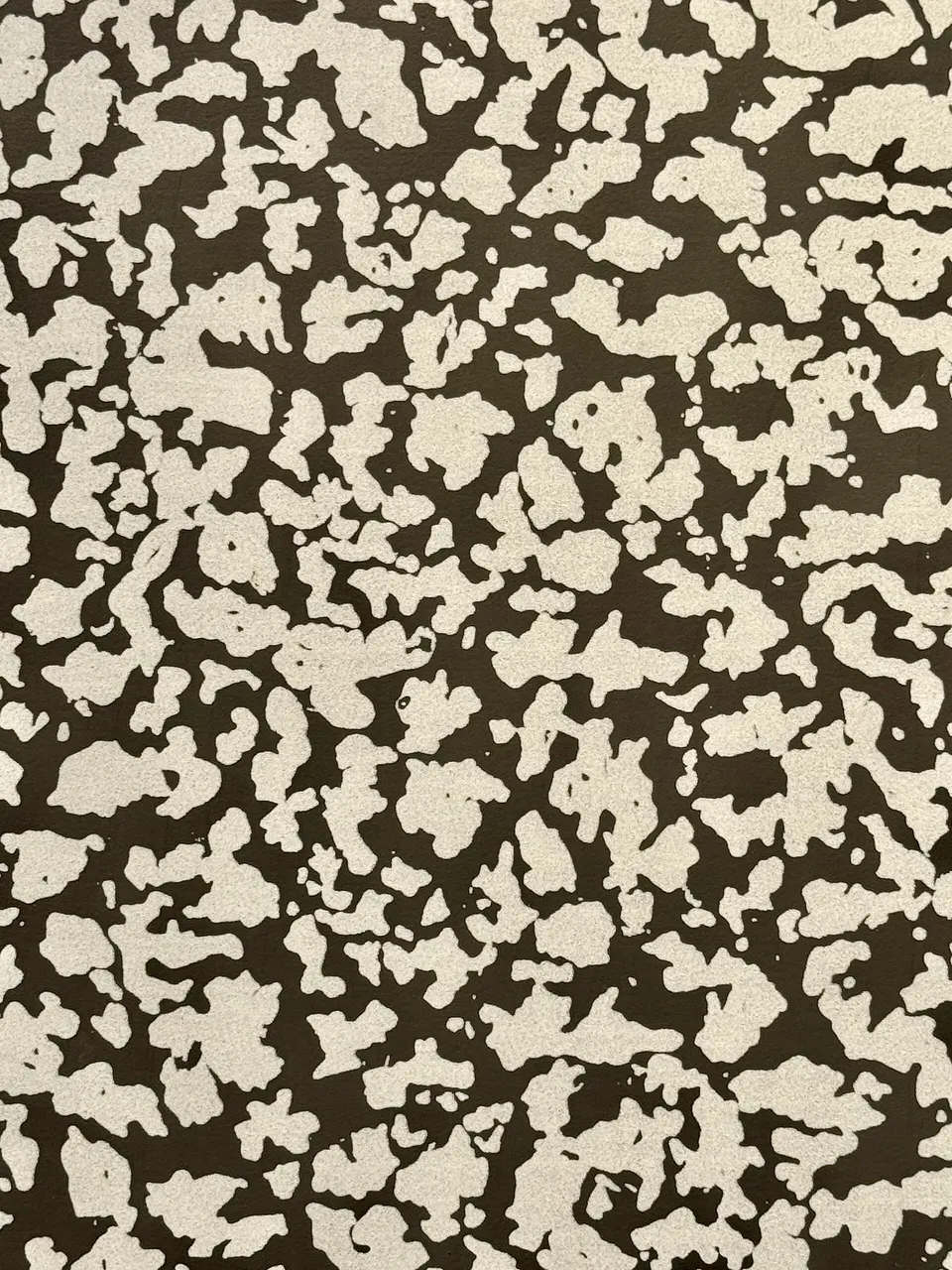
Memphis took these tests to a bigger public. Its name came from a Bob Dylan song that played at the first meeting. Sottsass wanted the work to be “radical, funny, and outrageous.” He also drew Bacterio, a squiggle pattern based on the surface of a temple in Madurai, India. The group and its other members have their own page: Memphis design.
How Sottsass used color and materials
He put everyday surfaces on costly furniture. Plastic laminate was the material of American diners and wipe-clean kitchen tables. Used on a sideboard for the living room, it broke the rules of good taste. The V&A notes that Memphis pieces were still too expensive for the average customer.
Glass gave him another way to use color. He designed pieces for Venini on Murano. To understand where such colors come from, read how color gets into glass.
Museums with works by Sottsass
The Metropolitan Museum and MoMA in New York, the Philadelphia Museum of Art and the Brooklyn Museum own works by him. The National Gallery of Victoria in Melbourne has a Carlton. In London, Young V&A shows a Casablanca sideboard, and the Design Museum has a Valentine.