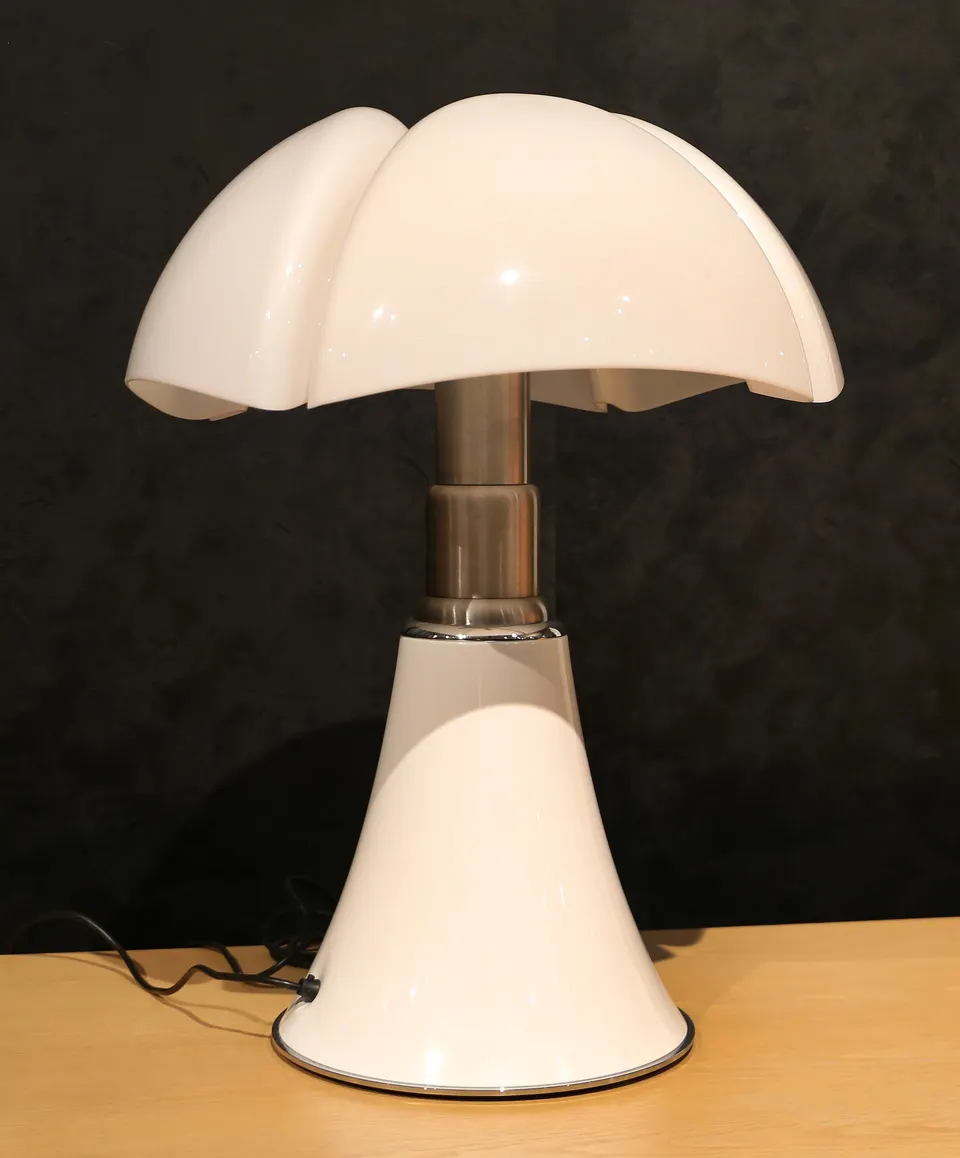
Seven famous Italian lamps are Arco, Taccia, Eclisse, Parentesi, Tizio, Atollo and Tolomeo. Each has a simple idea behind it, such as light over a table without a hole in the ceiling.
Seven lamps to know
| Lamp | Designer, maker | How to recognize it |
|---|---|---|
| Arco, 1962 | Achille and Pier Giacomo Castiglioni, Flos | Marble block, long steel arch, metal dome |
| Taccia, 1962 | The same brothers, Flos | Glass bowl on a grooved metal column |
| Eclisse, 1965 | Vico Magistretti, Artemide | Three half-spheres, one of them turns |
| Parentesi, 1971 | Castiglioni and Pio Manzù, Flos | Steel cable from ceiling to floor, bent tube |
| Tizio, 1972 | Richard Sapper, Artemide | Two thin arms, two counterweights, small head |
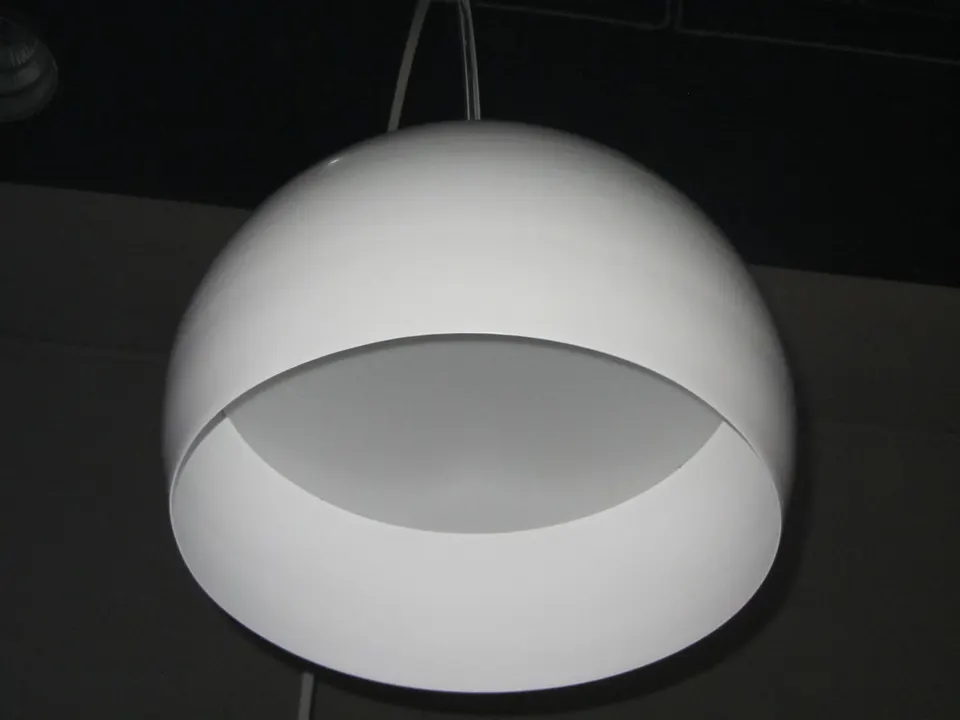
| Atollo, 1977 | Vico Magistretti, Oluce | Dome above a cylinder with a cone-shaped tip |
| Tolomeo, 1986 | De Lucchi and Fassina, Artemide | Aluminum arms with thin steel cables outside |
How Arco stands up is explained on the page about Achille Castiglioni.
The ideas behind these lamps
Taccia came from the idea of a ceiling lamp turned upside down. It gives reflected light. The base looks like a column, but it was inspired by a radiator, and its first job was to get rid of heat.
Eclisse works like an eclipse. Magistretti thought of it on the Milan subway, remembering the lantern in Les Misérables. You turn the inner half-sphere to cover the bulb as much as you like. Newer ones have a small wheel, so you do not touch the hot part.
Tizio has no wire along its arms. The arms themselves carry a safe 12 volts, and two counterweights hold the lamp where you leave it. Tolomeo uses springs hidden in the arms, and its head turns all the way around. Parentesi stays up through friction between the bent tube and the cable.
Makers of Italian lamps
- Arteluce, founded in 1939 by Gino Sarfatti. His lamps had numbers for names. Table lamps start at 500, floor lamps at 1000, hanging lamps at 2000.
- Oluce, founded in 1945.
- Artemide, founded in 1959 by Ernesto Gismondi and Sergio Mazza.
- Flos, founded in 1962, the year of Arco and Taccia.
Many of these lamps were drawn by architects. See Vico Magistretti and Gae Aulenti, who designed the Pipistrello.
Which type of lamp for which place
| Place | Type of light | Example |
|---|---|---|
| Dining table with no ceiling outlet | From above, on an arm | Arco |
| Desk | Narrow, easy to move | Tizio, Tolomeo |
| Bedside | Small, can be covered | Eclisse |
| Dark corner | Sent up and reflected | Luminator type |
| One picture or plant | A spot you can slide | Parentesi |
| Sideboard or hall | Soft, from under a dome | Atollo |
Luminator is a type as well as a name: a floor lamp that sends all its light to the ceiling. Pietro Chiesa made one in 1933. It needs a pale ceiling to work well.
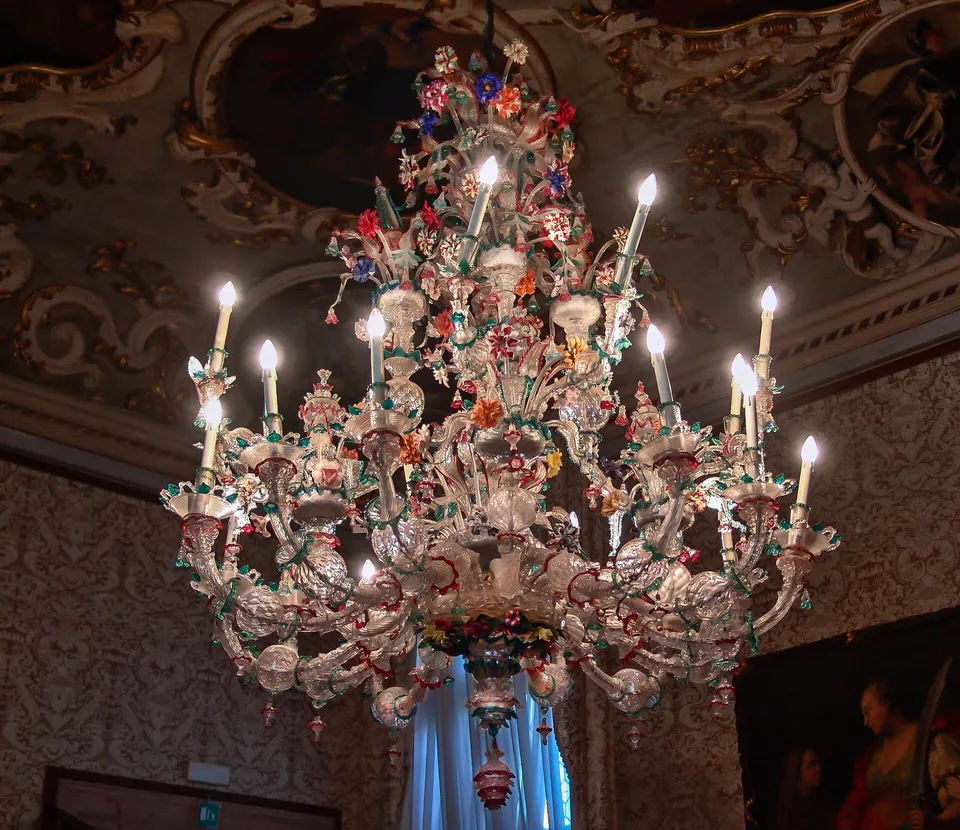
One lamp seldom lights a whole room. The page on light, texture and scale in a living room shows how to spread several. For glass lamps, see Murano chandeliers.
Old and new versions of the same lamp
Some lamps changed while they stayed in production. Tizio was drawn for a halogen bulb and later got an LED version. So did Arco, in 2012. This helps to date a lamp.
Lookalikes are common, and the maker of Arco has gone to court over one. If you buy second-hand, look for the maker's label, and have old wiring checked by an electrician before use.
Sources
Main photo: Pipistrello lamp by Gae Aulenti. Photo: Sailko, CC BY-SA 4.0