Gae Aulenti was an Italian architect known for the Pipistrello lamp, the glass table on wheels and the Musée d'Orsay in Paris. She designed furniture to go with the rooms around it.
Who was Gae Aulenti?
Gaetana Aulenti, called Gae, was born in 1927 in Palazzolo dello Stella, in the northeast of Italy. She studied architecture at the Politecnico di Milano. From 1955 to 1965 she worked at the magazine Casabella, at first as a graphic designer.
Many modern architects of the time rejected the past. Aulenti joined the Neoliberty side, which saw old and new styles as connected. She also designed exhibitions, stage sets and showrooms, and said she tried to make her work “unclassifiable.” She died in Milan in 2012. Among the famous Italian furniture designers in this guide she is the only woman.
Gae Aulenti's furniture and lamps
| Piece | What was new | How to recognize it |
|---|---|---|
| Sgarsul chair, Poltronova, 1962 | A modern answer to Thonet's rocking chair | Bent beech frame, hanging leather seat with soft padding |
| Locus Solus set, Poltronova, 1964 | Full garden set named after a novel | Chairs, table, lounger and lamp in steel tube |
| Giova lamp, FontanaArte, 1964 | A lamp that is also a vase | Glass, with a top that can hold flowers |
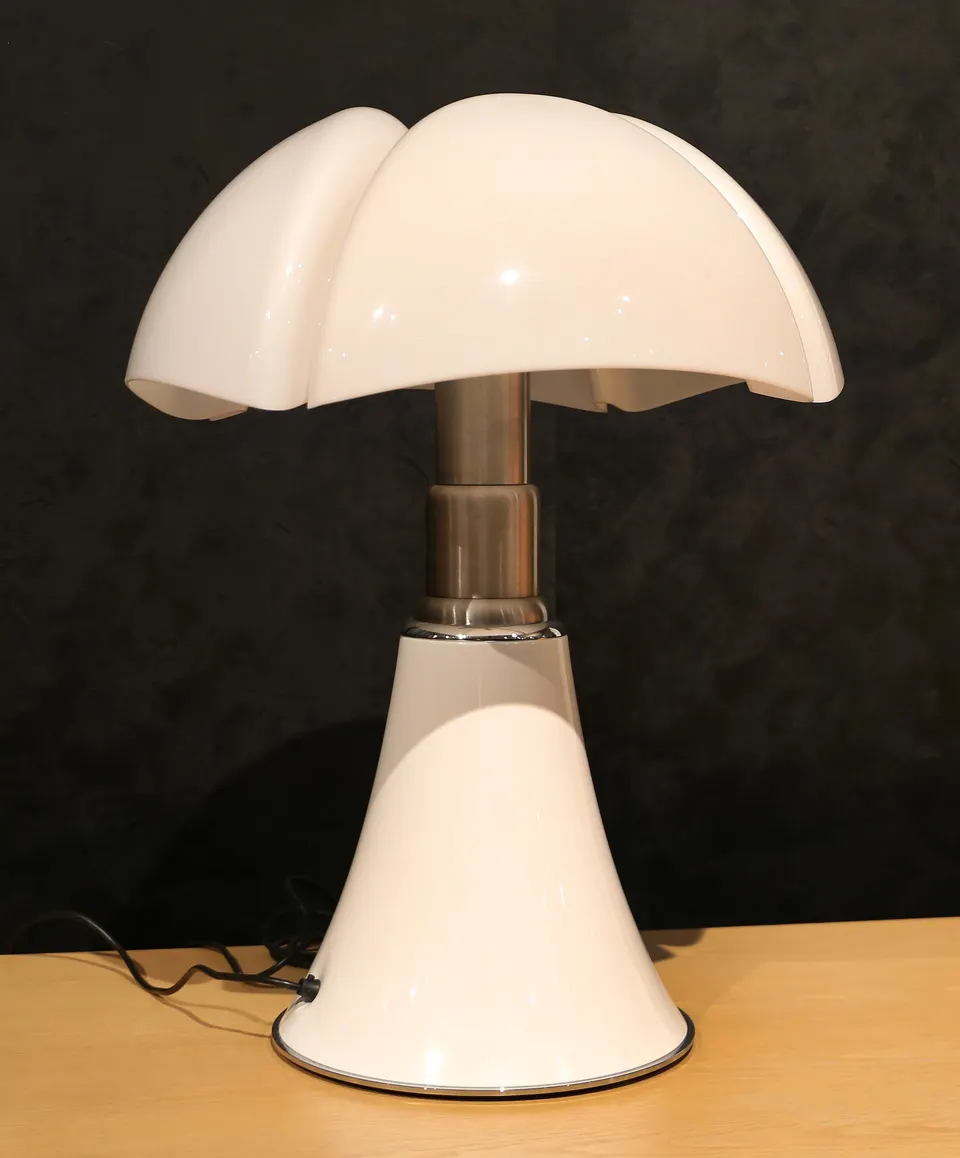
| Pipistrello lamp, Martinelli Luce, 1965 | One lamp for table and floor | White shade like bat wings, cone base, sliding neck |
| Jumbo table, Knoll, 1965 | A table built like a small piece of architecture | Massive marble |
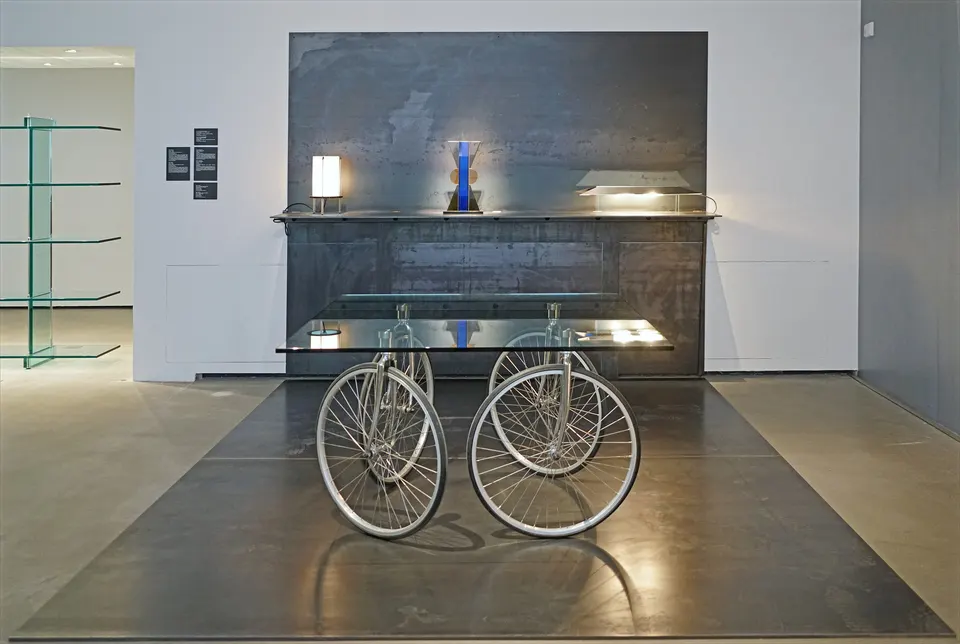
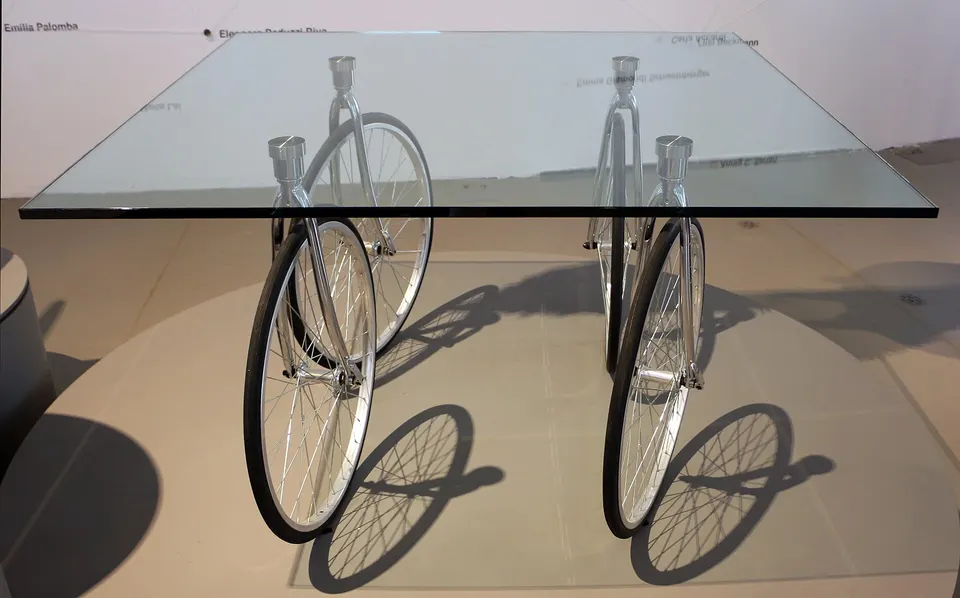
| Table on wheels, FontanaArte, 1980 | Factory wheels in a living room | Thick glass top bolted to rubber wheels |
How the Pipistrello lamp works
Pipistrello means bat in Italian, and the shade spreads like wings above the stem. Aulenti planned it for the Olivetti shop in Paris, which she redesigned with white laminate, gentle curves and chrome steel. The lamps stood on its different floors.
The neck is a metal tube that slides up by about 20 cm. Low, the lamp works on a table. High, it can stand on the floor. The shade is methacrylate, a plastic made milky white here, and it hides the light sources. Martinelli Luce still makes it. The copy in the Centre Pompidou is 66 cm high and 55 cm across. More examples are in famous Italian lamps.
The glass table on wheels
Tavolo con Ruote means table with wheels. The top is one sheet of toughened glass, 15 mm thick, with beveled edges. Under it, industrial wheels of rubber and black metal are bolted straight to the glass. There is no frame.
The one in Paris is 120 cm square and only 25 cm high. It rolls where you need it and lets you see the rug or floor below. If you are thinking of glass at home, read glass in a room: light and balance first.
Aulenti's museums
Her best-known project is the Musée d'Orsay. The Gare d'Orsay was built as a railway station for 1900. Aulenti designed the new museum inside it, which opened in December 1986.
Other museums followed: rooms for the Centre Pompidou, Palazzo Grassi in Venice, the national art museum in Barcelona and the Asian Art Museum in San Francisco. For Palazzo Grassi she worked with Piero Castiglioni on the Castello lighting system, which won the Compasso d'Oro in 1995.
How she worked and where to see her pieces
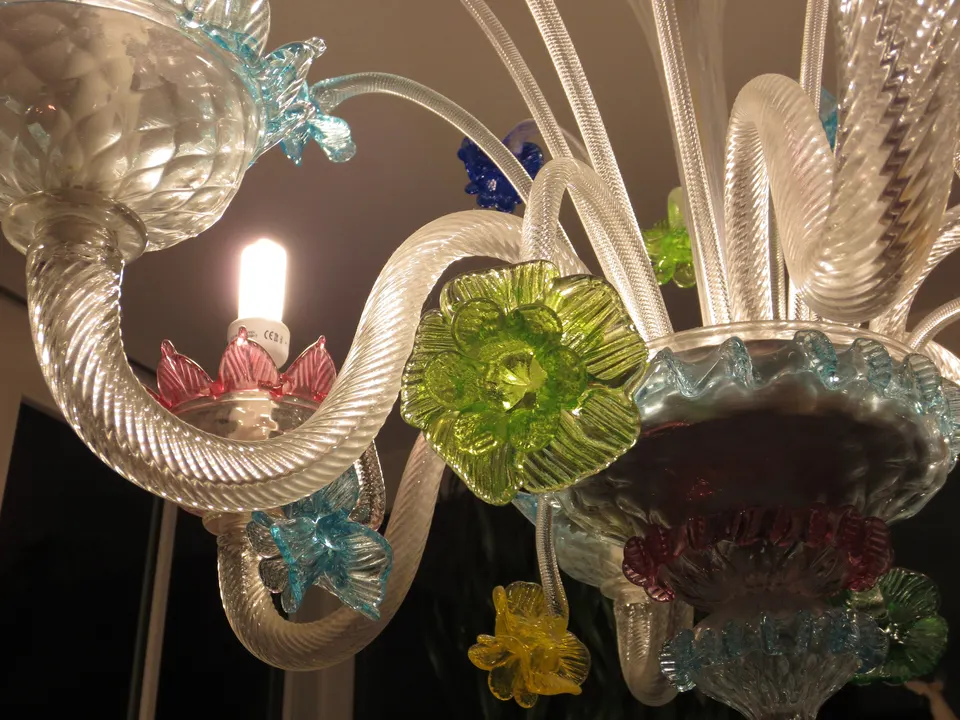
Aulenti cared more about solving a given problem than about keeping one style. Still, most of her pieces have a strong outline that is easy to remember. She moved from material to material: beech, steel tube, marble, plastic and glass. Between 1995 and 2008 she designed vases for Venini, the glassworks on Murano. Its methods are covered in how Murano glass is made.
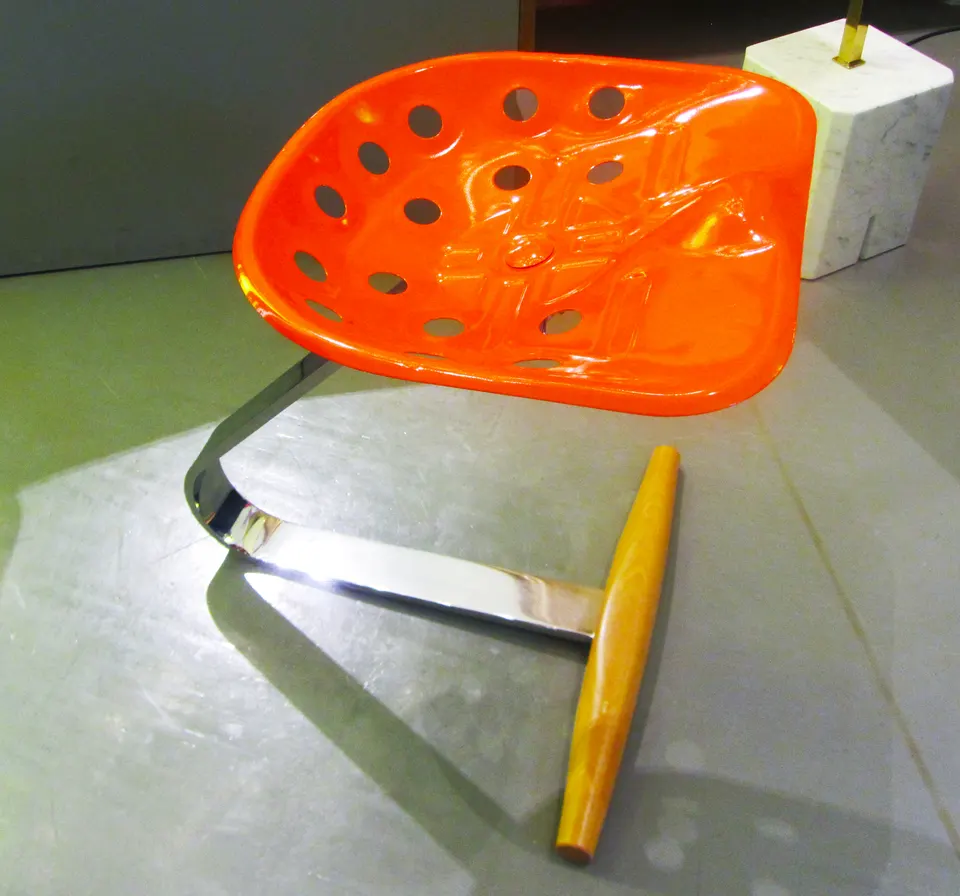
The Centre Pompidou owns a large group: Pipistrello, Ruspa, Rimorchiatore, the table on wheels and the folding April chair. Her drawings are kept in the Archivio Gae Aulenti in Milan and at Virginia Tech. The Musée d'Orsay shows her work at full size.
Sources
Main photo: Tour table by Gae Aulenti. Photo: Sailko, CC BY 3.0