Glass keeps a room light and open, but it also reflects lamps, shows fingerprints and must be a safe type wherever someone could fall against it. Here is how to choose the right glass and where to use it.
How to avoid glare
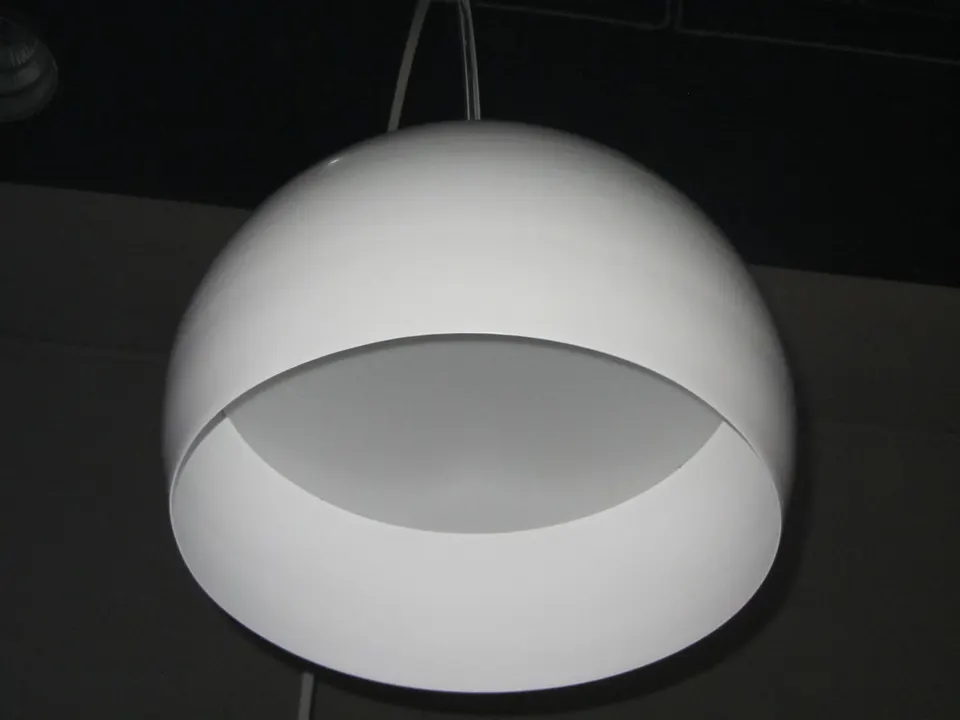
Before placing a glass table or cabinet, look at where the windows and lamps are. A horizontal top mirrors the ceiling light straight into your eyes. Moving a pendant, choosing a shade that hides the bulb, or turning the table a quarter often fixes it. Satin or tinted glass is calmer than clear.
Which type of glass is safe
| Type | Behavior | Typical use |
|---|---|---|
| Annealed | Breaks into large sharp pieces | Vases, picture frames, old tabletops |
| Tempered | About four times stronger; falls into small granules | Tabletops, shower doors, shelves |
| Laminated | Cracks in a web and stays on its plastic layer | Railings, partitions, skylights |
Glass partitions, doors and stairs
A glass partition can split a room and leave the daylight in both halves. You still see everything behind it, and sound is only partly stopped. On stairs, a glass railing replaces a row of balusters with one clear plane. Both jobs need safety glass and correct fixings, so ask the installer for the glass type in writing and look for the small permanent mark in the corner. Local rules differ.
Choosing a glass table
A glass top makes a heavy base look lighter and suits a small room. The edge matters most: it should be smooth all the way around with corners slightly rounded. With a carved or unusual base the clear top lets you see the work. Check that the base does not rock. Expect daily wiping.
Small glass pieces and lamps
If building work is out of the question, one vase or lamp changes the light on a shelf at once. Colored glass near a window throws a tinted patch on the wall that moves during the day. See where to put a vase for heights and fillings, and how color gets into glass for why some tones glow and others stay dark.
How much glass is too much
Glass looks cold beside metal and white paint alone. Wood, wool or a linen curtain takes the edge off and absorbs some of the echo. A useful limit is one large glass thing per room, plus a few small ones.
Sources
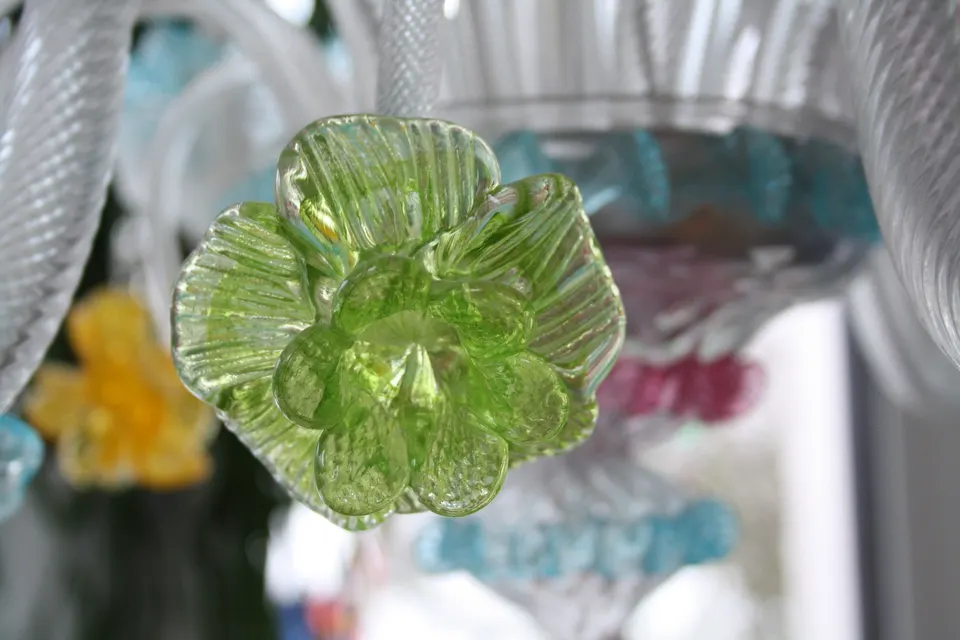
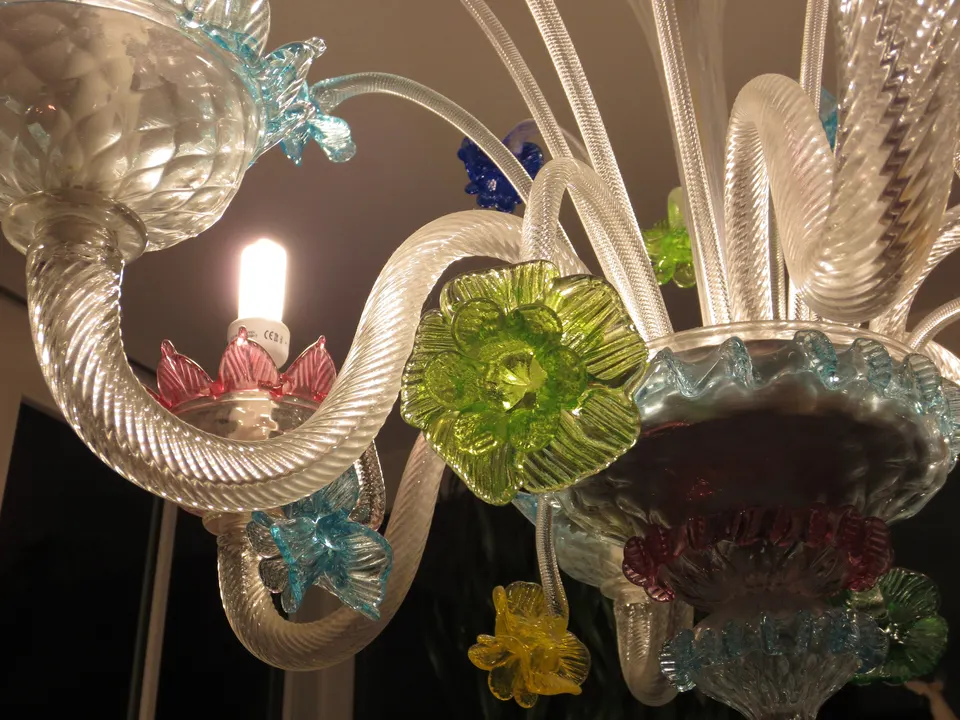
Main photo: Arms of a Murano chandelier. Photo: Mummelgrummel, CC BY-SA 3.0