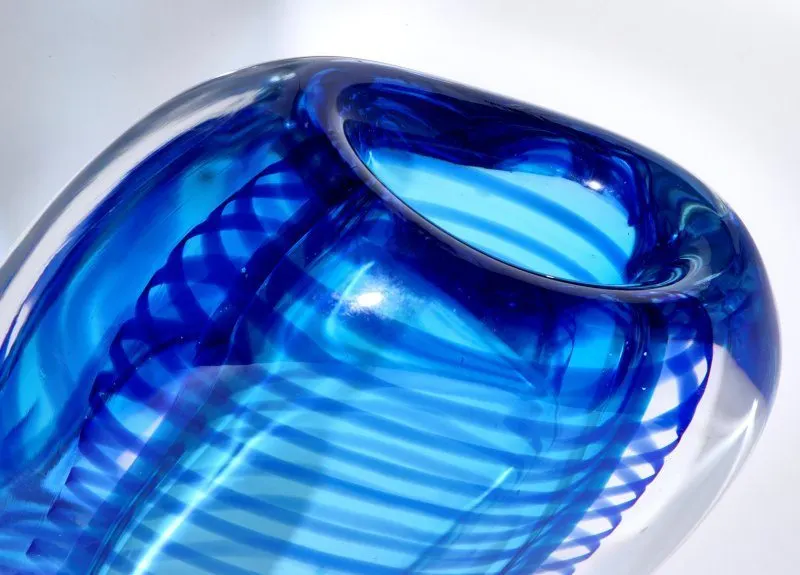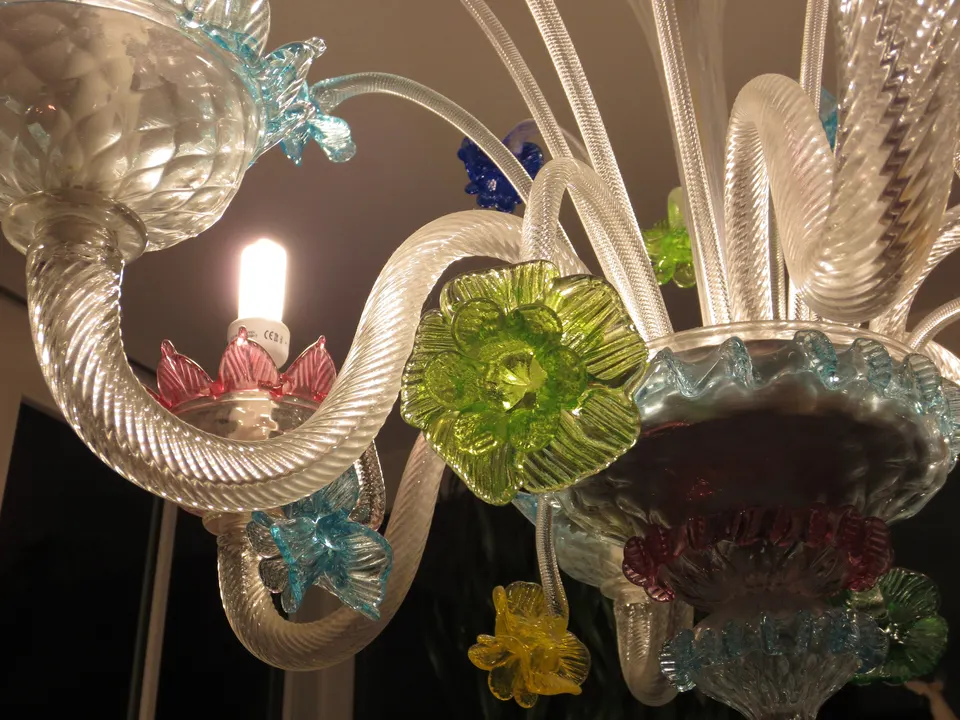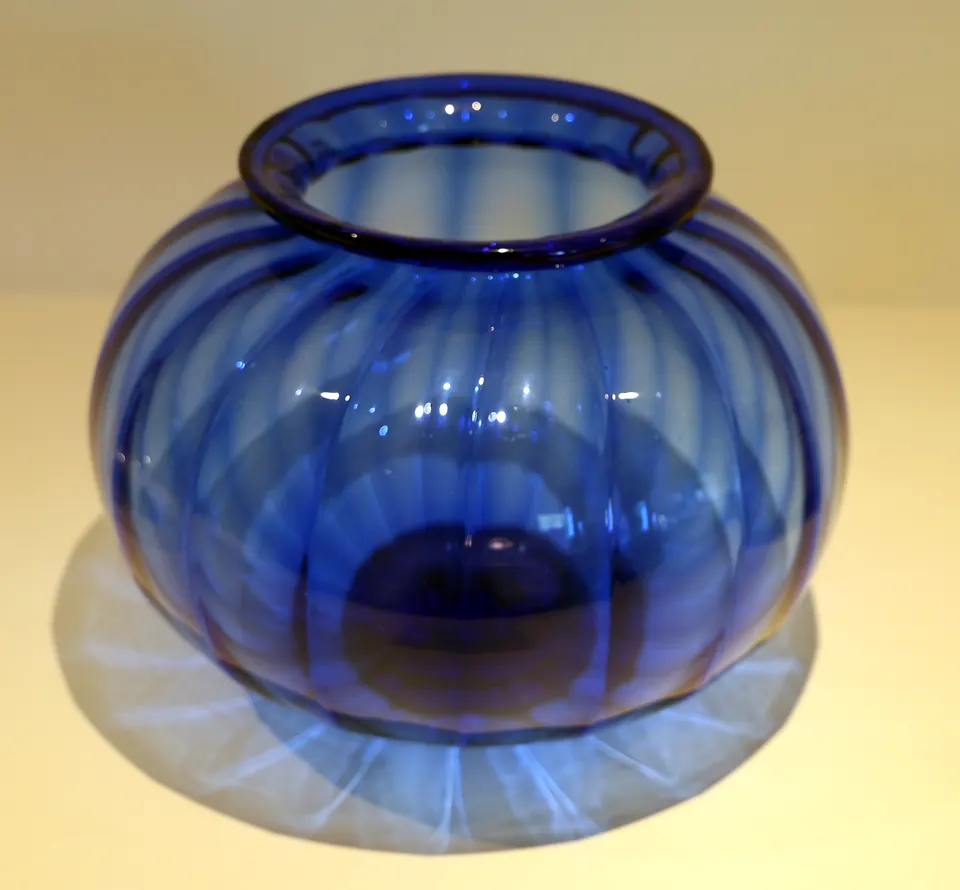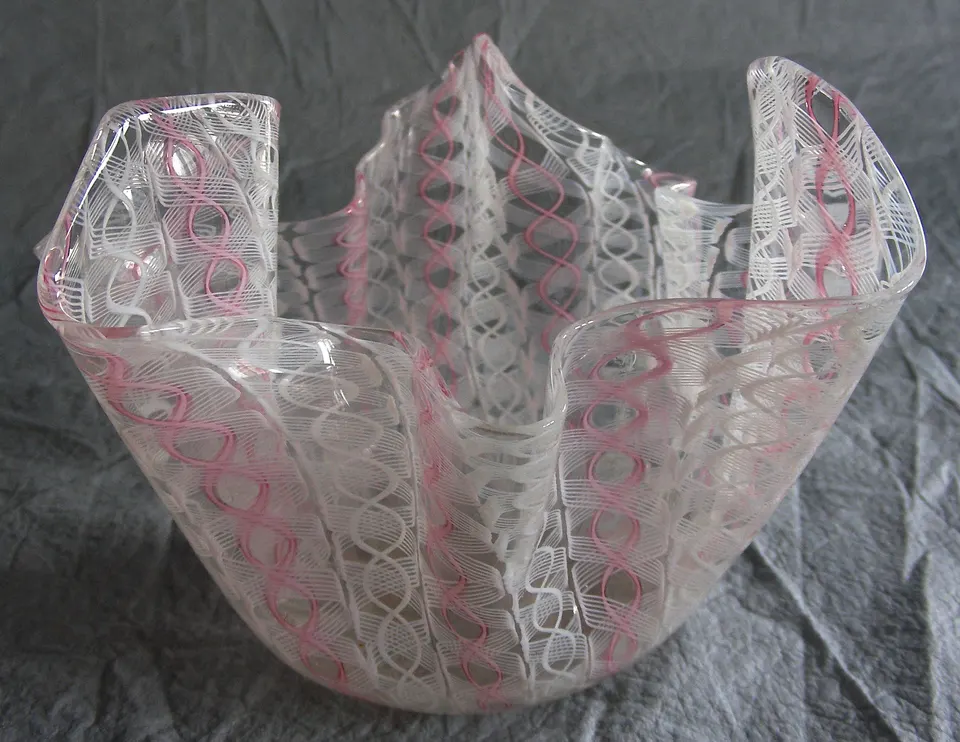
The best place for a decorative glass vase has light from behind or from the side, a height where you can see into the glass, and a steady surface. How much room it needs depends on its size.
Five good places for a vase
- The entry. A niche or a narrow console gives one vase a background of its own. In a plain hallway a single strong color is enough.
- The mantel. Use one large vase off center, or three of different heights. Keep them away from the hottest point above an open fire.
- On top of cabinets. This suits big, simple shapes seen from below. Leave space around each one and add a small lamp, otherwise the row reads as storage.
- The dining table. Low enough to look over, or tall and thin enough to look past.
- A windowsill with indirect sun. Transparent color shows best here, and sommerso layers are visible from the side.
Fill the vase or leave it empty?
A vase with its own pattern usually looks better empty. Clear or single-color glass takes branches, flowers, pebbles, shells or pine cones well. Pour stones in gently with the vase tilted, or lay a circle of felt at the bottom first, since a pebble dropped from the rim can chip the glass.
Change flower water often. Hard water leaves a pale ring that is tedious to remove from a narrow neck.
Why candles can crack a glass vase
Old advice says to put candles inside glass vases. Ordinary art glass was never meant for that. Heat on one spot makes the inside expand before the outside, and the wall can crack. If you want a flame, use a holder made for it, or put a battery light in the vase.
How to keep a heavy vase from tipping
Thick glass is heavier than it looks. Morning Sunshine is 14 inches tall and weighs about 26 pounds; Deep Blue weighs about half that. Such pieces need a solid shelf and stand safest away from edges, dog tails and cabinet doors that slam. A dot of museum wax under the base helps on a busy surface.
How to group several vases
Pick one thing the vases share, a color family or a shape, and vary the height. Leave at least a hand's width between them so each outline is readable. More on reflections and glare is in glass in a room.
Sources
Main photo: Handkerchief vase. Photo: Ulrich Mayring, CC BY-SA 3.0