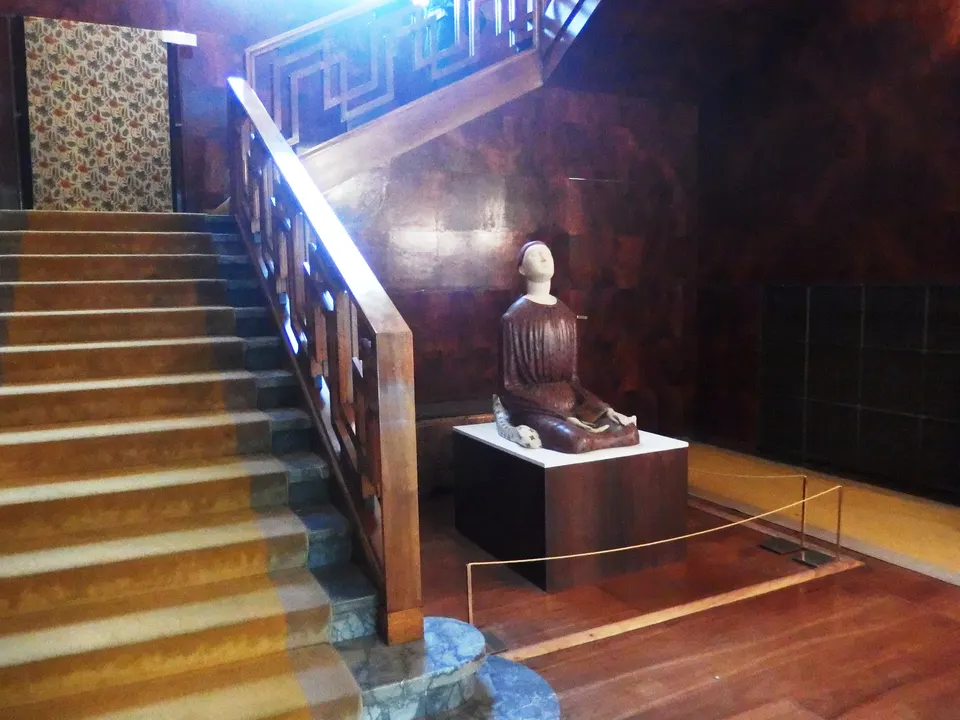
When you choose entryway furniture, pick one narrow piece with a clear shape. Place it where you look when the door opens, and leave enough free floor for two people with coats.
How to measure your entryway
Start with the door. Swing it fully open and mark its arc, then add the space two people need to stand without touching. What is left is the depth available. Two feet is the outer limit for a table here, and in most halls half of that is wiser.
The best spot is usually opposite the door. If there is a passage or a staircase instead, use the side wall where guests pause to take off their coats.
What Italian entrance halls do well
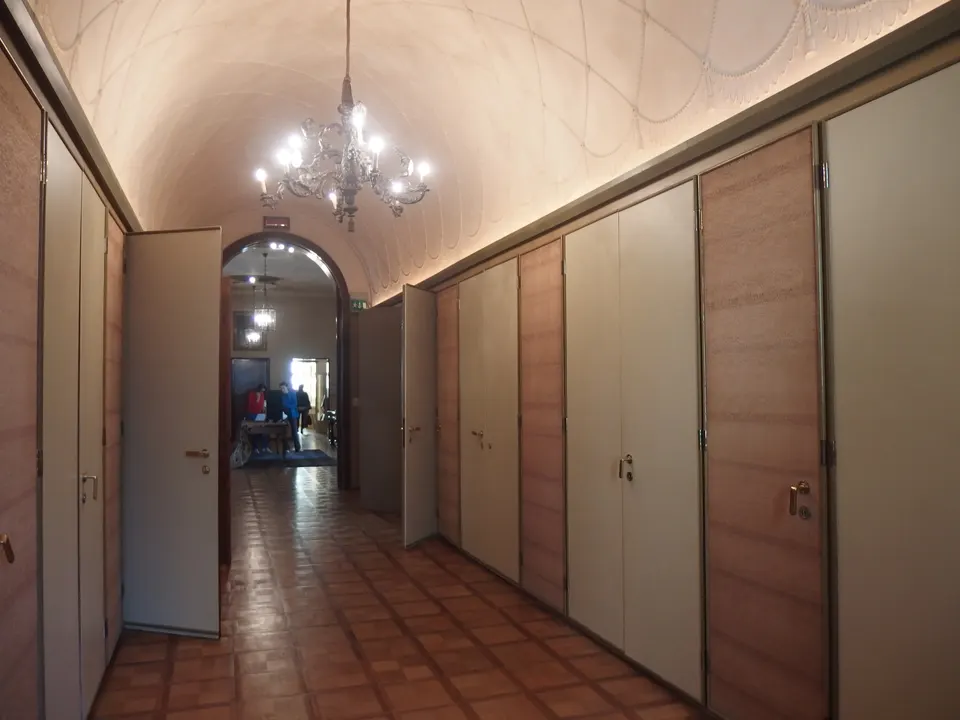
Italy has given its entrances a lot of thought. In a Venetian palace the portego ran right through the building, from the door on the canal to the door on the street, and worked as entrance, reception room and source of fresh air.
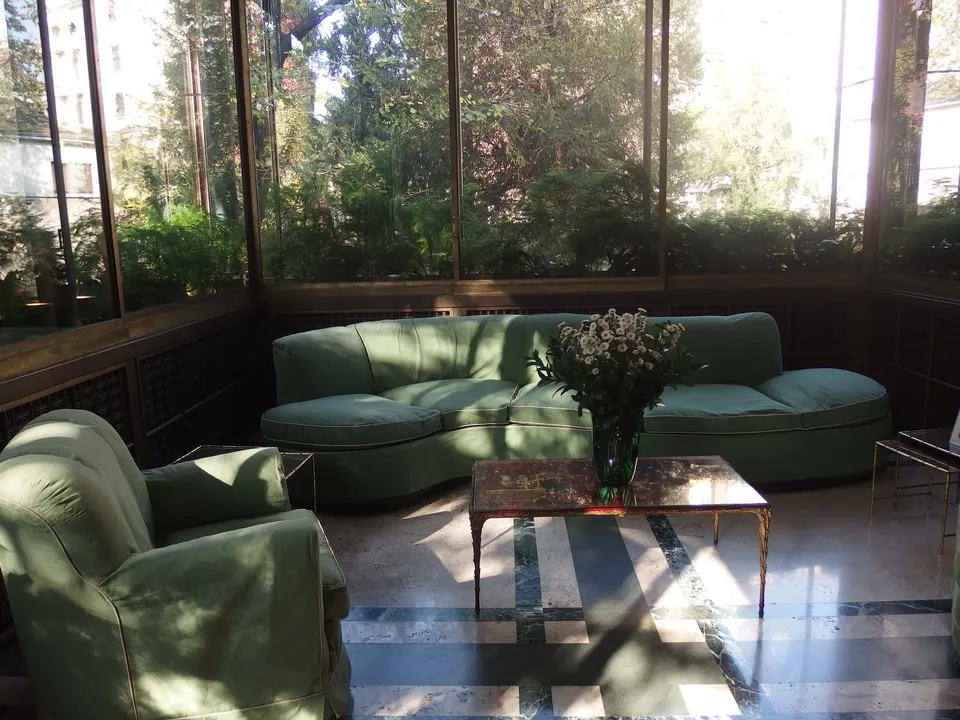
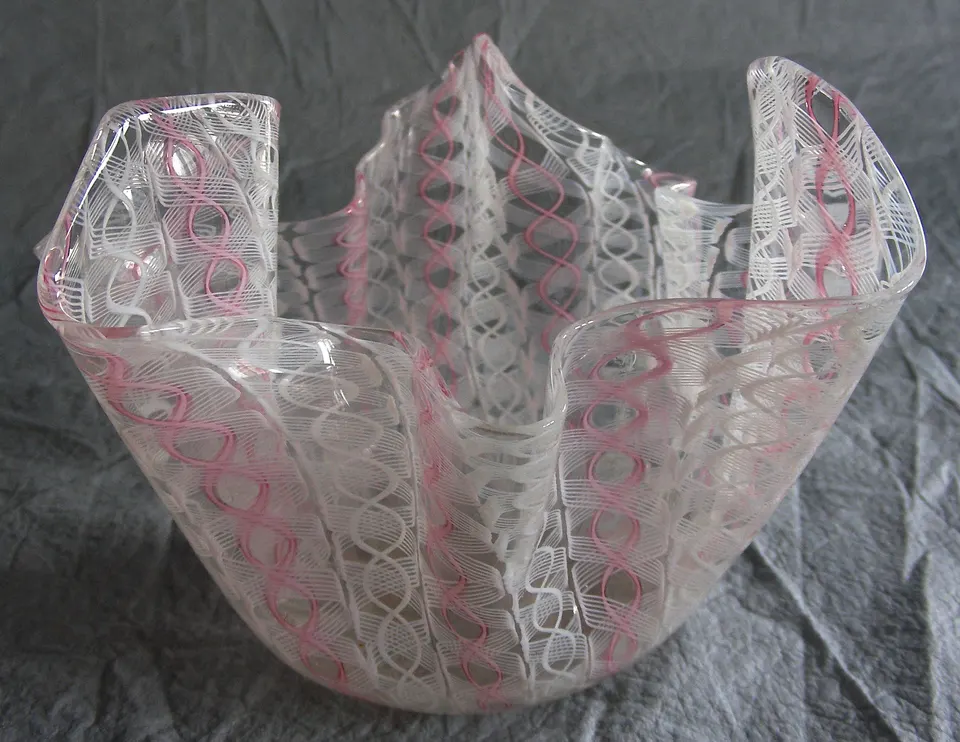
Milan's apartment buildings of the last century took the idea indoors and made it stone. Behind sober fronts, shared lobbies were finished with Carrara marble, travertine, Botticino and other limestones. Gio Ponti, with Fornaroli and Rosselli, laid one floor in several marbles and limestone together. Other lobbies have textured glass panels from a Trieste maker, ceramic door handles made in Venice, or a lamp by a well-known architect. The impression comes from surfaces and light, before any furniture.
Ideas to use at home
- Let the floor or rug carry pattern, and keep the table plain.
- Pick one form: a console on two legs, a bench, or a shelf fixed to the wall with nothing under it.
- Above it, a mirror or one picture. A round shape softens a narrow corridor.
- Set a vase off center and leave the other half bare for keys.
- Use a light that shows faces, at head height, beside the mirror.
Choosing a wall color
A hall is crossed, seldom sat in, so it can take a wall color that would tire you in a living room. Deep red, bottle green or ocher behind a pale table works. If the hall opens onto the living room, repeat the color there once in something small. The same logic of one object and empty space around it applies to a strong piece in a room, and a hard Italian floor gives it a good base.
Sources
Main photo: Staircase, Villa Necchi Campiglio. Photo: Palickap, CC BY-SA 4.0