Top and legs
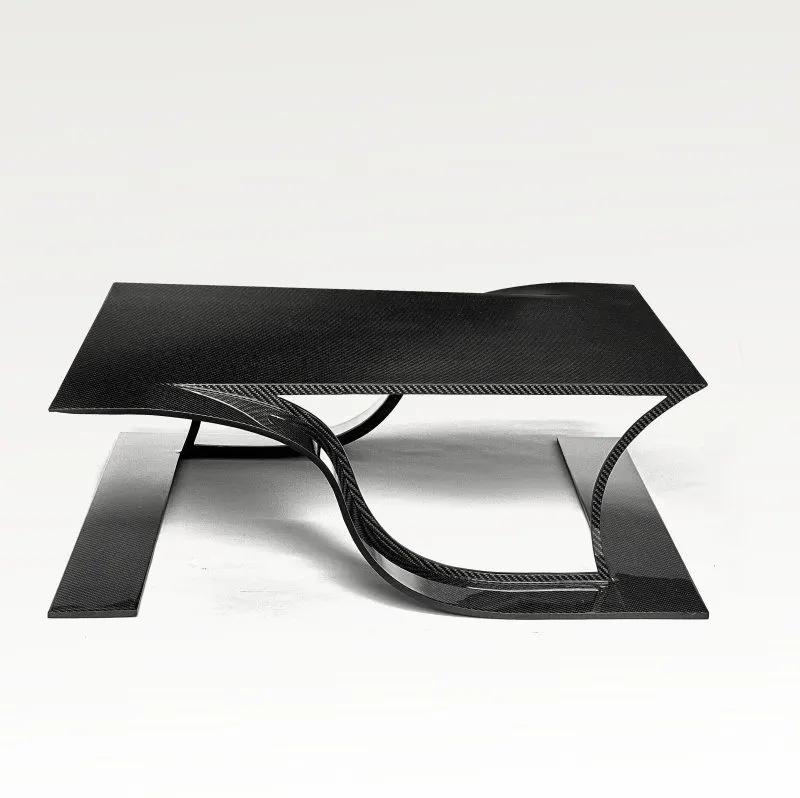
The top is a thin flat plane with straight edges that turn into curves. A wide strip leaves the front edge on the left, swings down in an S and lands on the right. A thinner strip drops from the right-hand corner to the same plate. The far side repeats the gesture. Two flat plates lie on the floor, one at each end.
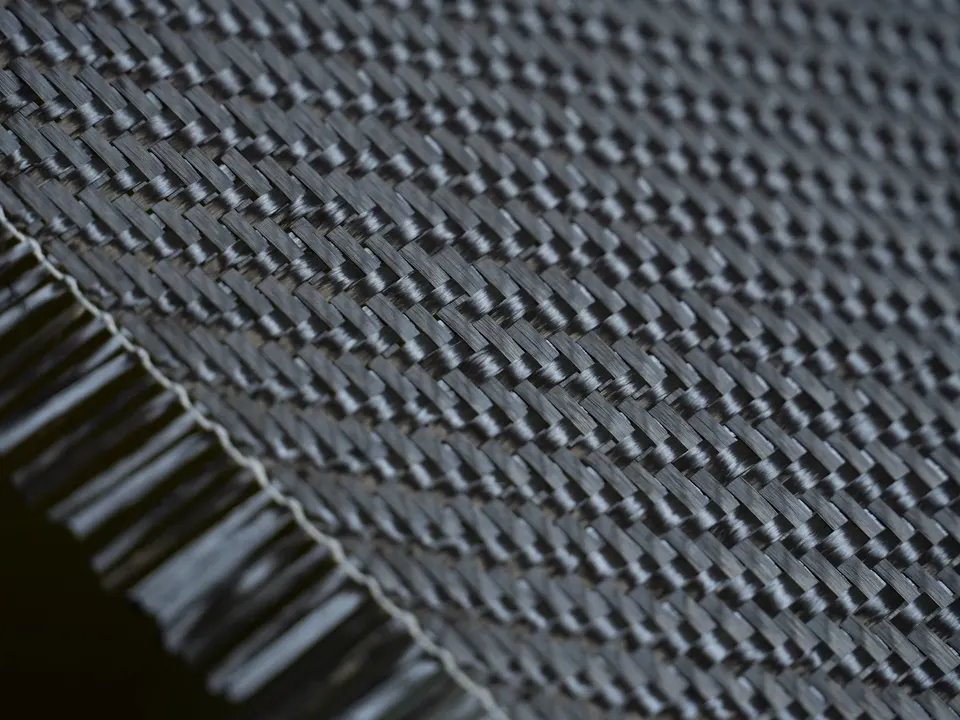
The surface is dark. On the edges and along the curves you can see a fine diagonal weave, like a ribbon of twill.
Why it is made of carbon fiber
Carbon fiber often arrives as cloth. Layers are placed in a mold with resin and hardened, so a flat plane and a curve can be one piece. The strength follows the threads, and layers are turned in different directions to suit the load.
Stone in this shape would break at the bend. Carbon has its own weak points: the clear coat scratches, and a chipped corner shows bare layers. On a real piece, hold your eye level with the top and look for ripples in the reflection, then follow the weave around a bend to see whether it stays straight. More in carbon fiber in furniture.
What to look for
- The S-shaped strip: try to say where the top ends and the leg begins.
- The diagonal weave along the front edge.
- The two plates on the floor, which spread the load.