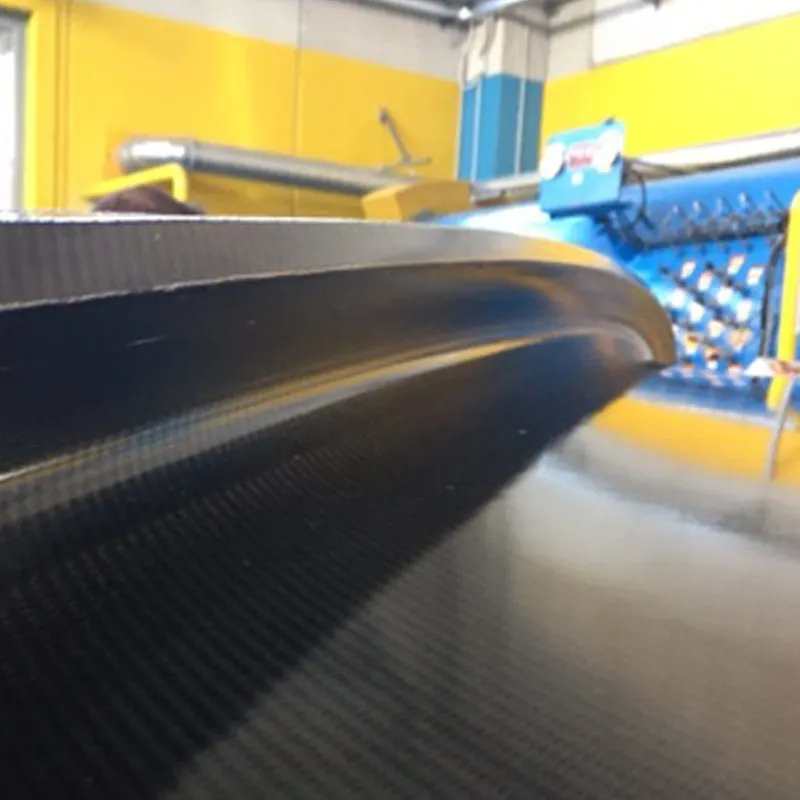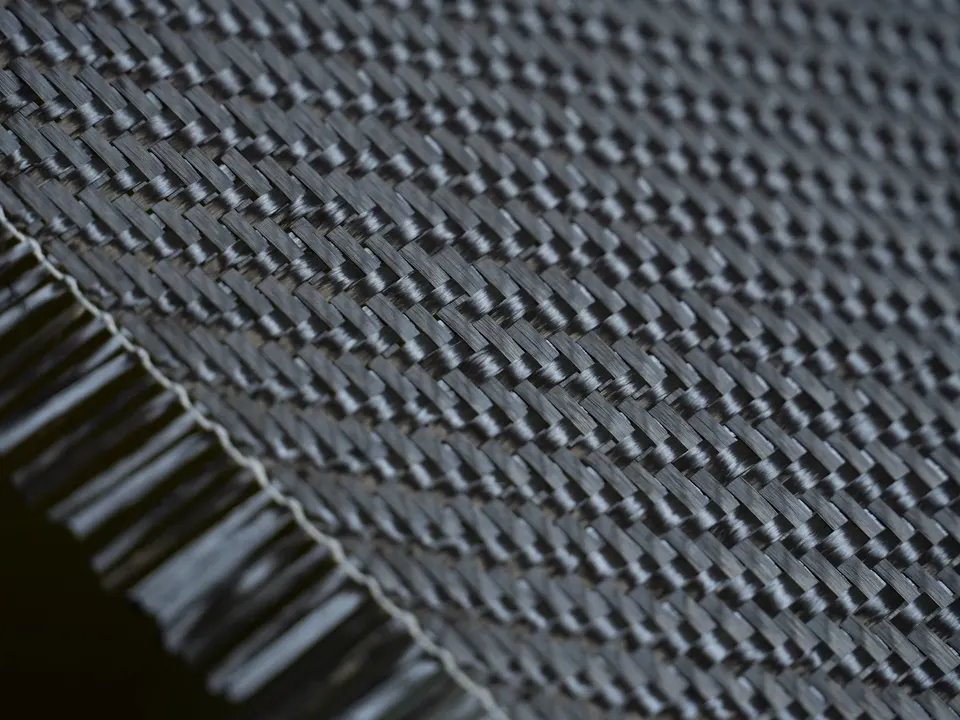
Carbon fiber furniture can be very thin and still stiff. The material is a cloth of carbon threads set in resin, usually epoxy, and it is strongest in the direction of the threads.
Why carbon fiber furniture is so thin
Steel and aluminum are about equally strong whichever way you pull. A composite is different: its maker decides where the strength goes by turning each layer of cloth. Alberto Meda's Light Light chair, produced by Alias, is made of carbon fiber with Nomex. An experimental prototype is in the Newfields collection in Indianapolis.
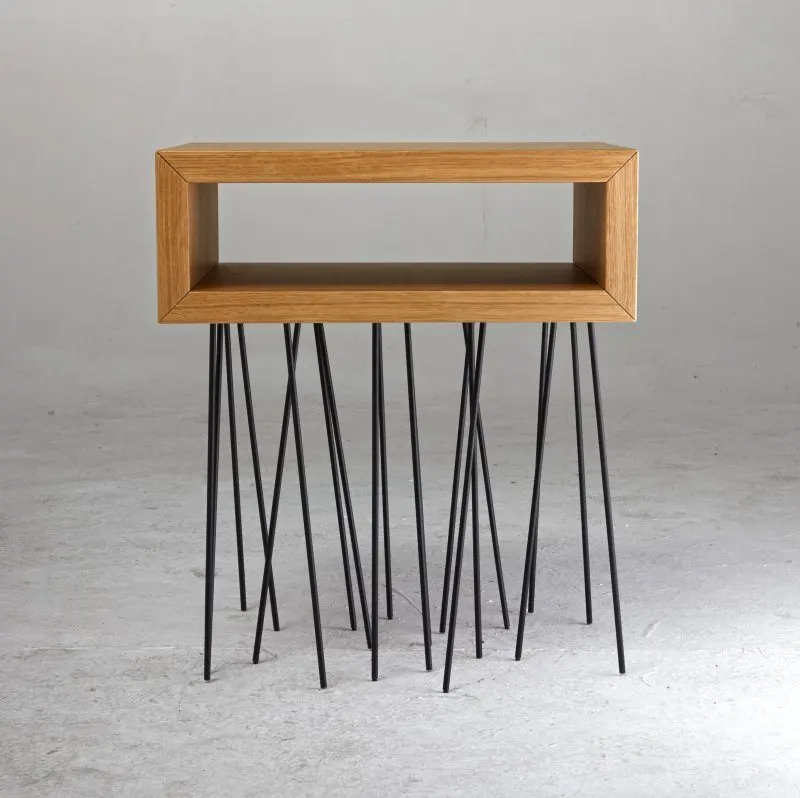
The other route is the rod. A coffee table standing on slim black rods and a floor lamp on this site use thin carbon rods that carry the load and draw the outline at once.
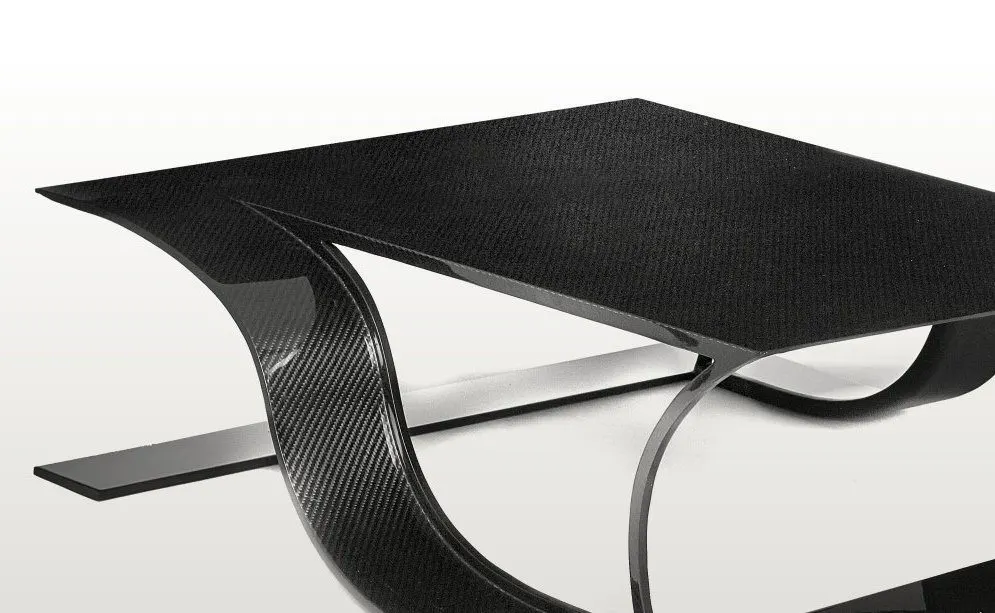
A table where you can see this is Perfect Cut, a low carbon fiber table.
Carbon fiber with steel and wood
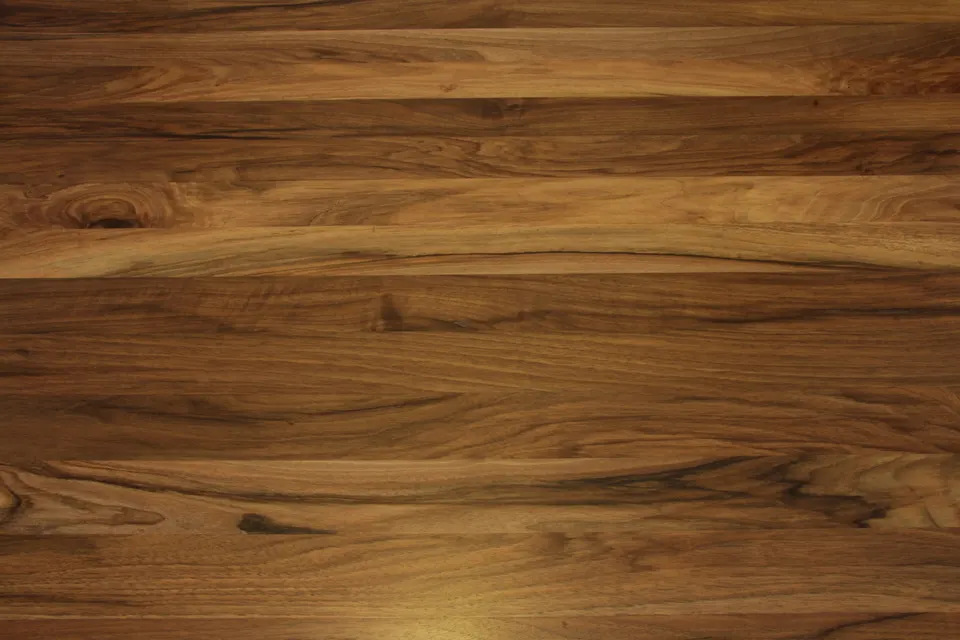
The Ewan chair pairs a skeleton of steel tube with a carbon shell covered in wooden leather, a thin sheet of wood bonded to fabric. The shell is not fixed, so the sitter chooses its position. Joining carbon to metal needs thought: in contact with aluminum or mild steel it can cause corrosion, while stainless steel and titanium are safe neighbors.
Weak points of carbon fiber
- It hardly bends before it breaks. Metal dents and warns you; a resin composite tends to crack or split between layers.
- The resin suffers from strong sun and moisture over many years. A clear lacquer is there for protection as much as for shine.
- It cannot be melted down like metal. Recycling grinds it, burns off the resin or dissolves it, and grinding leaves shorter, weaker fibers.
- It is expensive to produce, so on many objects the weave is only a printed film.
Is carbon fiber eco-friendly?
Advertising for carbon furniture has called it natural and sustainable. It is a synthetic composite, and it is difficult to recycle. Its honest argument is a long life with very little mass, provided it is kept out of the sun. For materials with a different balance, see greener materials and their trade-offs.