Glass top and wooden shelf
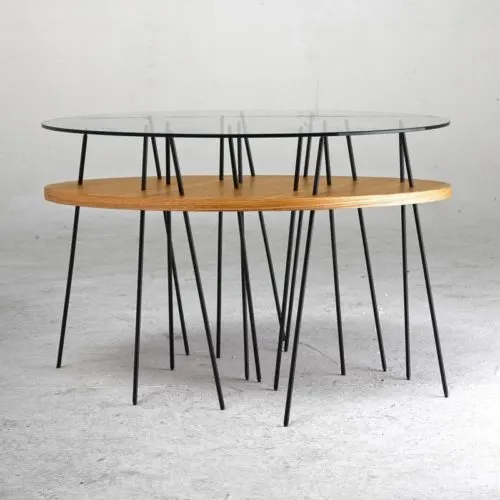
The lower top is a thick disk with a strong straight grain, light brown with darker stripes. A little way above it lies a disk of clear glass with a greenish edge. Black rods rise from the floor at different angles, some nearly upright and some crossing. They come out in the space between the two tops, where their cut ends hold up the glass.
No frame or crossbar is visible. The table looks like a tray caught in tall grass.
Why the thin rods hold
A single straight rod would fold sideways. A group set at many angles braces itself, because a push from any side meets several rods that lean against it. The wooden disk ties them together. A loose hole would let the whole table sway.
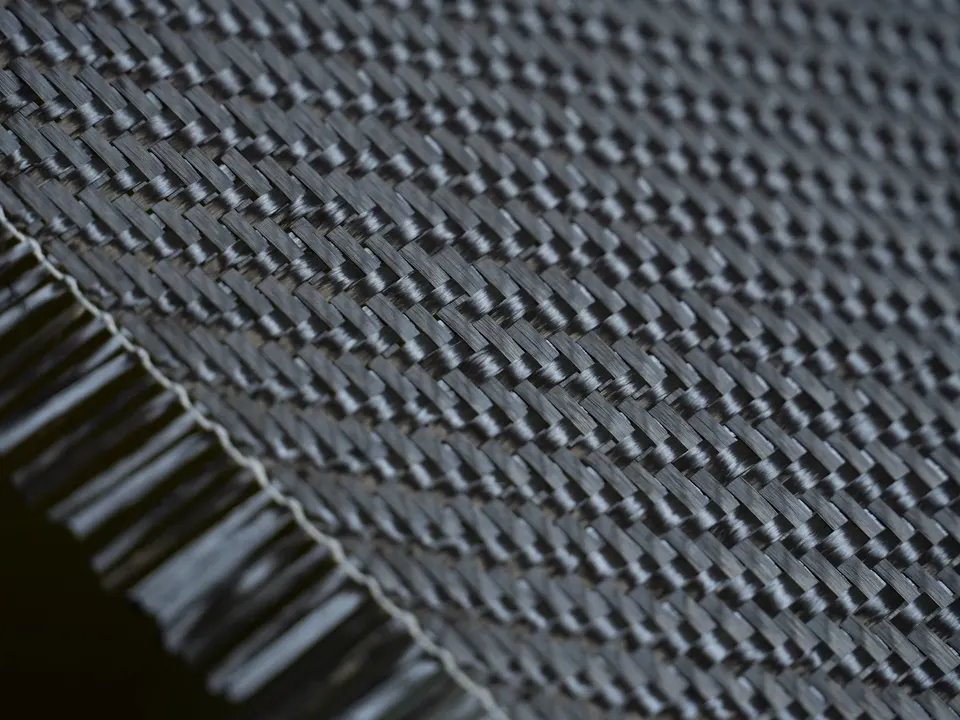
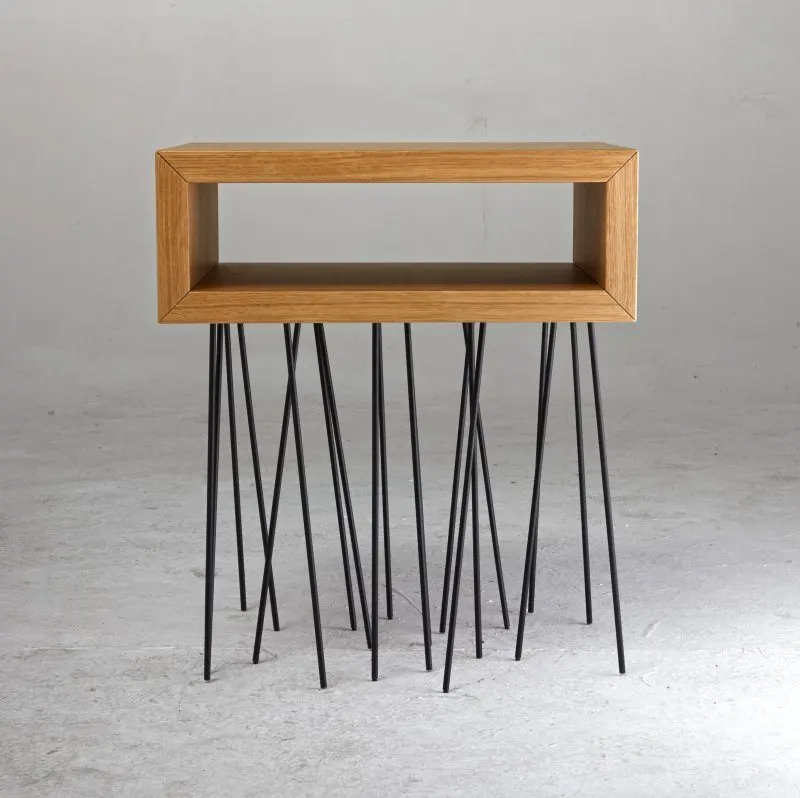
The related bedside table and lamp use carbon rods, and these look the same. With a real table, press down on the rim at several points and watch whether the glass tips. Look for soft pads between glass and rods. The glass edge should be polished, and it is worth asking if the pane is tempered; see glass in a room.
What to look for
- The ends of the rods seen through the glass.
- The points where rods enter the wood, each at its own angle.
- The edge of the wooden disk: its stripes show how it was built up.