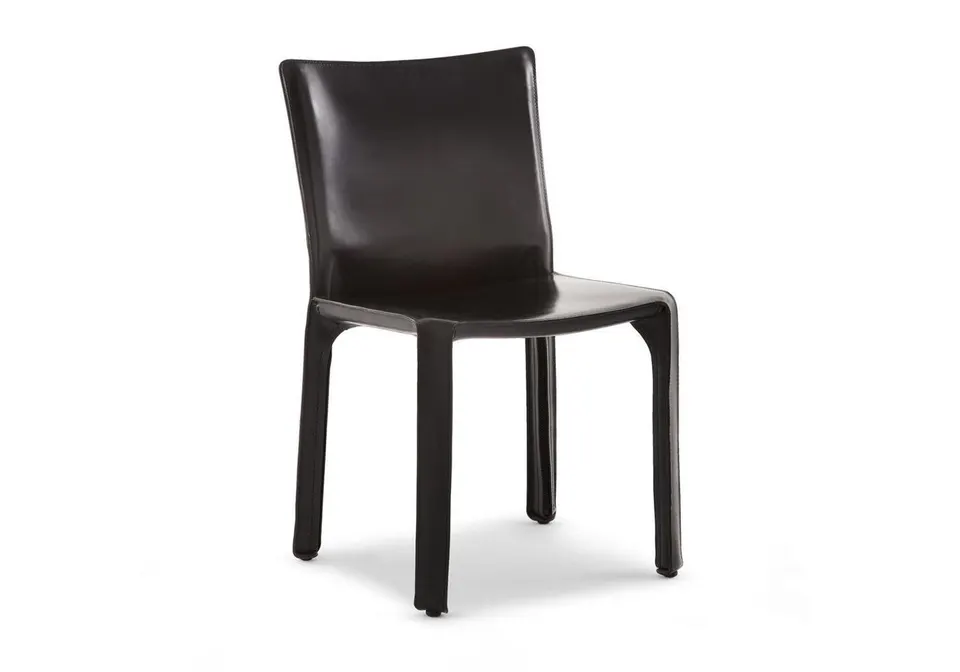
The two best-known Mario Bellini sofas are the Camaleonda, made of square blocks that hook together, and Le Bambole, which looks like one big soft cushion. His Cab chair, covered in zipped leather, is just as famous.
Camaleonda: square blocks held by cables and rings
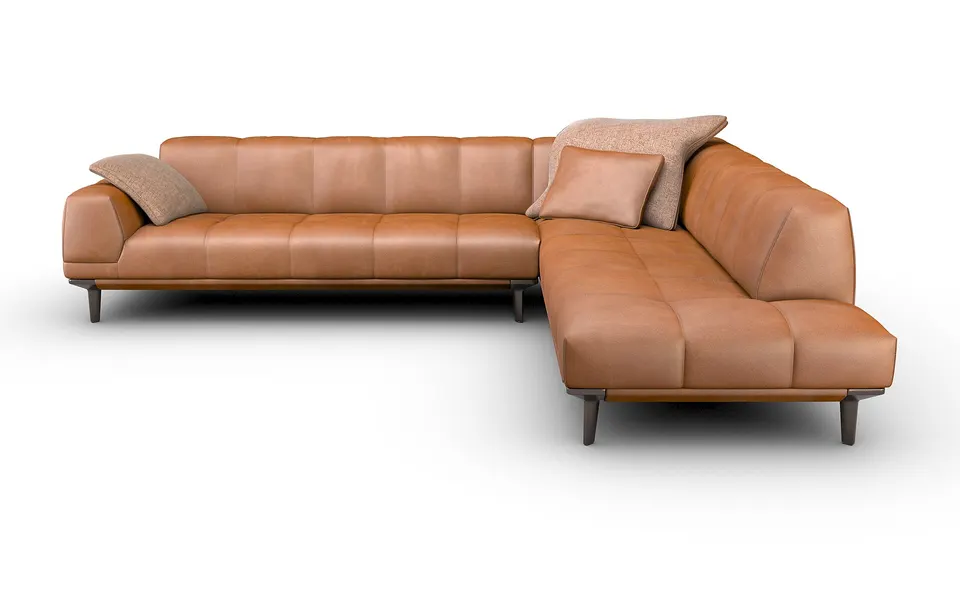
The Camaleonda was presented in 1970. Each seat block measures 90 by 90 centimeters, about 35 inches. Backs and armrests are separate parts. Cables with hooks and rings join everything, so you can unhook the parts and build a straight sofa, a corner or an armchair.
The same cables pull the padding into its deep round tufts. Bellini once said it was perhaps the best of his objects in its sense of freedom. Production stopped at the end of the 1970s and began again in 2020. The new version keeps the original seat size and cutting pattern, but the inside was redesigned with wooden panels and layers of different foam that can be taken apart.
Le Bambole: a sofa without a visible frame
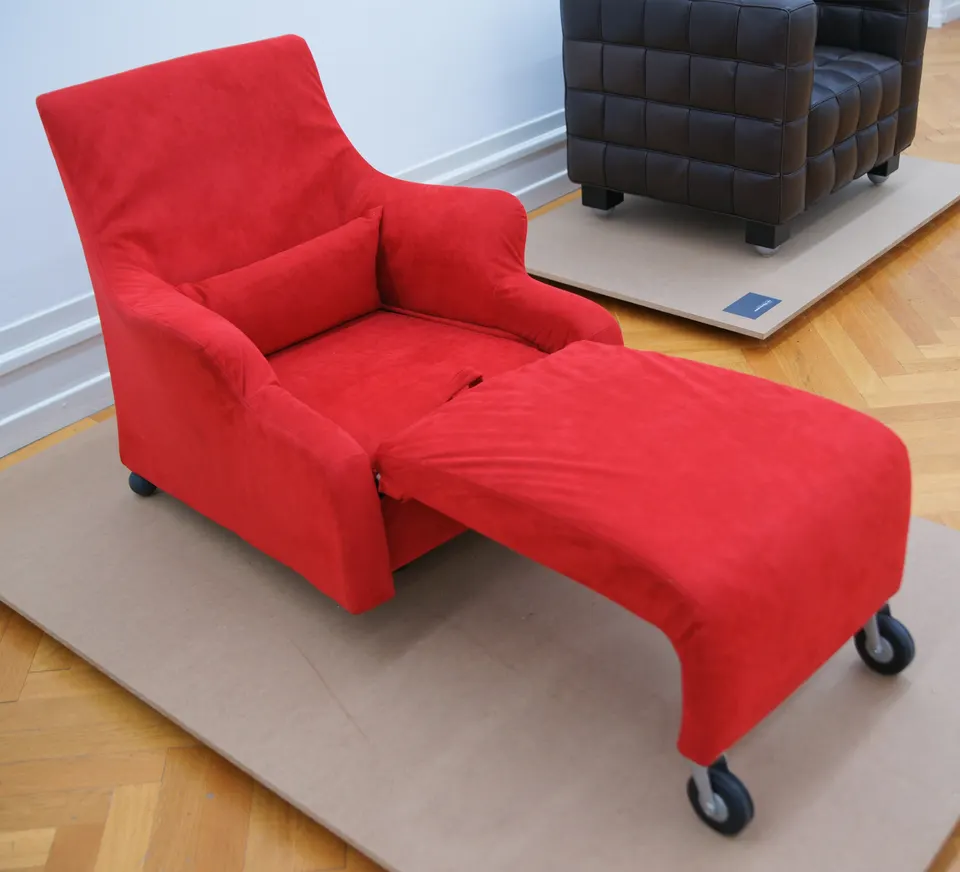
Le Bambole means "the dolls." The series was designed between 1970 and 1972 and won the Compasso d'Oro, the main Italian design prize, in 1979. Bambola is the armchair, Bibambola the two-seat sofa and Bamboletto the bed. The three-seat sofa was later made deeper and renamed Granbambola.
The first version had a metal structure buried inside polyurethane foam. The newer one uses recycled polyethylene for the structure, with foam parts around it. One of the covers on offer is a looped fabric, described in the article on boucle chairs.
Cab chair: leather zipped over a steel frame
The Cab chair from Cassina dates from the late 1970s. It has a thin steel frame and a fitted cover of saddle leather. The company says the cover is sewn from sixteen pieces and closed with a zipper, like a tailored garment. The idea came from the way skin fits over a skeleton.
Here the leather supports the body as well as covering the frame. That is a different job from the cover of an Italian leather sofa.
Bellini's best-known pieces compared
| Piece | What is new in it | How to recognize it |
|---|---|---|
| Camaleonda sofa, B&B Italia | Parts hook together and can be rearranged | Square seats with deep round tufts |
| Le Bambole, B&B Italia | The frame is hidden inside soft padding | Rounded arms and back, no wood or metal in sight |
| Cab chair, Cassina | A leather cover that stands up by itself | Leather down to the floor, zippers on the legs |
| Tables of 1976, Cassina | Table bases borrowed from old buildings | Heavy supports, names such as La Rotonda or Il Colonnato |
| Programma 101, Olivetti | An early computer small enough for a desk | A low machine with a keyboard and a paper strip |
| Kar-a-Sutra car | A car planned as a moving room | A tall body with glass all around |
From Olivetti machines to museum buildings
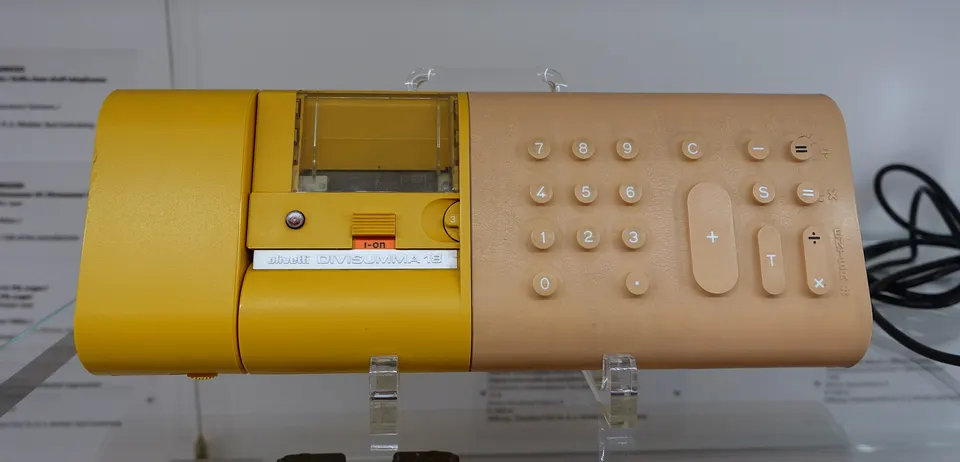
Mario Bellini was born in Milan in 1935 and studied architecture there. From 1963 he was a design consultant to Olivetti, where he worked on calculators and typewriters. Since the 1980s he has mostly designed buildings, such as the gallery of Islamic art at the Louvre in Paris, with Rudy Ricciotti, and the extension of the National Gallery of Victoria in Melbourne.
In 1972 the Museum of Modern Art in New York showed his Kar-a-Sutra and Camaleonda in a large exhibition on Italian homes. The same show included groups from Italian radical design. Bellini has won the Compasso d'Oro eight times. For other names of that time, see the Italian furniture designers.
Museums with Mario Bellini's work
The Museum of Modern Art held a show of his work in 1987 and had 25 of his designs at that time. The Metropolitan Museum of Art in New York also owns a Cab armchair. Pieces in storage are not always on view, so look at the online catalog before a visit.