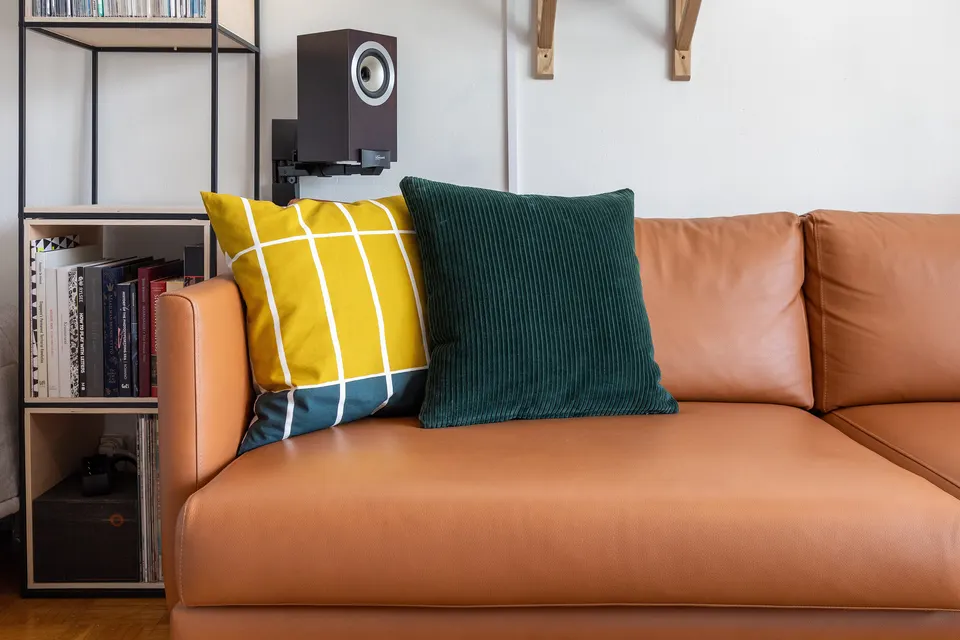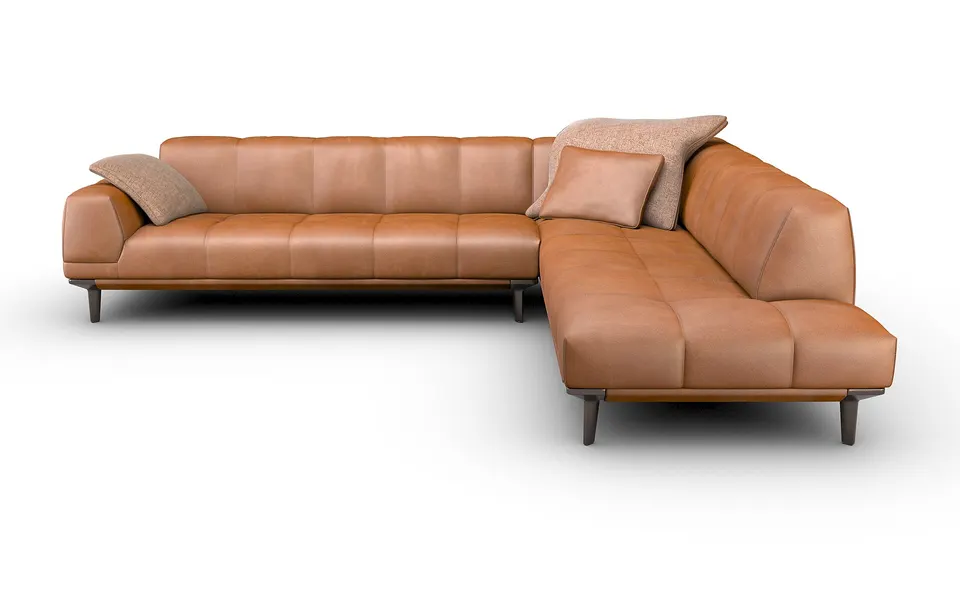
An Italian leather sofa can mean three things: leather tanned in Italy, a sofa made in Italy, or an Italian design. Ask which one it is, then check the type of leather, because that decides how the sofa will wear.
What “Italian” means on a leather sofa
A hide may come from one country, be tanned in a second and be cut and sewn in a third. The word Italian on a tag does not say which step happened in Italy. Put three questions to the seller. Where was the leather tanned? Where was the cover sewn? Where was the frame built? A clear written answer is a good sign.
Origin is no proof of good work, as the page on modern Italian furniture explains.
Types of leather, from full grain to bonded
| Type | What it is | What to expect |
|---|---|---|
| Full grain | Outer layer of the hide, surface left as it is | Marks and pores show, a patina forms |
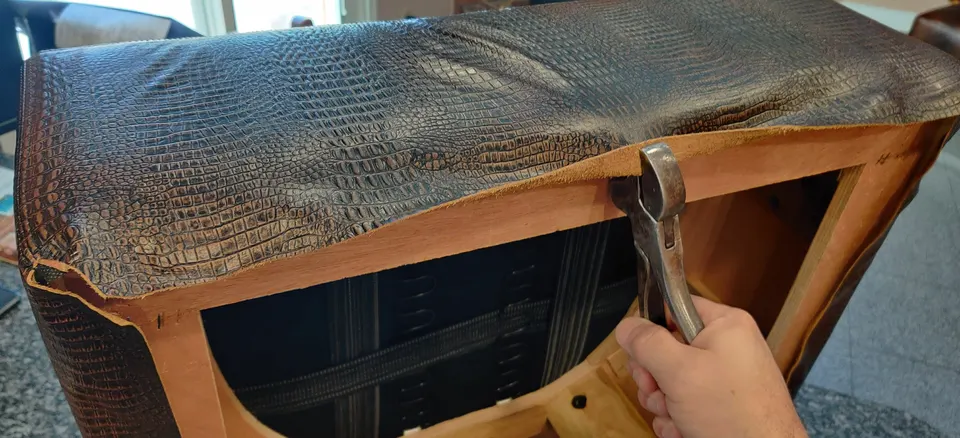
| Corrected grain | Outer layer sanded, then dyed and embossed | Even look, fewer marks |
| Nubuck | Outer layer sanded to a short nap | Feels like velvet, stains easily |
| Split | Lower layer, left when the hide is split | Often coated, or made into suede |
| Bicast | Split with polyurethane or vinyl on top | Very even and a bit stiff |
| Bonded | Leather fibers broken up and pressed into sheets | Not called leather under Italian law |
“Top grain” covers the first three rows, so it is not an answer by itself. “Genuine leather” is not a grade either, and it often describes a heavily processed split. Aniline and pigmented finishes are explained in modern furniture myths.
What Italian law calls leather
A decree of 2020 fixes the words for goods in Italy. Pelle and cuoio mean a tanned hide that has kept its fibers more or less intact, with a coating of 0.15 mm at most. If the coating is thicker, up to a third of the total, the material is pelle rivestita, coated leather. Pieno fiore, full grain, means that the original grain is kept and nothing was removed from the surface.
Sheets made from ground fibers are rigenerato di fibre di cuoio. At least half of their weight must be leather fiber. The decree does not cover goods made or sold in another EU country, so ask what the words on a tag refer to.
Vegetable or chrome tanning
Chrome tanning takes about a day and is the most common method now. The leather is soft and copes better with water. Its weak side is chromium in the waste water, which the tannery has to treat.
Vegetable tanning uses tannins from bark. The leather is light brown and can stain with water. A group of 17 tanneries between Florence and Pisa has its own mark for it, and the mark lets you trace the tannery. For a sofa, chrome-tanned leather is the usual choice, and it is not a fault.
Famous Italian seats in leather
- Model 904, Poltrona Frau, 1930, now called Vanity Fair. A round, full armchair. The firm was founded in Turin in 1912 and moved to Tolentino in the 1960s.
- Maralunga, Cassina, by Vico Magistretti. The headrest folds up and down on a bicycle chain.
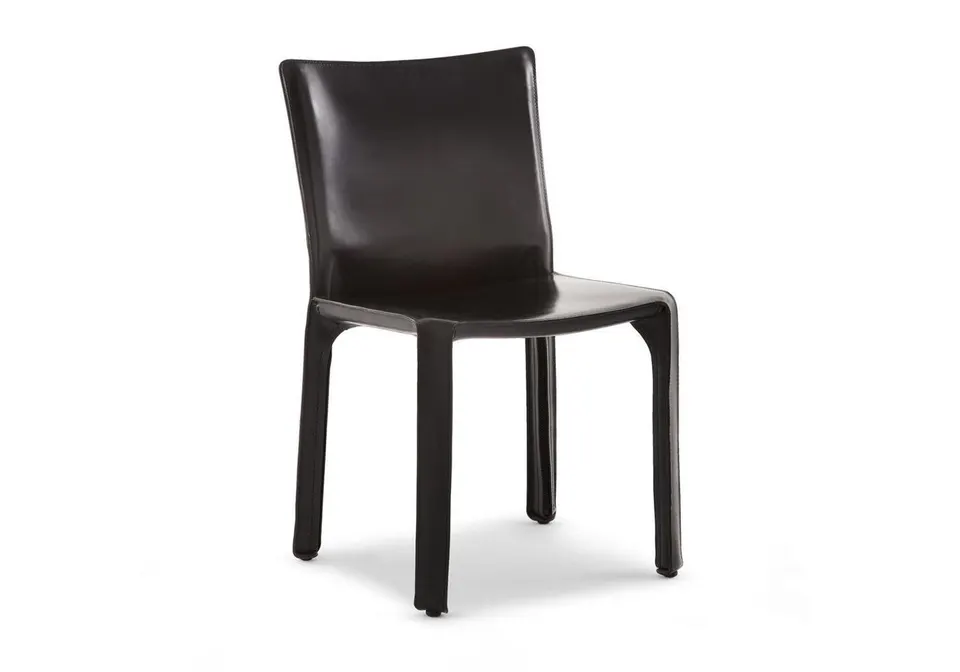
- Cab, Cassina, by Mario Bellini. A chair with a saddle leather cover that zips onto a steel frame.
- Joe, by De Pas, D'Urbino and Lomazzi. A giant baseball glove in foam and leather.
Leather is only the surface. Before paying for a good hide, check the frame and filling with the steps in how to tell if a sofa is good quality.
Sources
Main photo: Leather corner sofa. Photo: Henryhugon, CC0