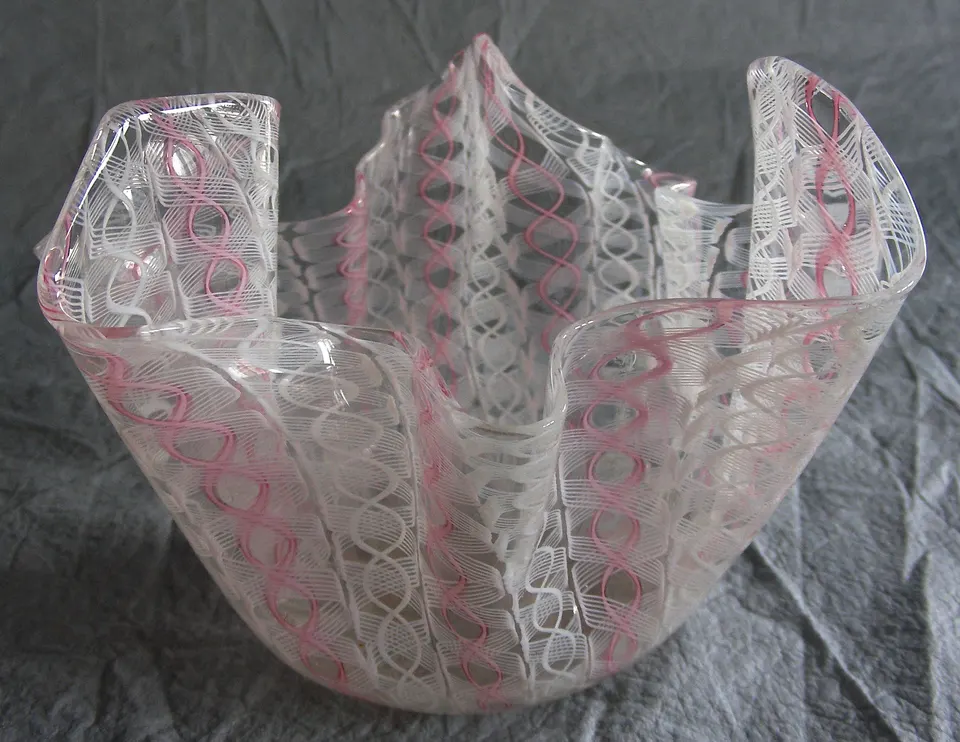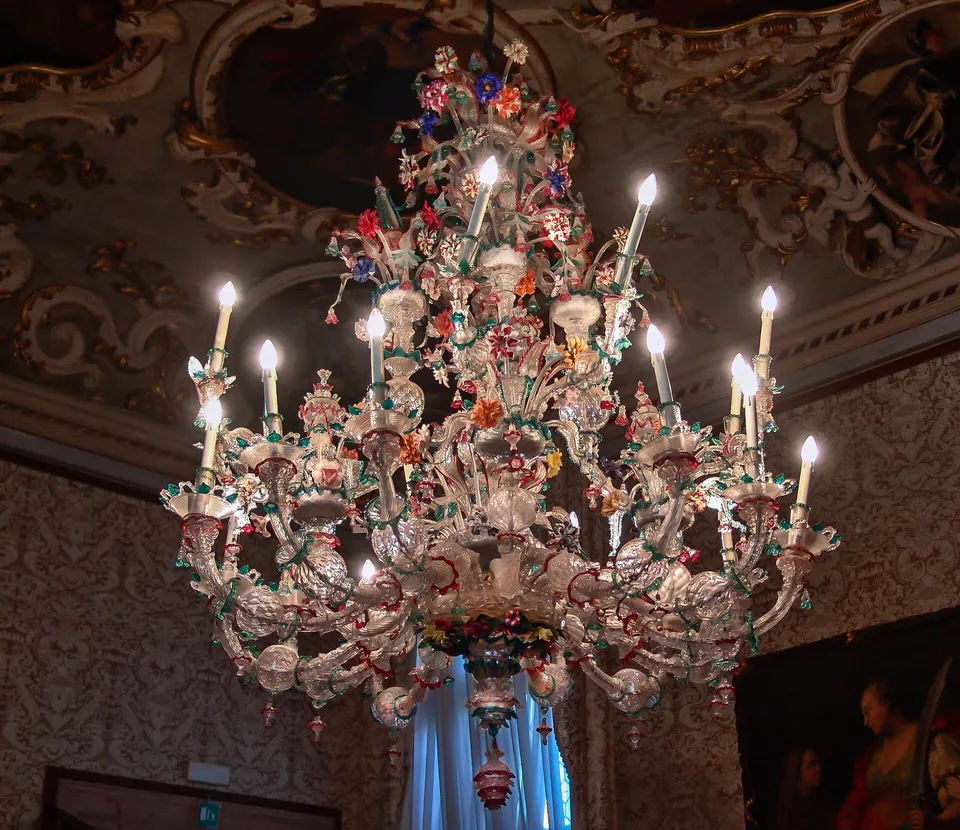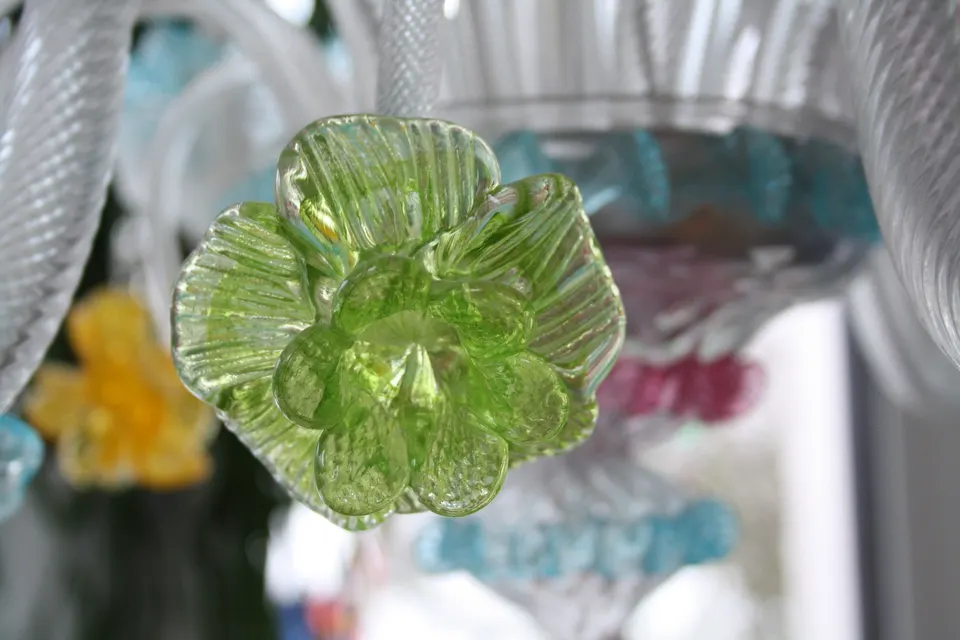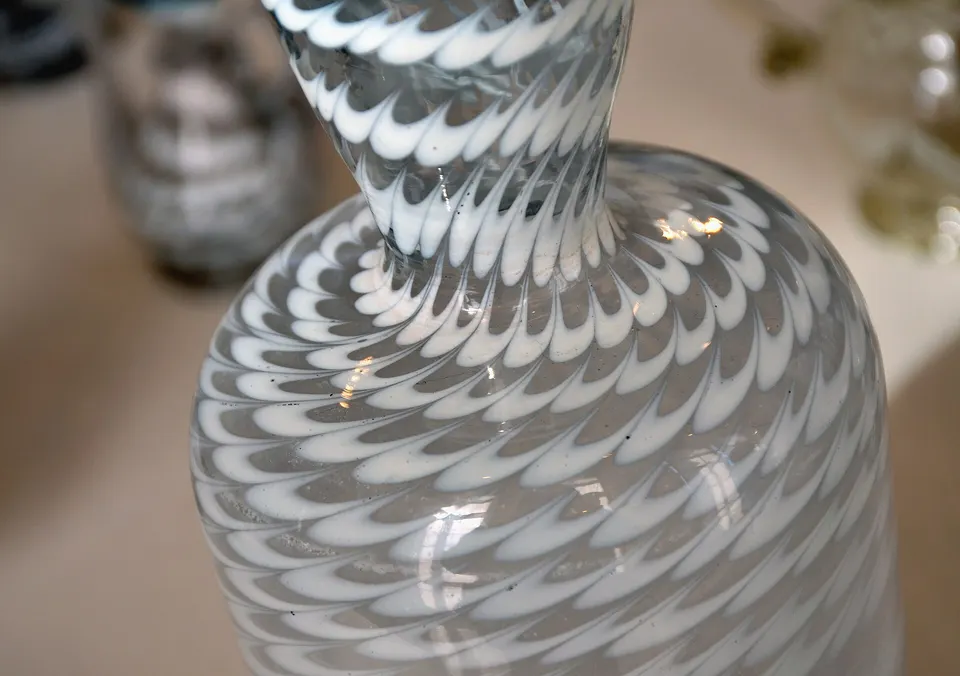
To clean Murano glass, dust it with a soft brush. If it is whole and has no painted or gilded decoration, wash it by hand in lukewarm water with a drop of mild dish soap, rinse and let it dry. Never use a dishwasher.
Check the glass before you wash it
Washing is fine for glass in good condition. Look at the piece in daylight first. Cracks, old glue, loose gold, flaking paint or a hazy surface mean you should stop at gentle dusting. A repaired piece is always weaker than an unbroken one, and old repairs can be hard to see.
Color inside the glass is safe, because it is part of the material. Color on top may come off. The page on color in glass shows how to tell the two apart.
What to use and what to avoid
| Use | Avoid | Why |
|---|---|---|
| Soft brush for dust | Rough cloth on applied details | Cloth can catch on threads, handles and loose parts |
| Lukewarm water | Hot water, then cold | A quick change of temperature can crack glass |
| A drop of mild soap, no color or perfume | Dishwasher and its detergent | Hot, strong soap attacks glass and leaves it cloudy |
| Distilled water for the last rinse | Letting tap water dry on the glass | Minerals in tap water leave white spots |
| Soft, lint-free towel, then air | Hair dryer or heater | Heat is never used to speed up drying |
| Dry brushing for old or decorated glass | Sprays with ammonia | Ammonia can react with unstable surfaces |
Washing a Murano vase in a basin
Put a folded towel in a plastic basin and fill it with lukewarm water. Work without gloves, because wet rubber is slippery. Hold the vase by the body with both hands, never by a handle or rim. Wash with a soft brush or your fingers, then rinse twice, the second time with distilled water.
Dry the outside with a soft towel and let the rest dry in the air. A narrow neck holds water for a long time. Leave the vase tilted on a towel until the inside is fully dry. Damp trapped inside is bad for glass, so do not close a bottle or decanter with its stopper while it is wet.
Change flower water often and rinse the vase after each bouquet. Heavy pieces such as Morning Sunshine are safer dusted where they stand.
Gold, paint, matte and acid-frosted surfaces
- Gold leaf between layers of glass is protected. Gold on the surface is thin, so brush it only.
- Enamel fired on the glass usually holds. Cold paint does not. Test nothing with a cloth or cotton swab if you see loose color.
- Battuto and other cut surfaces hold dust in the small hollows. A dry soft brush reaches it.
- Acid-frosted glass stains easily from the oil of your fingers. Handle it with clean, soft gloves and only when dry.
Cloudy old glass: when not to clean it
Some Murano glass is made iridescent on purpose. Old glass that has turned milky, hazy or rainbow-colored by itself is different: its surface has decayed. Glass with too much alkali reacts with damp air. First it looks hazy. Later it may feel slippery, show tiny drops or a net of fine cracks called crizzling. Some Venetian glass from the 16th to 19th centuries has this problem.
Scrubbing does not remove such haze. Keep the piece in a dry, steady place and ask a glass conservator. A thin chalky ring from flower water is another thing, and it usually stays at the old water line.
Dusting a Murano chandelier
Switch off the power and let the bulbs cool. Dust from the top down with a soft brush, one arm at a time. Do not turn the chandelier while you work and do not spray it, because liquid can run into the wiring and the metal mounts. For a full wash the parts are taken down, and that is a job for a specialist. The parts are described in the guide to Murano chandeliers.
Sources
- Basic care: glass and ceramic objects, Canadian Conservation Institute
- Care of Ceramics and Glass, CCI Notes 5/1, Canadian Conservation Institute
- Cleaning glass: a many-faceted issue, S. P. Koob, Corning Museum of Glass (PDF)
- How do you clean the glass? Corning Museum of Glass
- Removing Dust From Ceramic and Glass Objects, Conserve O Gram 8/1, U.S. National Park Service (PDF)