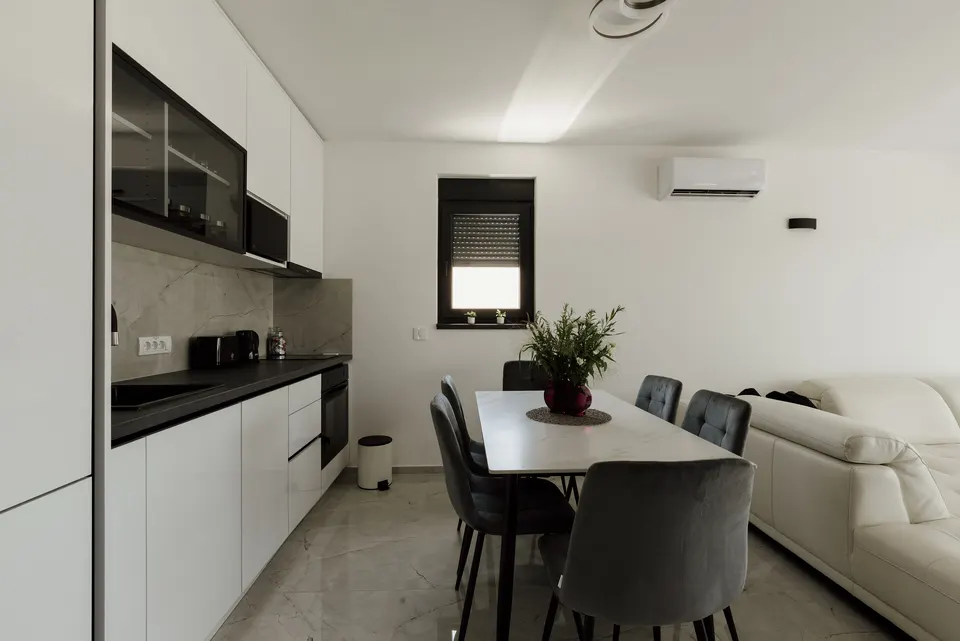
Modern design is a movement that began in the late 19th century and rejected ornament. Contemporary means “of today”, so its look keeps changing while modern stays the same.
Four styles compared
| Style | Signs | Easily mistaken for |
|---|---|---|
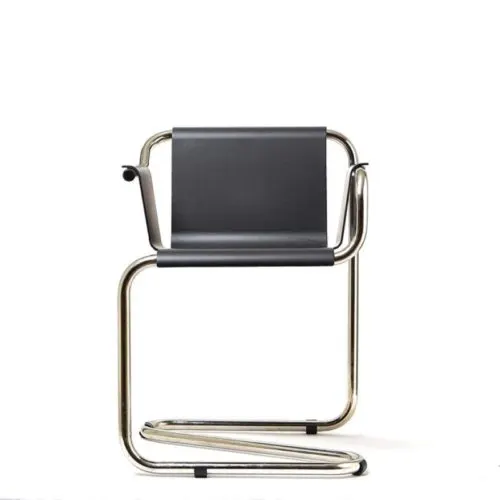
| Modern | Steel tube, glass, plain geometry, no applied ornament | Anything new |
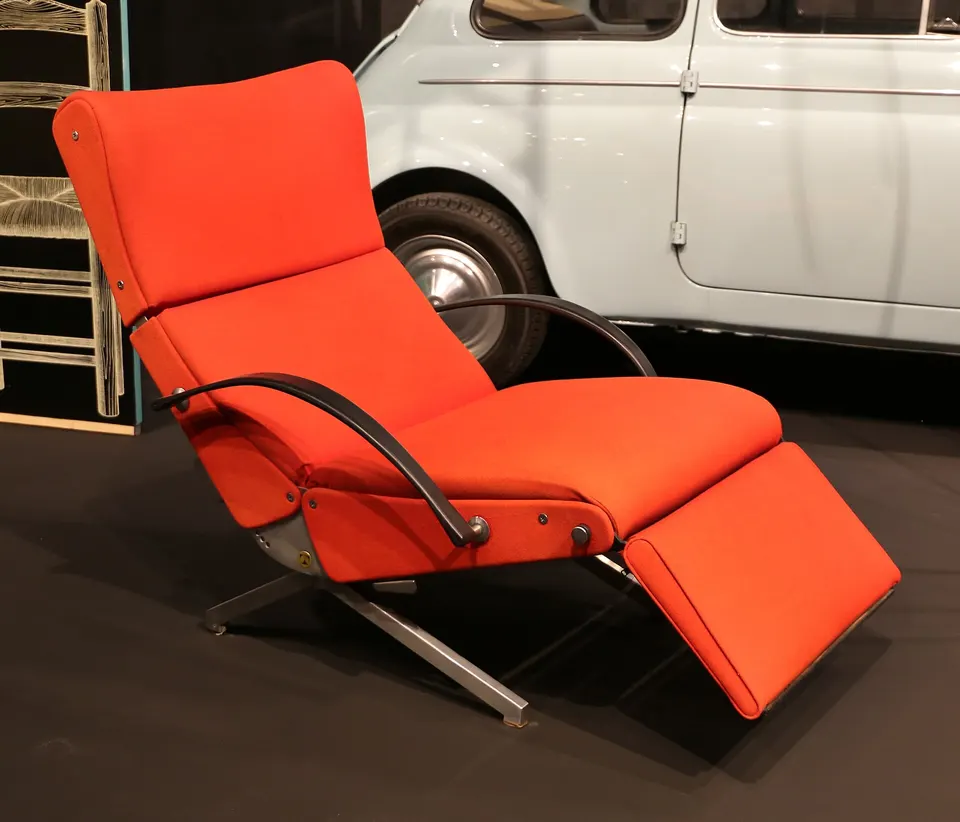
| Mid-century modern | Tapered wooden legs, gentle curves, wide windows | Modern in general, of which it is a branch |
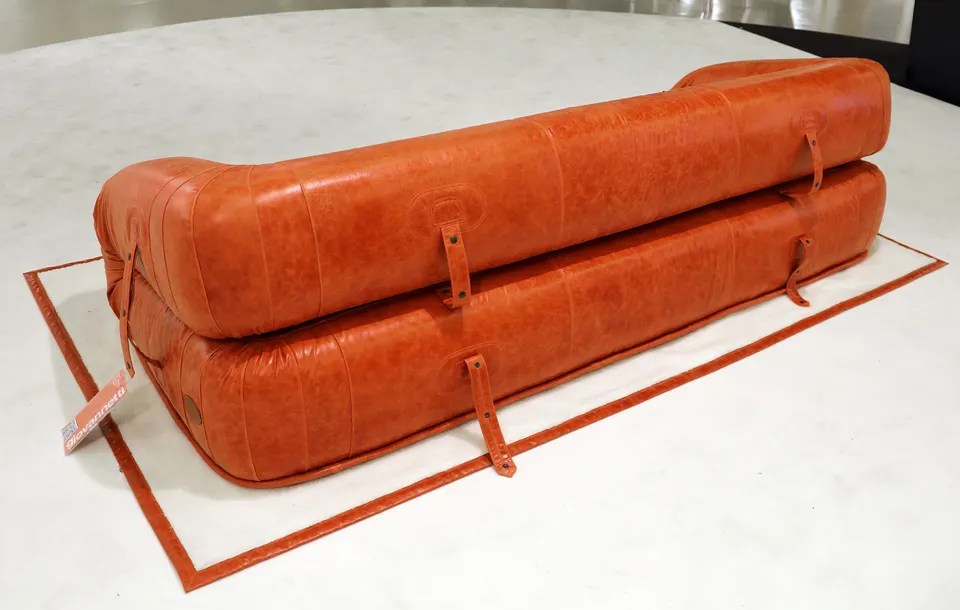
| Postmodern | Bright laminate, odd angles, jokes about older styles | Children's furniture |
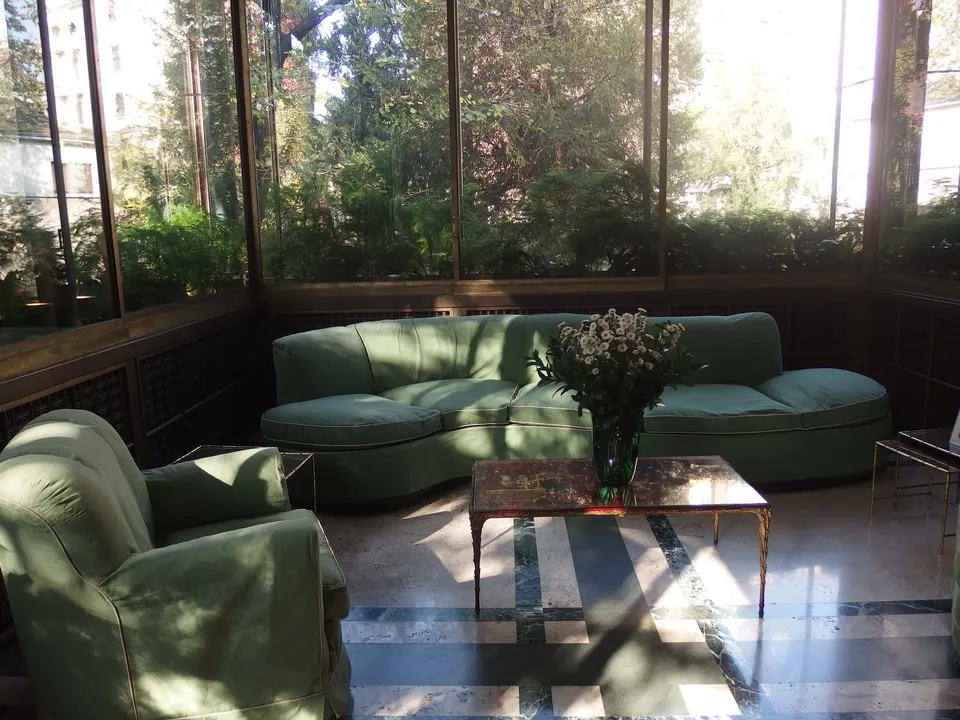
| Contemporary | Soft corners, pale neutrals, natural cloth, sculptural lamps | Modern, because it borrows from it |
Why people confuse modern and contemporary
Modern furniture grew out of machines and new materials. De Stijl in the Netherlands and the Bauhaus in Germany stripped forms to their essentials, with function first. Makers have kept producing those pieces ever since, so a chair drawn a century ago can still be bought new. New and modern are different claims.
Mid-century modern is the branch that was popular roughly from the end of the Second World War for a quarter of a century. It kept the clean lines and the honest use of materials, with more wood and more curve. The label itself was fixed much later by a book on the period.
Then came the revolt. In Milan, Ettore Sottsass and the Memphis Group answered good taste with plastic laminate, terrazzo patterns and colors that refused to match. That is postmodern, and it is as Italian as any plain marble table.
Chairs in bent tube come from this period: the Gru chair follows the same principle.
What counts as contemporary now
Some guides describe contemporary style as a fixed set: curves, taupe, frosted glass. That list only describes one moment. A safer reading is by attitude. Contemporary rooms mix sources freely, use light as decoration, and repeat one tone in several materials. A current room may hold a steel-tube chair, a linen sofa and a lumpy ceramic lamp without contradiction.
None of this ranks one style above another. It helps when searching for a piece, reading a description, or explaining to somebody why a room feels wrong. The traits of Italian modern pieces and the myths around modern furniture go further.
Sources
Main photo: Dining corner. Photo: Shixart1985, CC BY 2.0